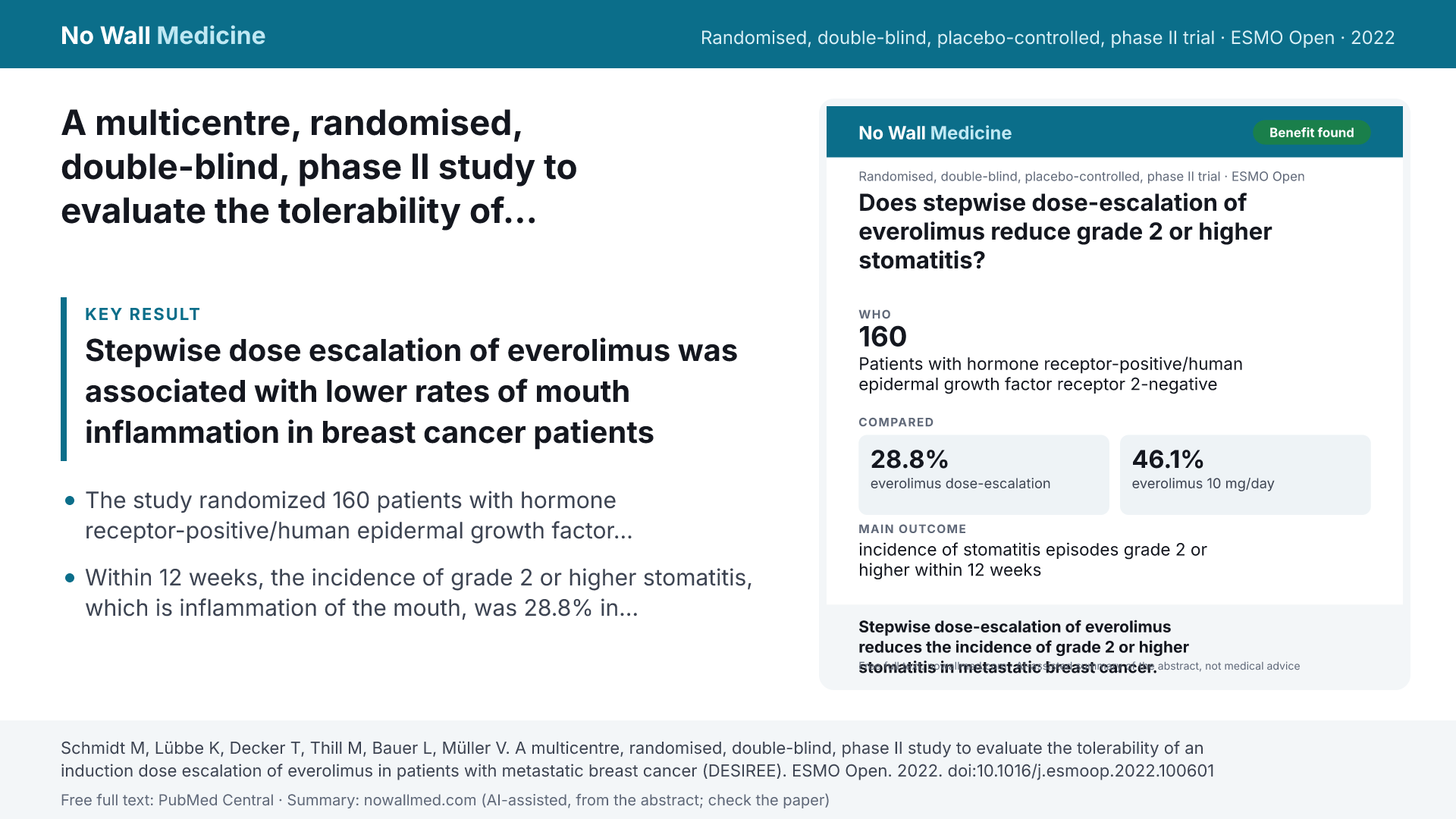
Stepwise dose escalation of everolimus was associated with lower rates of mouth inflammation in breast cancer patients
A multicentre, randomised, double-blind, phase II study to evaluate the tolerability of an induction dose escalation of everolimus in patients with metastatic breast cancer (DESIREE)
Randomised, double-blind, placebo-controlled, phase II trialBenefit found
Does stepwise dose-escalation of everolimus reduce grade 2 or higher stomatitis?
Who
160
Patients with hormone receptor-positive/human epidermal growth factor receptor 2-negative metastatic breast cancer · multicentre
Compared
28.8%everolimus dose-escalation
46.1%everolimus 10 mg/day
Main outcome
incidence of stomatitis episodes grade 2 or higher within 12 weeks
Result: odds ratio 0.47 (95% confidence interval 0.24-0.92)
Bottom line: Stepwise dose-escalation of everolimus reduces the incidence of grade 2 or higher stomatitis in metastatic breast cancer.
ESMO Open · 2022-11-07Download image
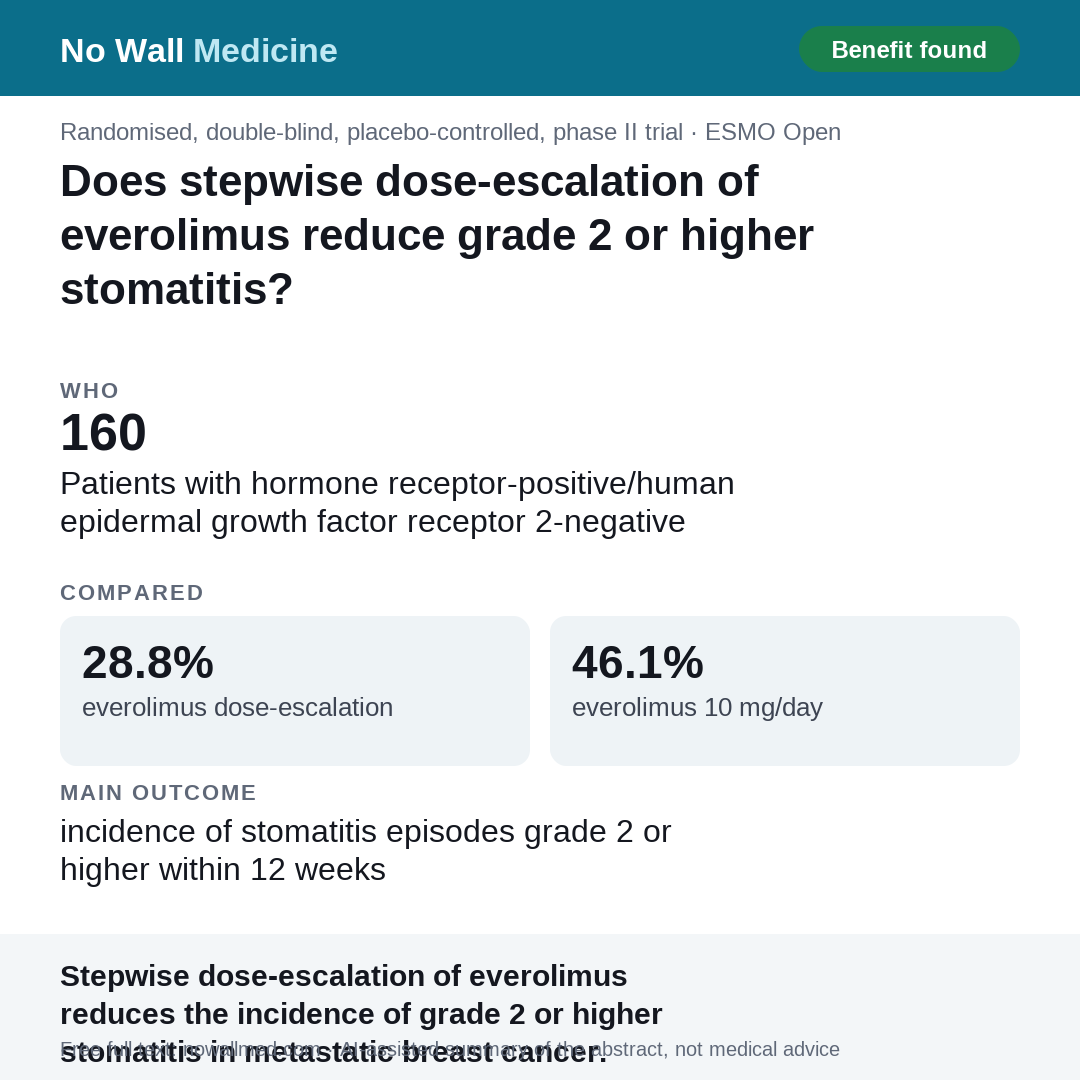
Clinical question: Does stepwise dose-escalation of everolimus reduce grade 2 or higher stomatitis?
Key points
- The study randomized 160 patients with hormone receptor-positive/human epidermal growth factor receptor 2-negative metastatic breast cancer to receive either stepwise dose escalation or a constant 10 mg dose of everolimus.
- Within 12 weeks, the incidence of grade 2 or higher stomatitis, which is inflammation of the mouth, was 28.8% in the dose-escalation group compared to 46.1% in the constant dose group.
- The median relative total dose intensity was 91.1% for the dose-escalation group and 80.0% for the constant dose group, though this difference was not statistically significant.
Headline and key points written with AI from the paper’s abstract, with every number checked against it. Read the paper before relying on them.
Was this summary helpful?
Subject terms
Cite this article
Schmidt M, Lübbe K, Decker T, Thill M, Bauer L, Müller V. A multicentre, randomised, double-blind, phase II study to evaluate the tolerability of an induction dose escalation of everolimus in patients with metastatic breast cancer (DESIREE). ESMO Open. 2022. doi:10.1016/j.esmoop.2022.100601
Spotted a mistake? Suggest a correction
Top studies every Monday
The week’s key trials and guidelines in your specialties, plus any topics you follow. By email, free.
Get the weekly digest