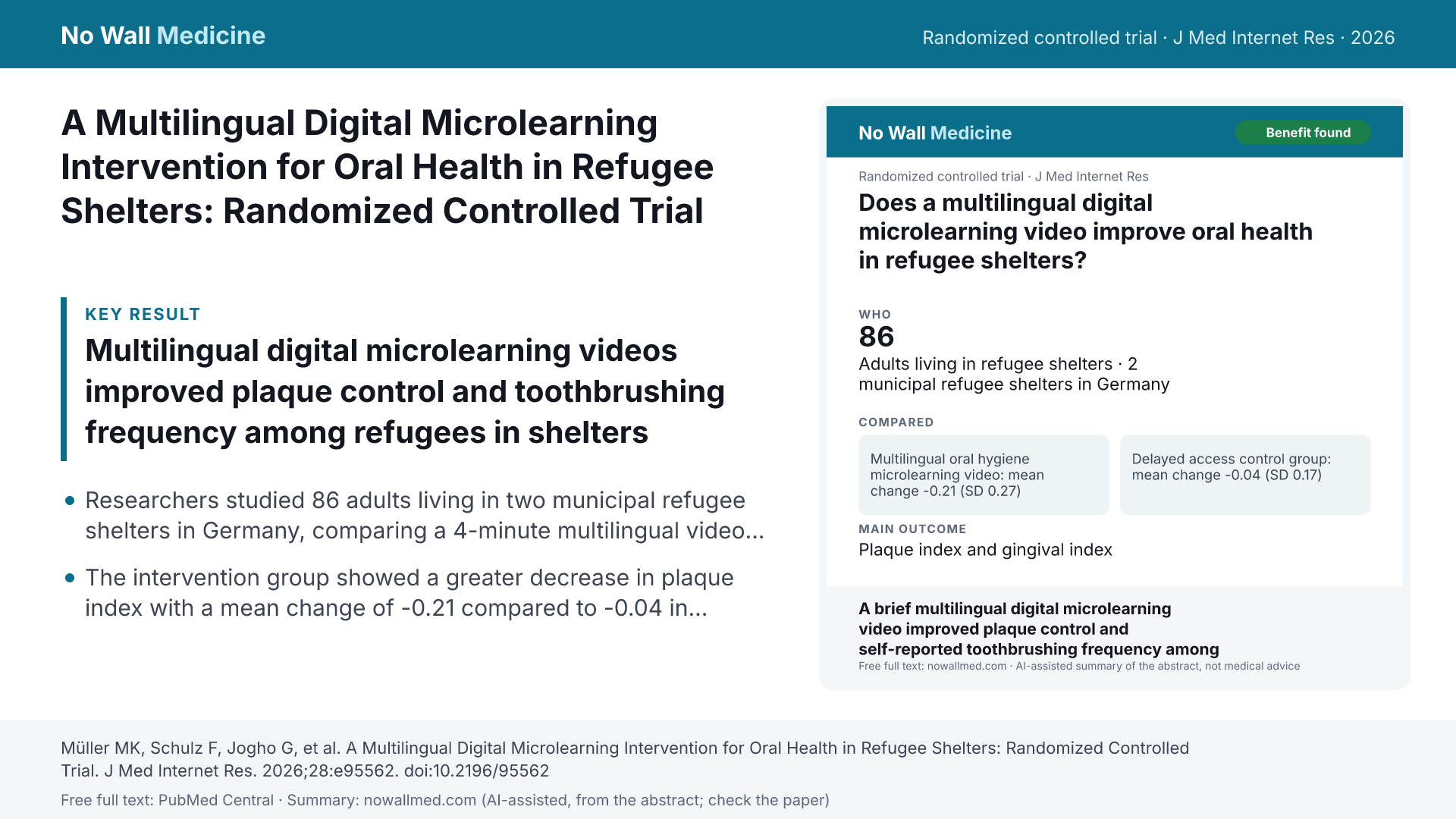
Multilingual digital microlearning videos improved plaque control and toothbrushing frequency among refugees in shelters
A Multilingual Digital Microlearning Intervention for Oral Health in Refugee Shelters: Randomized Controlled Trial
Randomized controlled trialBenefit found
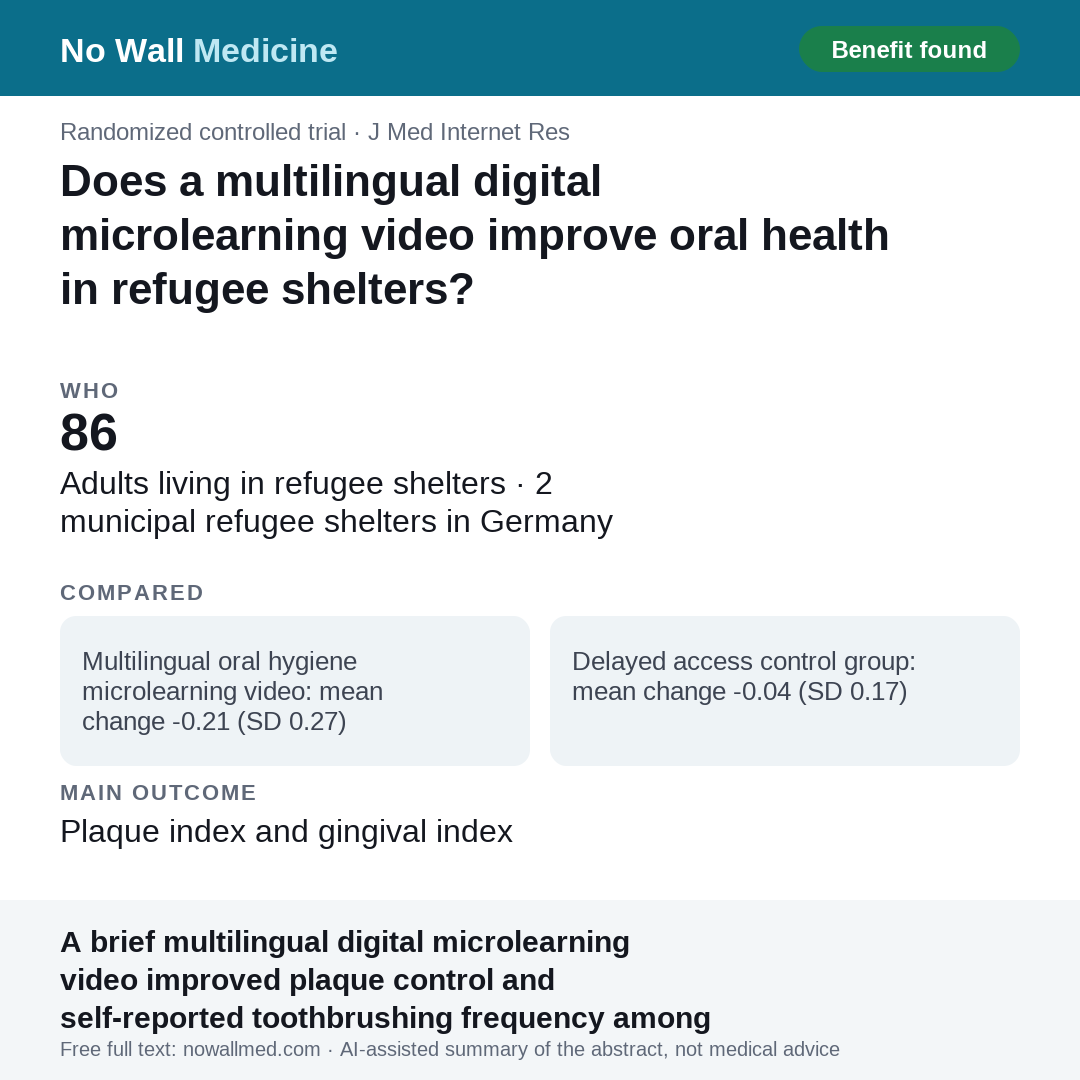
Does a multilingual digital microlearning video improve oral health in refugee shelters?
Who
86
Adults living in refugee shelters · 2 municipal refugee shelters in Germany
Compared
Multilingual oral hygiene microlearning video: mean change -0.21 (SD 0.27)
Delayed access control group: mean change -0.04 (SD 0.17)
Main outcome
Plaque index and gingival index
Bottom line: A brief multilingual digital microlearning video improved plaque control and self-reported toothbrushing frequency among refugees.
Limitation: Need for larger, prospectively powered trials with longer follow-up and blinded assessment.
J Med Internet Res · 2026-06-15Download image
Clinical question: Does a multilingual digital microlearning video improve oral health in refugee shelters?
Why it matters: Refugees often face language and access barriers when trying to obtain preventive oral health information.
Key points
- Researchers studied 86 adults living in two municipal refugee shelters in Germany, comparing a 4-minute multilingual video to delayed access.
- The intervention group showed a greater decrease in plaque index with a mean change of -0.21 compared to -0.04 in the control group.
- While toothbrushing frequency increased, changes in other oral health literacy measures were not statistically significant.
Limitation the authors note: The authors state that larger trials with longer follow-up periods and blinded outcome assessment are needed.
Headline and key points written with AI from the paper’s abstract, with every number checked against it. Read the paper before relying on them.
Was this summary helpful?
Subject terms
Cite this article
Müller MK, Schulz F, Jogho G, et al. A Multilingual Digital Microlearning Intervention for Oral Health in Refugee Shelters: Randomized Controlled Trial. J Med Internet Res. 2026. doi:10.2196/95562
Spotted a mistake? Suggest a correction