A Multilingual Digital Microlearning Intervention for Oral Health in Refugee Shelters: Randomized Controlled Trial
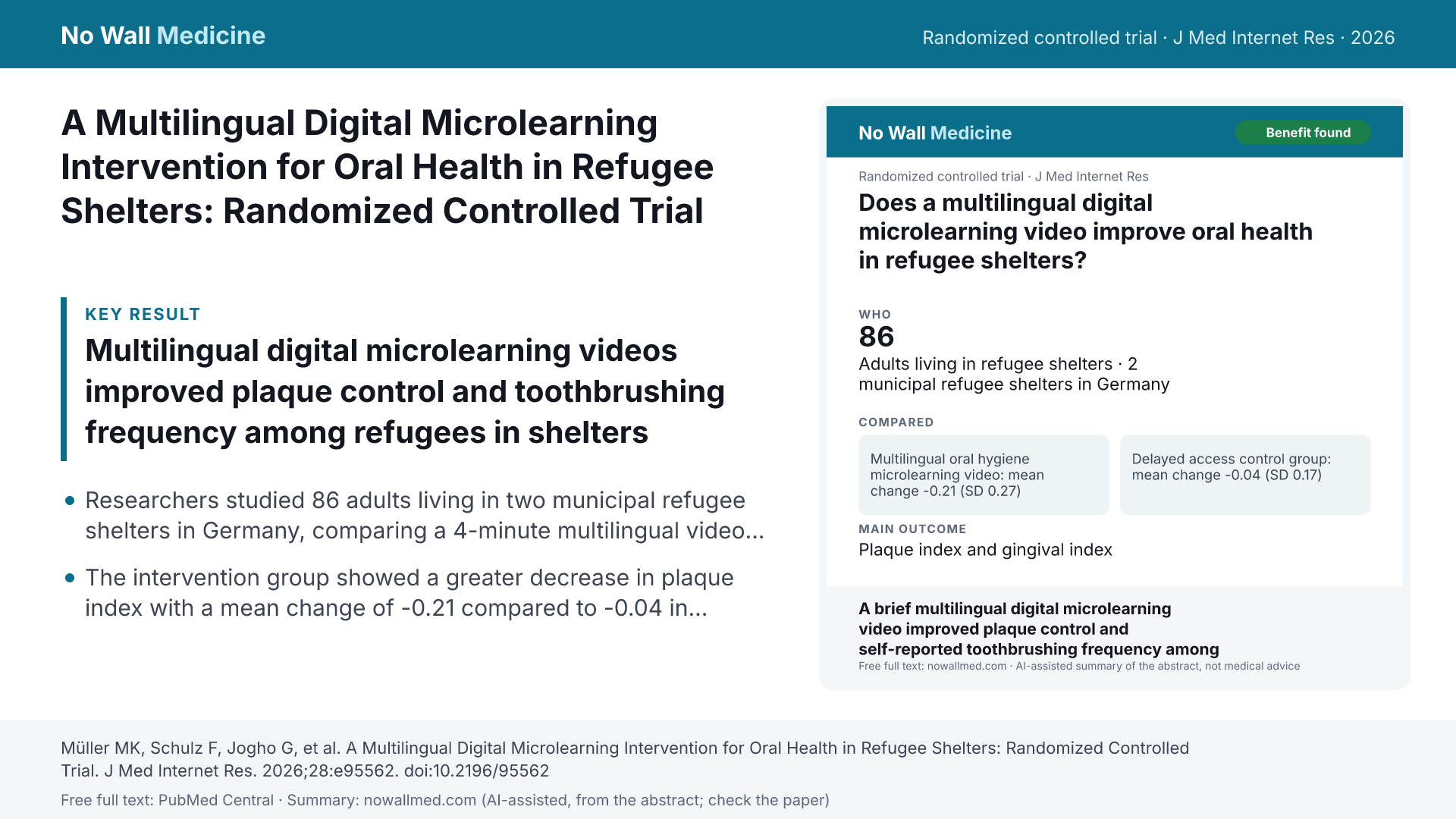
Key result: Multilingual digital microlearning videos improved plaque control and toothbrushing frequency among refugees in shelters
Key points
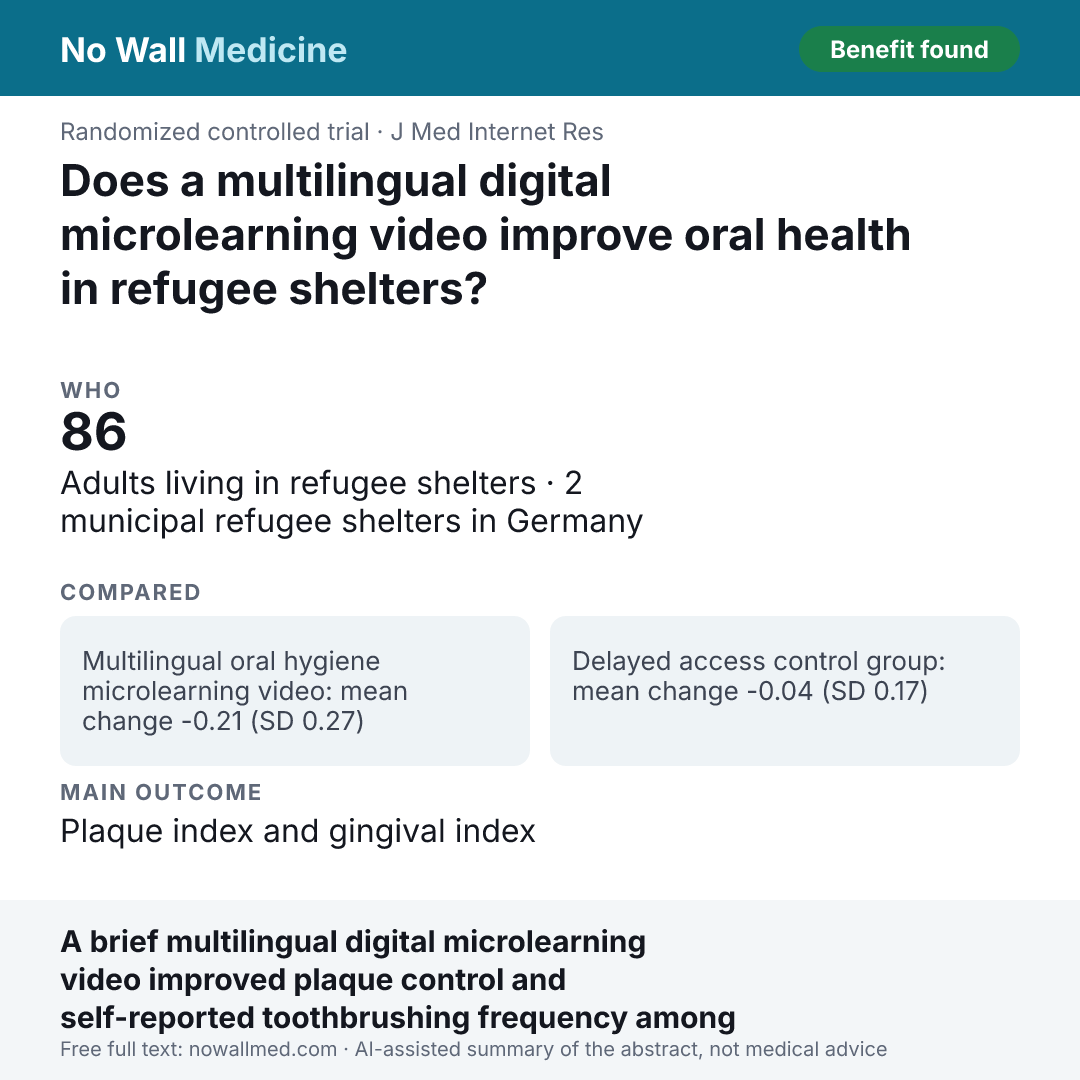
- Researchers studied 86 adults living in two municipal refugee shelters in Germany, comparing a 4-minute multilingual video to delayed access.
- The intervention group showed a greater decrease in plaque index with a mean change of -0.21 compared to -0.04 in the control group.
- While toothbrushing frequency increased, changes in other oral health literacy measures were not statistically significant.
Why it matters: Refugees often face language and access barriers when trying to obtain preventive oral health information.
Limitation the authors note: The authors state that larger trials with longer follow-up periods and blinded outcome assessment are needed.
Discussion prompts
- Would these patients look like yours? Who was left out?
- Is the main outcome one that matters to patients?
- Is the difference large enough to change what you do?
Cite: Müller MK, Schulz F, Jogho G, et al. A Multilingual Digital Microlearning Intervention for Oral Health in Refugee Shelters: Randomized Controlled Trial. J Med Internet Res. 2026;28:e95562. doi:10.2196/95562
Free full text: PubMed Central · Summary and visual abstract: nowallmed.com/a/a-multilingual-digital-microlearning-intervention-for-oral-health-in-1r4qubi/ (AI-assisted from the abstract; check the paper before relying on it).