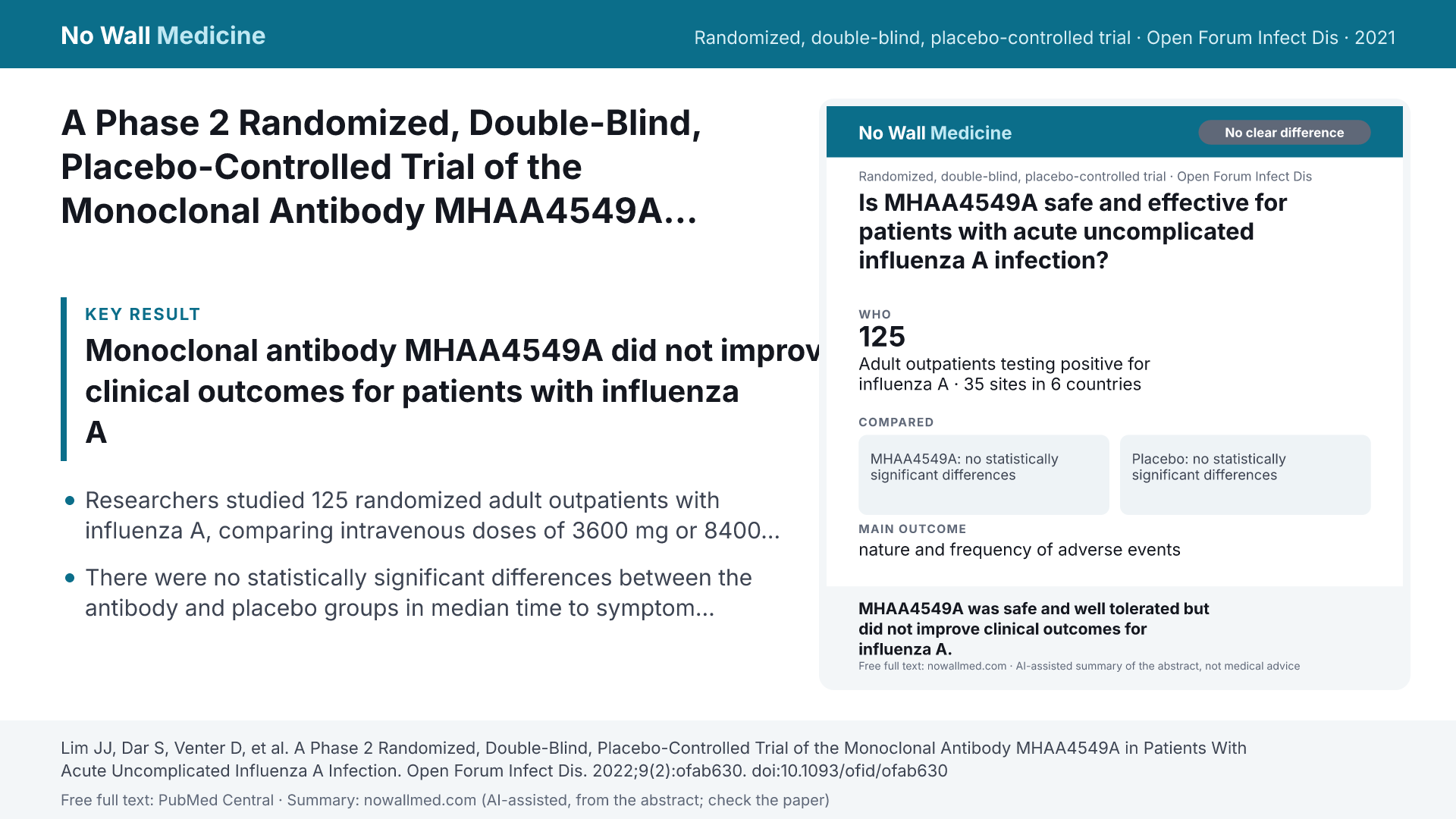
Monoclonal antibody MHAA4549A did not improve clinical outcomes for patients with influenza A
A Phase 2 Randomized, Double-Blind, Placebo-Controlled Trial of the Monoclonal Antibody MHAA4549A in Patients With Acute Uncomplicated Influenza A Infection
Randomized, double-blind, placebo-controlled trialNo clear difference
Is MHAA4549A safe and effective for patients with acute uncomplicated influenza A infection?
Who
125
Adult outpatients testing positive for influenza A · 35 sites in 6 countries
Compared
MHAA4549A: no statistically significant differences
Placebo: no statistically significant differences
Main outcome
nature and frequency of adverse events
Bottom line: MHAA4549A was safe and well tolerated but did not improve clinical outcomes for influenza A.
Open Forum Infect Dis · 2021-12-10Download image
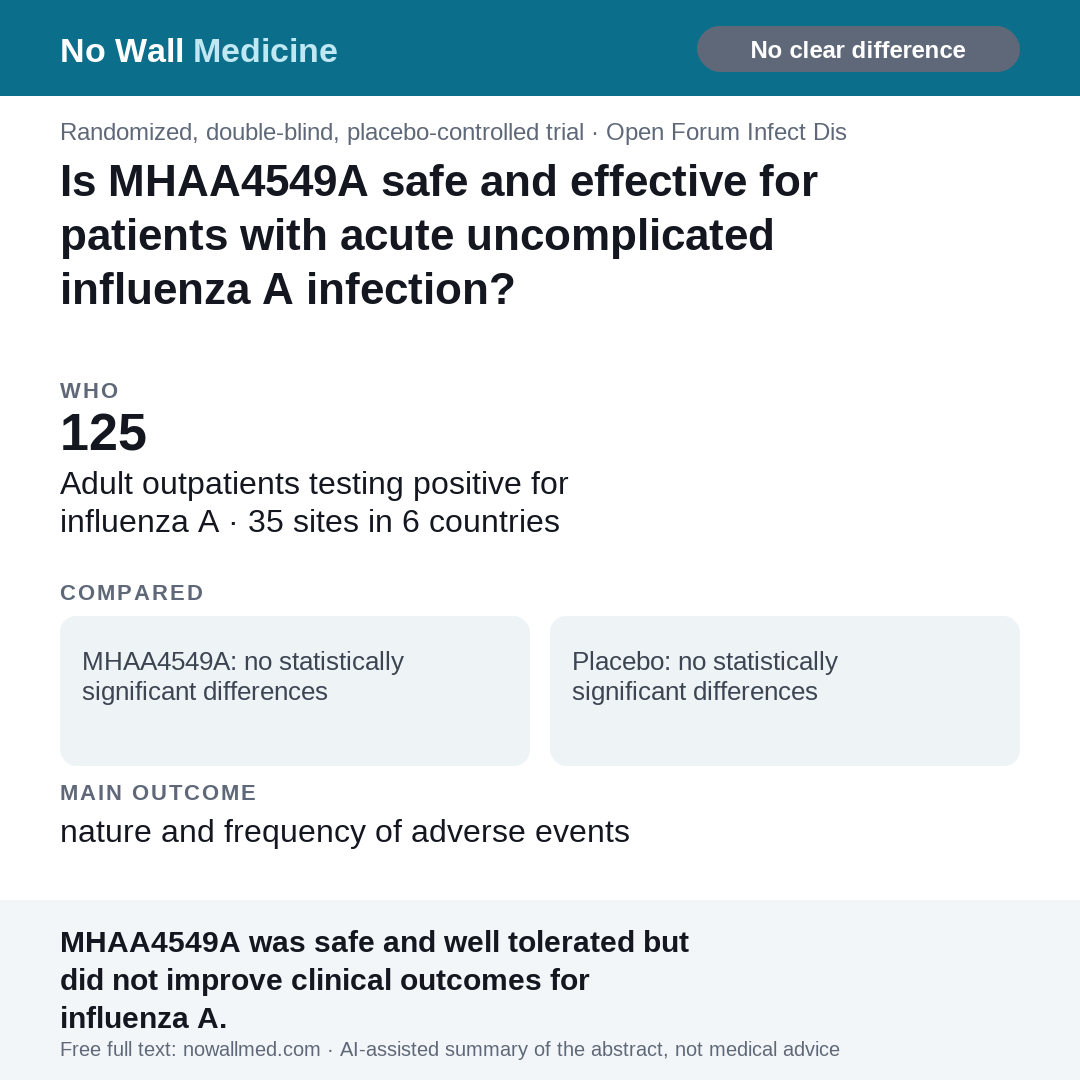
Clinical question: Is MHAA4549A safe and effective for patients with acute uncomplicated influenza A infection?
Why it matters: It was unknown if the monoclonal antibody MHAA4549A, which targets the influenza A hemagglutinin stalk, could improve clinical outcomes in outpatients with acute influenza A.
Key points
- Researchers studied 125 randomized adult outpatients with influenza A, comparing intravenous doses of 3600 mg or 8400 mg of MHAA4549A to a placebo.
- There were no statistically significant differences between the antibody and placebo groups in median time to symptom relief, viral load, or duration of viral shedding.
- The frequency of adverse events was similar between groups, with nausea occurring in 6.5% of patients, and no hospitalizations or deaths occurred.
Headline and key points written with AI from the paper’s abstract, with every number checked against it. Read the paper before relying on them.
Was this summary helpful?
Cite this article
Lim JJ, Dar S, Venter D, Horcajada JP, Kulkarni P, Nguyen A. A Phase 2 Randomized, Double-Blind, Placebo-Controlled Trial of the Monoclonal Antibody MHAA4549A in Patients With Acute Uncomplicated Influenza A Infection. Open Forum Infect Dis. 2021. doi:10.1093/ofid/ofab630
Spotted a mistake? Suggest a correction
Top studies every Monday
The week’s key trials and guidelines in your specialties, plus any topics you follow. By email, free.
Get the weekly digest