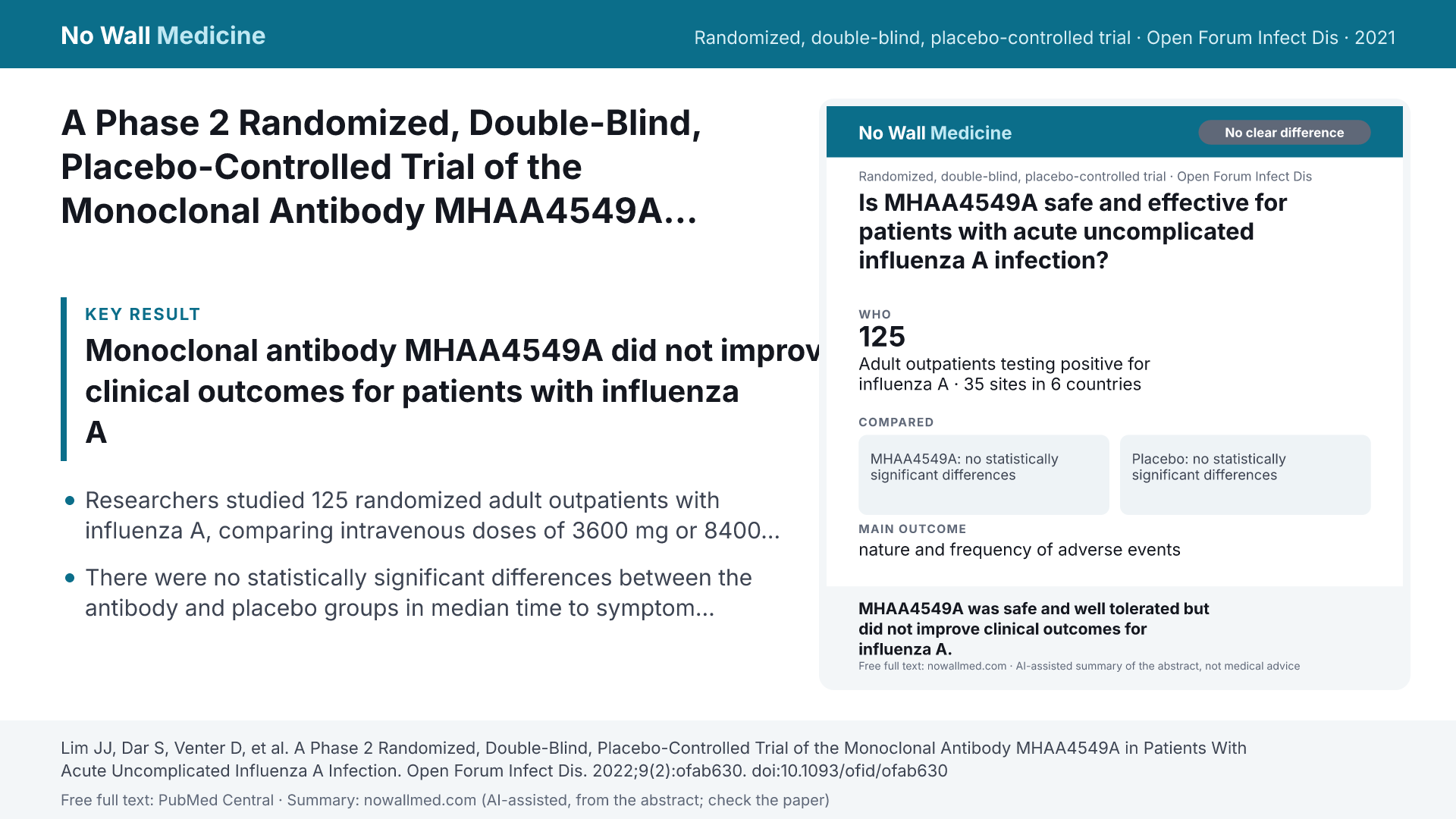
A Phase 2 Randomized, Double-Blind, Placebo-Controlled Trial of the Monoclonal Antibody MHAA4549A in Patients With Acute Uncomplicated Influenza A Infection
Key result: Monoclonal antibody MHAA4549A did not improve clinical outcomes for patients with influenza A
Key points
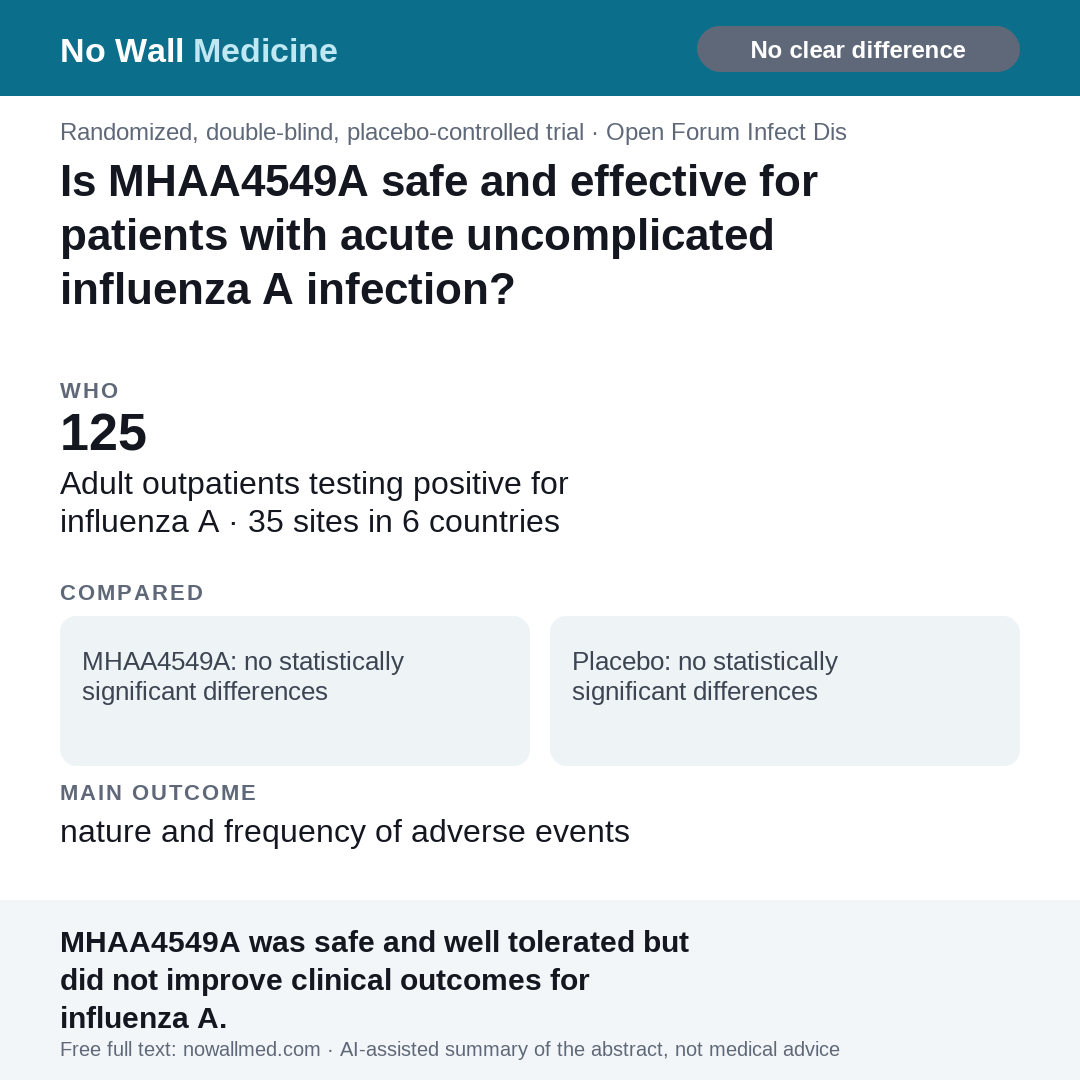
- Researchers studied 125 randomized adult outpatients with influenza A, comparing intravenous doses of 3600 mg or 8400 mg of MHAA4549A to a placebo.
- There were no statistically significant differences between the antibody and placebo groups in median time to symptom relief, viral load, or duration of viral shedding.
- The frequency of adverse events was similar between groups, with nausea occurring in 6.5% of patients, and no hospitalizations or deaths occurred.
Why it matters: It was unknown if the monoclonal antibody MHAA4549A, which targets the influenza A hemagglutinin stalk, could improve clinical outcomes in outpatients with acute influenza A.
Discussion prompts
- Would these patients look like yours? Who was left out?
- Is the main outcome one that matters to patients?
- Is the difference large enough to change what you do?
Cite: Lim JJ, Dar S, Venter D, et al. A Phase 2 Randomized, Double-Blind, Placebo-Controlled Trial of the Monoclonal Antibody MHAA4549A in Patients With Acute Uncomplicated Influenza A Infection. Open Forum Infect Dis. 2021. doi:10.1093/ofid/ofab630
Free full text: PubMed Central · Summary and visual abstract: nowallmed.com/a/a-phase-2-randomized-double-blind-placebo-controlled-trial-of-the-16fbesk/ (AI-assisted from the abstract; check the paper before relying on it).