A phase 2 randomized, placebo-controlled trial of inulin for the prevention of gut pathogen colonization and infection among patients admitted to the intensive care unit for sepsis
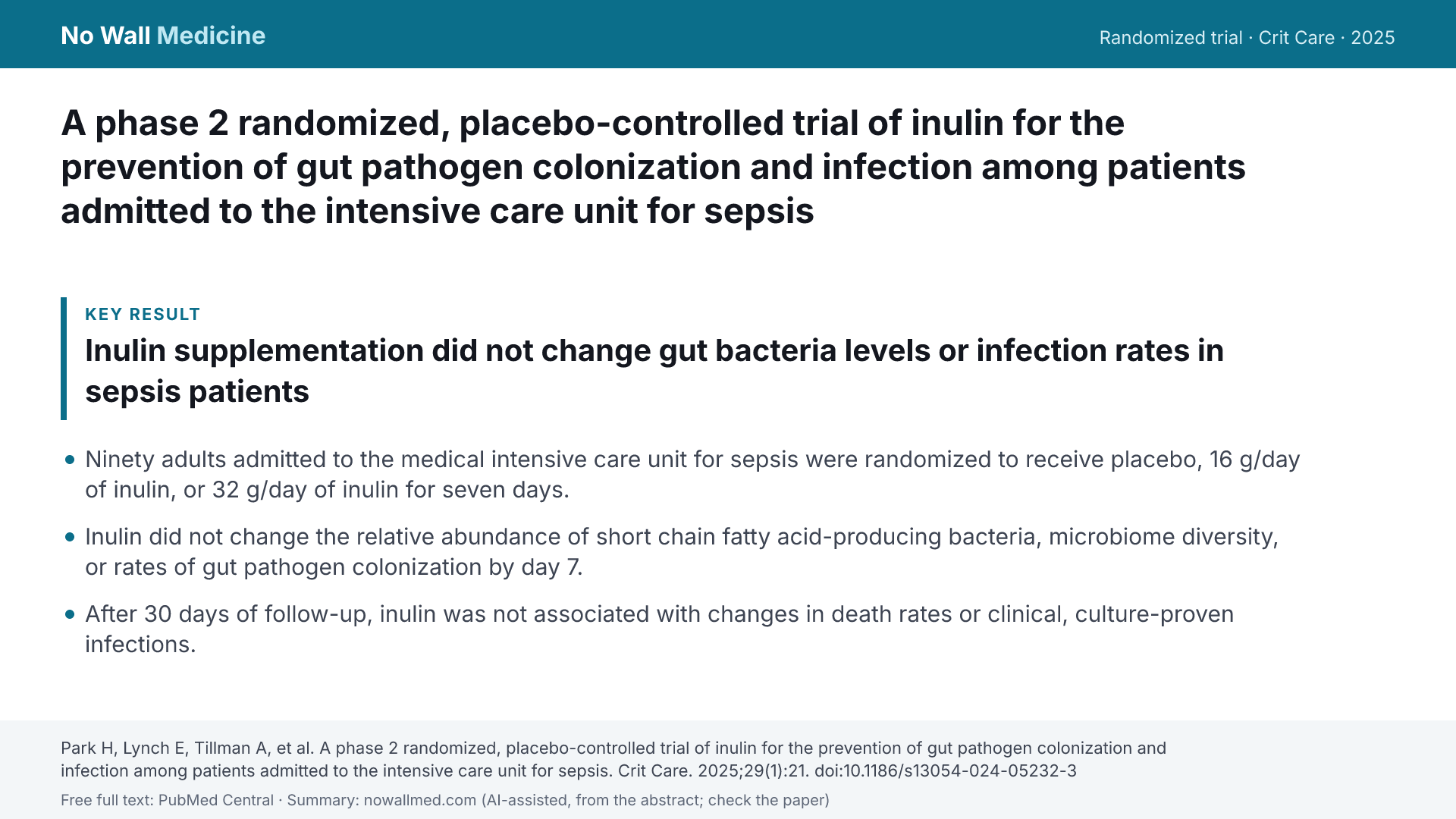
Key result: Inulin supplementation did not change gut bacteria levels or infection rates in sepsis patients
Key points
- Ninety adults admitted to the medical intensive care unit for sepsis were randomized to receive placebo, 16 g/day of inulin, or 32 g/day of inulin for seven days.
- Inulin did not change the relative abundance of short chain fatty acid-producing bacteria, microbiome diversity, or rates of gut pathogen colonization by day 7.
- After 30 days of follow-up, inulin was not associated with changes in death rates or clinical, culture-proven infections.
Discussion prompts
- Would these patients look like yours? Who was left out?
- Is the main outcome one that matters to patients?
- Is the difference large enough to change what you do?
Cite: Park H, Lynch E, Tillman A, et al. A phase 2 randomized, placebo-controlled trial of inulin for the prevention of gut pathogen colonization and infection among patients admitted to the intensive care unit for sepsis. Crit Care. 2025;29(1):21. doi:10.1186/s13054-024-05232-3
Free full text: PubMed Central · Summary and visual abstract: nowallmed.com/a/a-phase-2-randomized-placebo-controlled-trial-of-inulin-for-the-heg9kp/ (AI-assisted from the abstract; check the paper before relying on it).