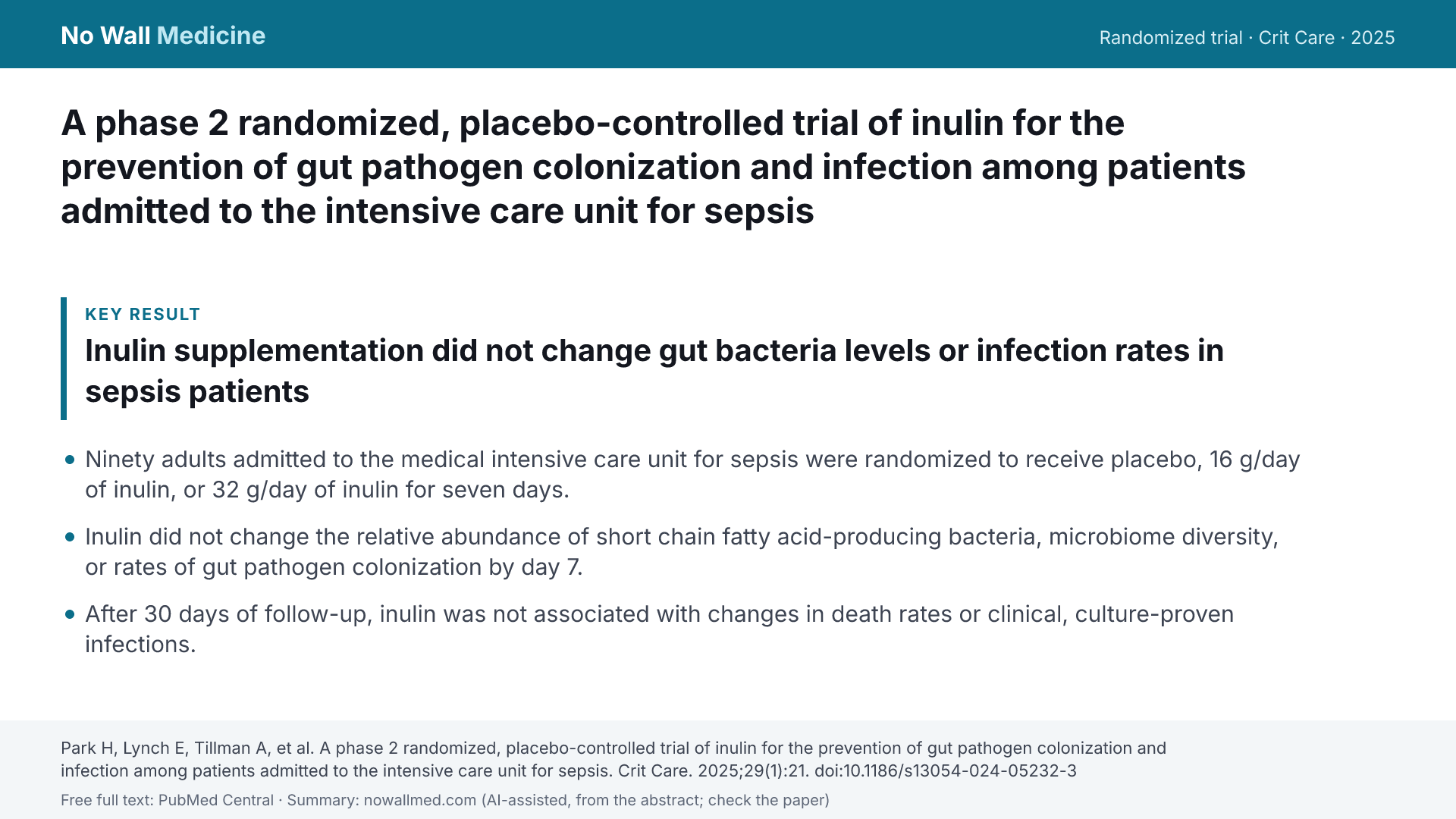
Inulin supplementation did not change gut bacteria levels or infection rates in sepsis patients
A phase 2 randomized, placebo-controlled trial of inulin for the prevention of gut pathogen colonization and infection among patients admitted to the intensive care unit for sepsis
Why it matters: It was unknown if a prebiotic could improve the gut microbiome to decrease pathogen colonization and infection risk in patients with sepsis.
Key points
- Ninety adults admitted to the medical intensive care unit for sepsis were randomized to receive placebo, 16 g/day of inulin, or 32 g/day of inulin for seven days.
- Inulin did not change the relative abundance of short chain fatty acid-producing bacteria, microbiome diversity, or rates of gut pathogen colonization by day 7.
- After 30 days of follow-up, inulin was not associated with changes in death rates or clinical, culture-proven infections.
Headline and key points written with AI from the paper’s abstract, with every number checked against it. Read the paper before relying on them.
Was this summary helpful?
Subject terms
Cite this article
Park H, Lynch E, Tillman A, et al. A phase 2 randomized, placebo-controlled trial of inulin for the prevention of gut pathogen colonization and infection among patients admitted to the intensive care unit for sepsis. Crit Care. 2025. doi:10.1186/s13054-024-05232-3
Spotted a mistake? Suggest a correction