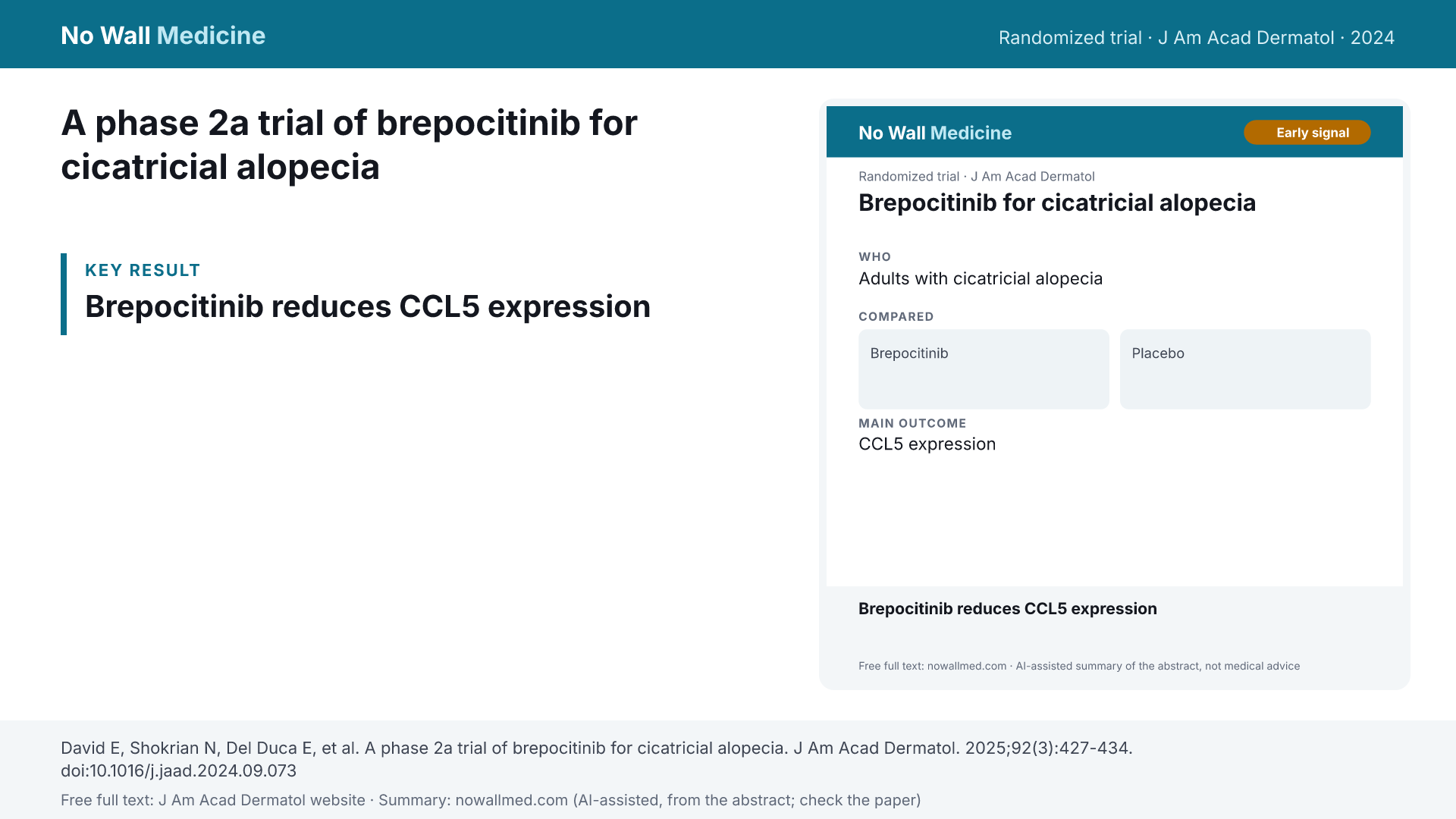
A phase 2a trial of brepocitinib for cicatricial alopecia
Randomized trialEarly signal
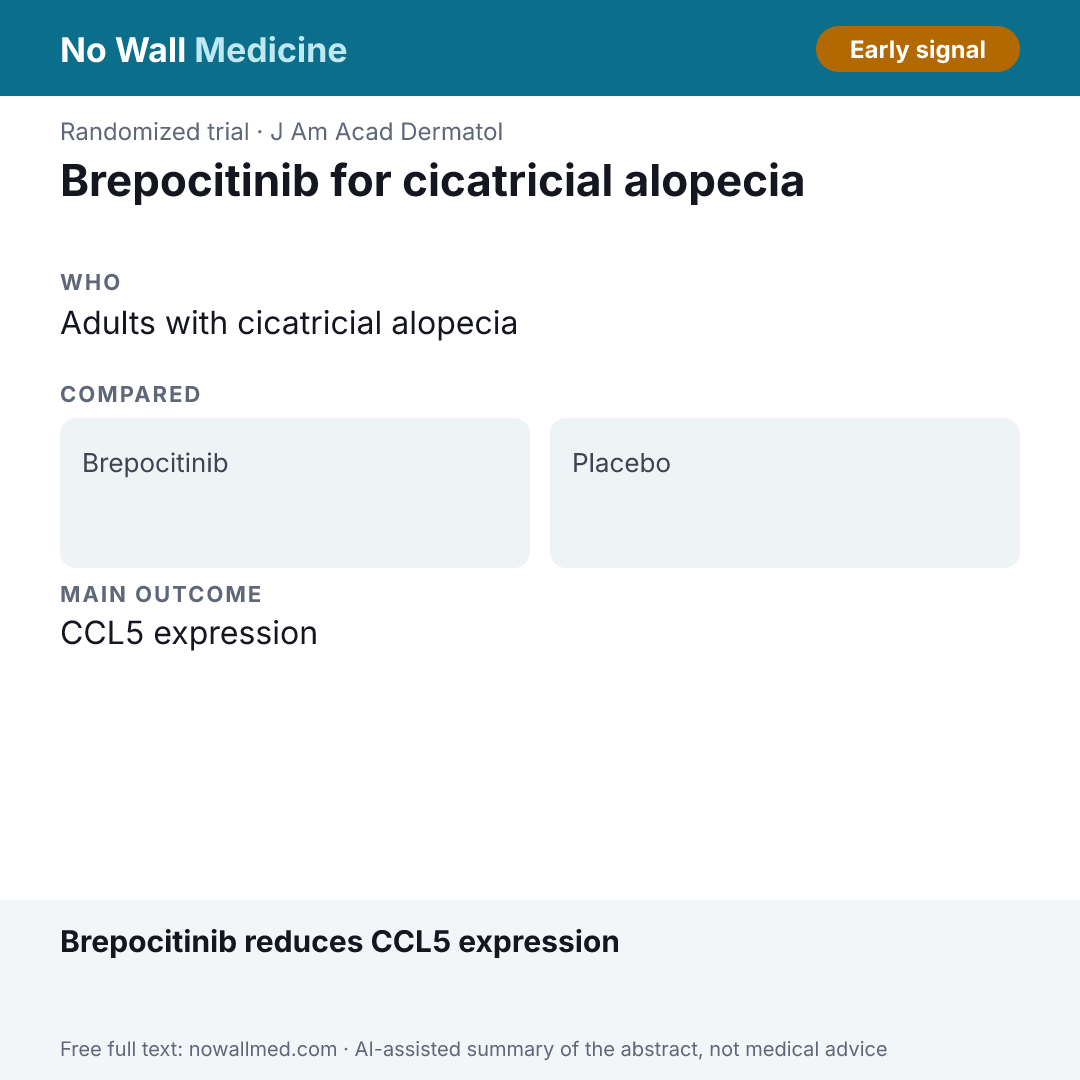
Brepocitinib for cicatricial alopecia
Who
Adults with cicatricial alopecia
Compared
Brepocitinib
Placebo
Main outcome
CCL5 expression
Bottom line: Brepocitinib reduces CCL5 expression
Limitation: Single-dose regimen, small placebo group
J Am Acad Dermatol · 2024-10-24 · Save PNG
Abstract
Background
Cicatricial alopecias are chronic, progressive scarring hair-loss conditions. Molecular dysregulation is not fully understood, hindering treatment development. Th1/IFNγ signaling and Janus kinase dysregulation has shown involvement, providing rationale for this phase 2a trial with Tyrosine kinase 2/Janus kinase 1 inhibitor brepocitinib. Methods
Randomized, placebo-controlled phase 2a trial spanning 52 weeks. Adults (≥18 years of age) with lichen planopilaris, frontal fibrosing alopecia, or central centrifugal cicatricial alopecia diagnosis were randomized 3:1 to brepocitinib 45 mg daily or placebo for 24 weeks, after which all patients received brepocitinib for another 24 weeks, with a safety follow up 4 weeks later. Lesional scalp biopsies were collected at baseline, week 24, and week 48. Coprimary endpoints were changes in lesional expression of C-C motif chemokine ligand (CCL5), changes in lesional expression of fibrosis-related markers, and safety at week 24. Results
Patients receiving brepocitinib showed significant downregulation in CCL5 expression at week 24 (P = .004). Enrichment analysis of a subset of fibrosis markers showed trending upregulation in placebo patients (P < .1). Brepocitinib was well tolerated and improved clinical severity scores. Limitations
Single-dose regimen, small placebo group. Conclusion
Brepocitinib significantly reduces CCL5 expression and was well tolerated at week 24, meeting coprimary endpoints. Brepocitinib reduces inflammatory biomarker expression and improves clinical severity, while maintaining favorable safety profile.
Subject terms
Headline, design, result, key points, caveat and citation as plain text.
Cite this article
David E, Shokrian N, Del Duca E, et al. A phase 2a trial of brepocitinib for cicatricial alopecia. J Am Acad Dermatol. 2025;92(3):427-434. doi:10.1016/j.jaad.2024.09.073
Spotted a mistake? Suggest a correction