A Pilot Randomized Controlled Trial of De Novo Belatacept-based Immunosuppression After Lung Transplantation
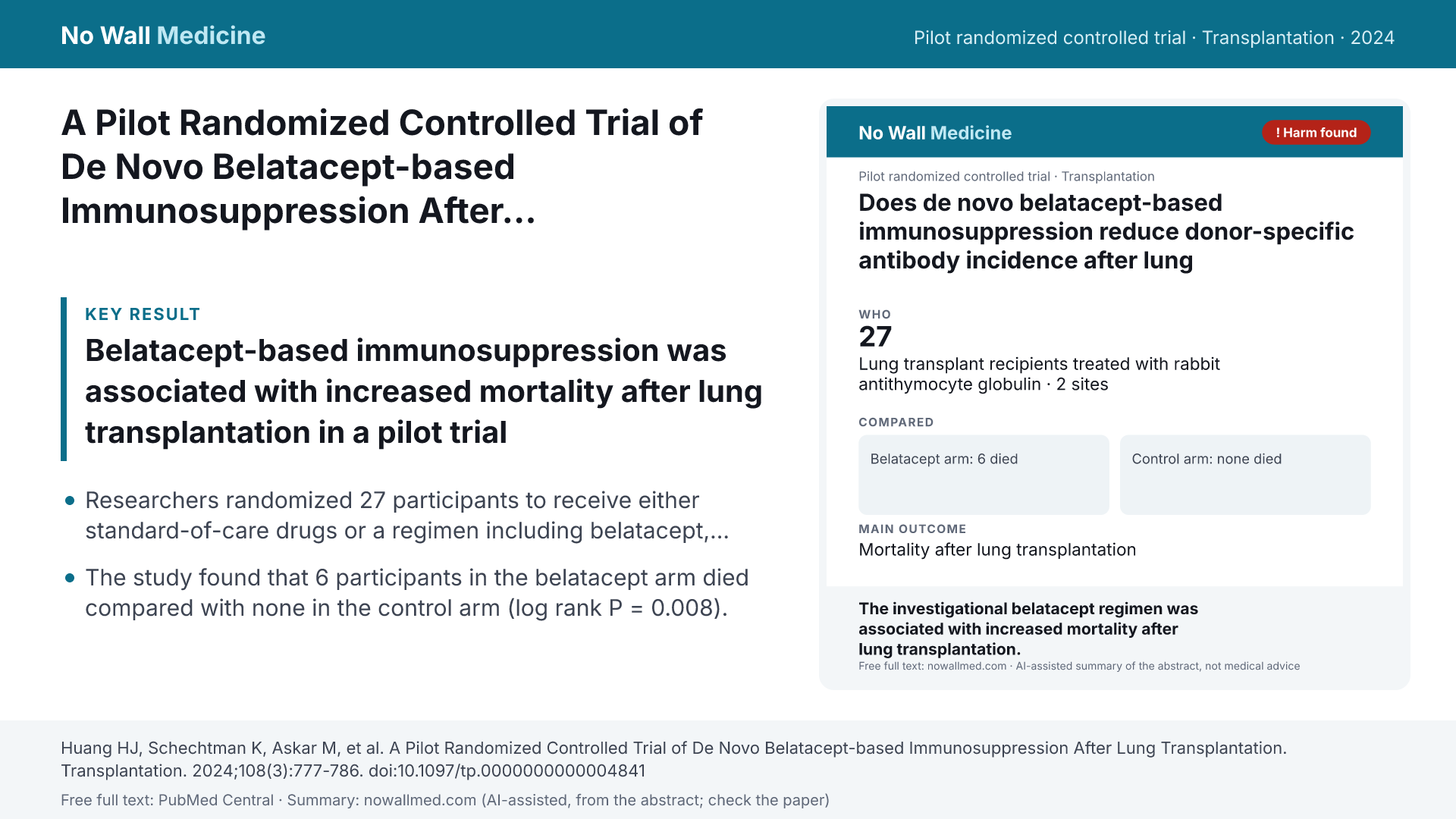
Key result: Belatacept-based immunosuppression was associated with increased mortality after lung transplantation in a pilot trial
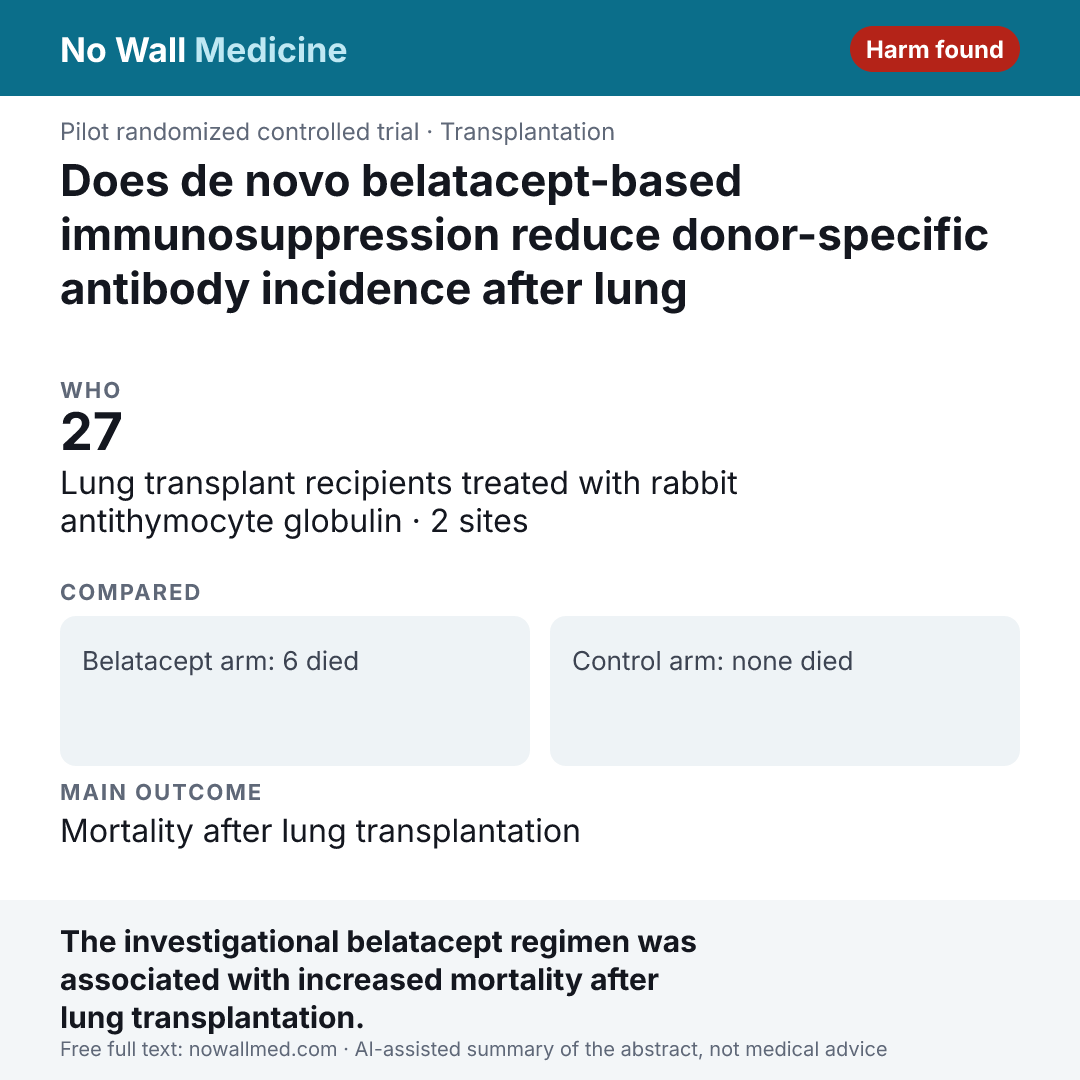
Pilot randomized controlled trialHarm found
Does de novo belatacept-based immunosuppression reduce donor-specific antibody incidence after lung transplantation?
Who
27
Lung transplant recipients treated with rabbit antithymocyte globulin · 2 sites
Compared
Belatacept arm: 6 died
Control arm: none died
Main outcome
Mortality after lung transplantation
Result: log rank P = 0.008
Bottom line: The investigational belatacept regimen was associated with increased mortality after lung transplantation.
Transplantation · 2024-02-20 · Save PNG
Key points
- Researchers randomized 27 participants to receive either standard-of-care drugs or a regimen including belatacept, a T-cell costimulatory blocker, which stops certain immune responses.
- The study found that 6 participants in the belatacept arm died compared with none in the control arm (log rank P = 0.008).
- There were no differences observed between the groups regarding donor-specific antibodies, rejection types, chronic lung allograft dysfunction, or infections.
Discussion prompts
- Would these patients look like yours? Who was left out?
- Is the main outcome one that matters to patients?
- Is the difference large enough to change what you do?
Cite: Huang HJ, Schechtman K, Askar M, et al. A Pilot Randomized Controlled Trial of De Novo Belatacept-based Immunosuppression After Lung Transplantation. Transplantation. 2024;108(3):777-786. doi:10.1097/tp.0000000000004841
Free full text: PubMed Central · Summary and visual abstract: nowallmed.com/a/a-pilot-randomized-controlled-trial-of-de-novo-belatacept-based-nx0jz5/ (AI-assisted from the abstract; check the paper before relying on it).