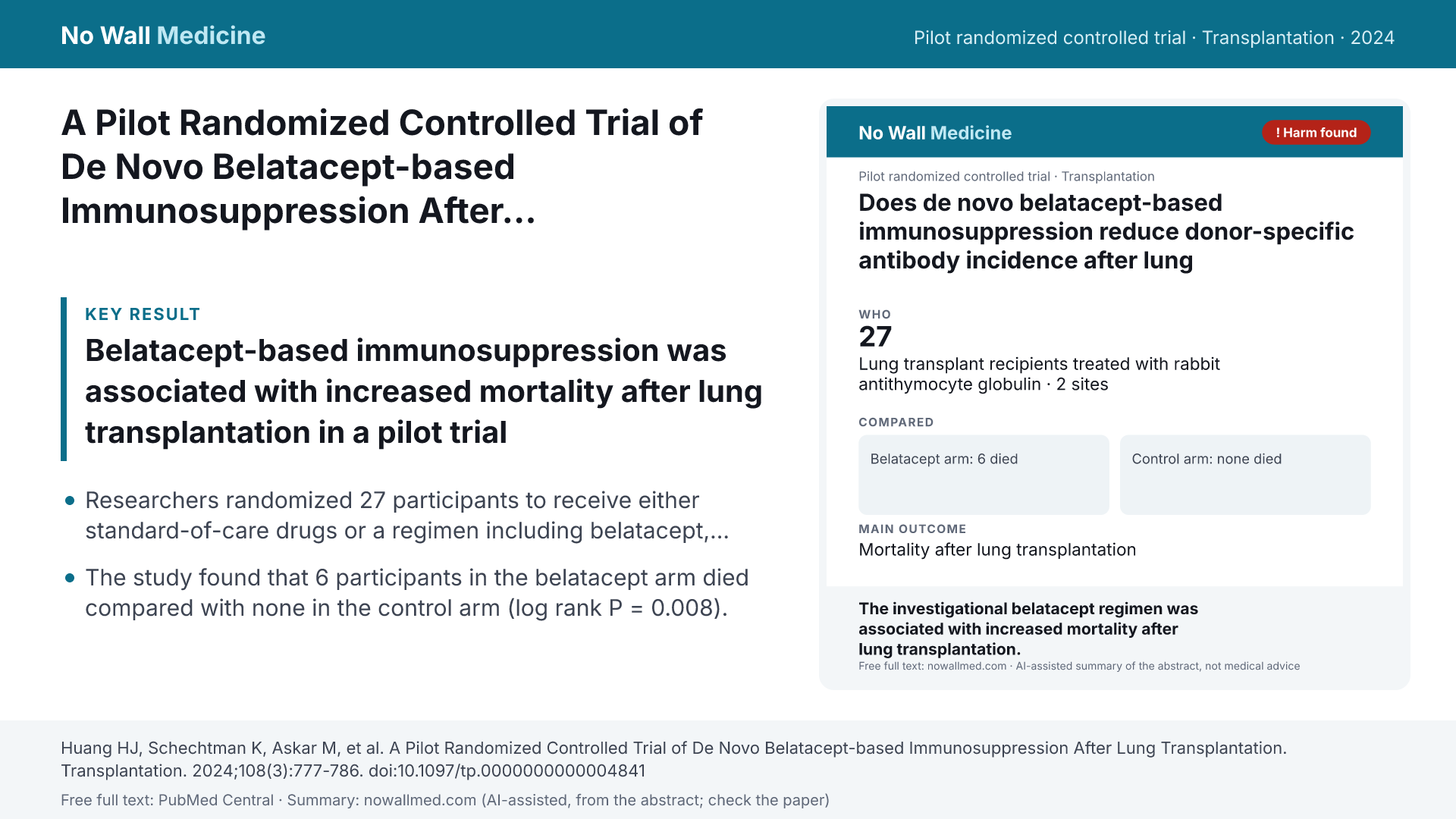
Belatacept-based immunosuppression was associated with increased mortality after lung transplantation in a pilot trial
A Pilot Randomized Controlled Trial of De Novo Belatacept-based Immunosuppression After Lung Transplantation
Pilot randomized controlled trialHarm found
Does de novo belatacept-based immunosuppression reduce donor-specific antibody incidence after lung transplantation?
Who
27
Lung transplant recipients treated with rabbit antithymocyte globulin · 2 sites
Compared
Belatacept arm: 6 died
Control arm: none died
Main outcome
Mortality after lung transplantation
Result: log rank P = 0.008
Bottom line: The investigational belatacept regimen was associated with increased mortality after lung transplantation.
Transplantation · 2024-02-20Download image
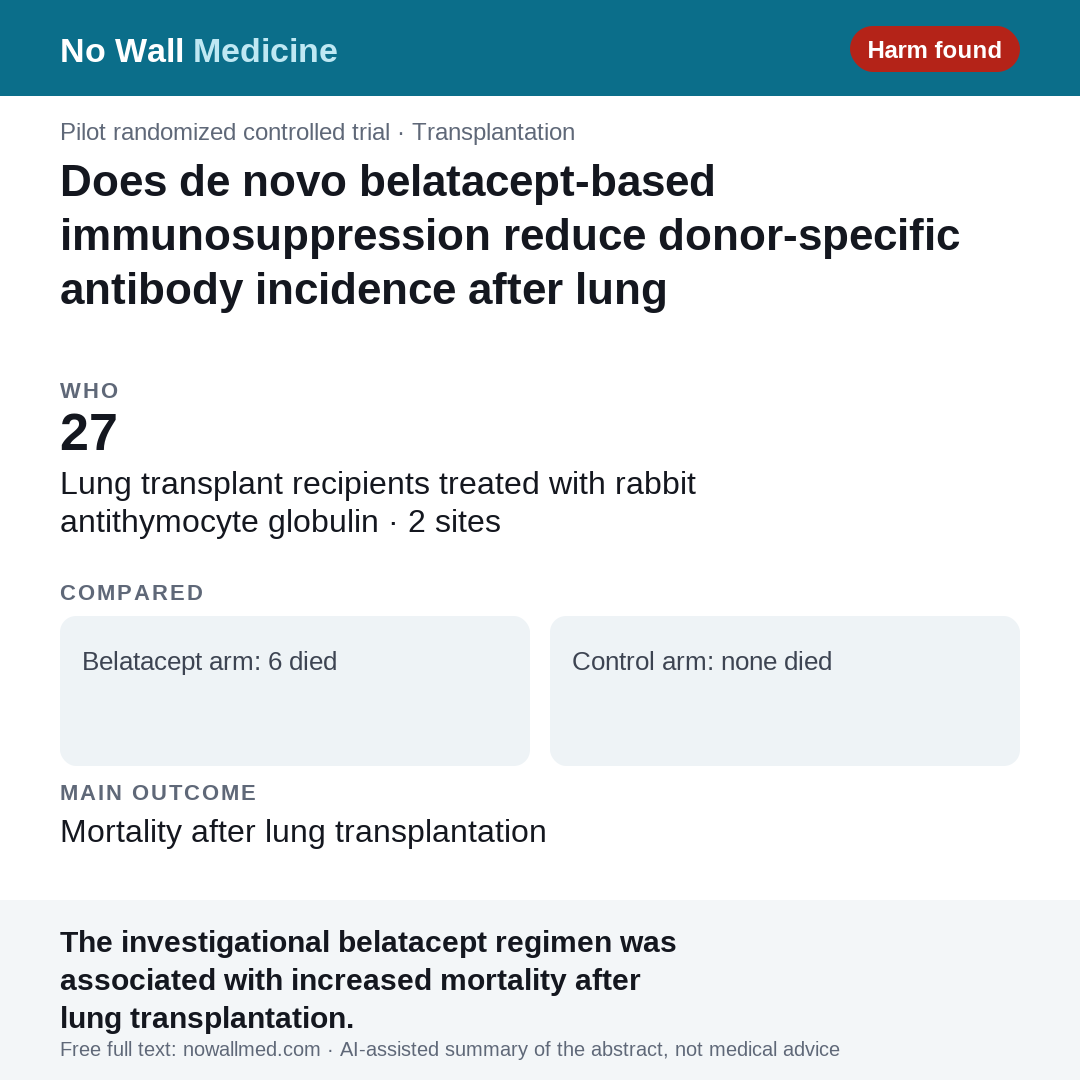
Clinical question: Does de novo belatacept-based immunosuppression reduce donor-specific antibody incidence after lung transplantation?
Why it matters: It was unknown if belatacept could reduce the development of donor-specific antibodies, which is a risk factor for chronic lung allograft dysfunction after lung transplantation.
Key points
- Researchers randomized 27 participants to receive either standard-of-care drugs or a regimen including belatacept, a T-cell costimulatory blocker, which stops certain immune responses.
- The study found that 6 participants in the belatacept arm died compared with none in the control arm (log rank P = 0.008).
- There were no differences observed between the groups regarding donor-specific antibodies, rejection types, chronic lung allograft dysfunction, or infections.
Headline and key points written with AI from the paper’s abstract, with every number checked against it. Read the paper before relying on them.
Was this summary helpful?
Subject terms
Cite this article
Huang HJ, Schechtman K, Askar M, et al. A Pilot Randomized Controlled Trial of De Novo Belatacept-based Immunosuppression After Lung Transplantation. Transplantation. 2024. doi:10.1097/tp.0000000000004841
Spotted a mistake? Suggest a correction