A randomised clinical trial of methotrexate points to possible efficacy and adaptive immune dysfunction in psychosis
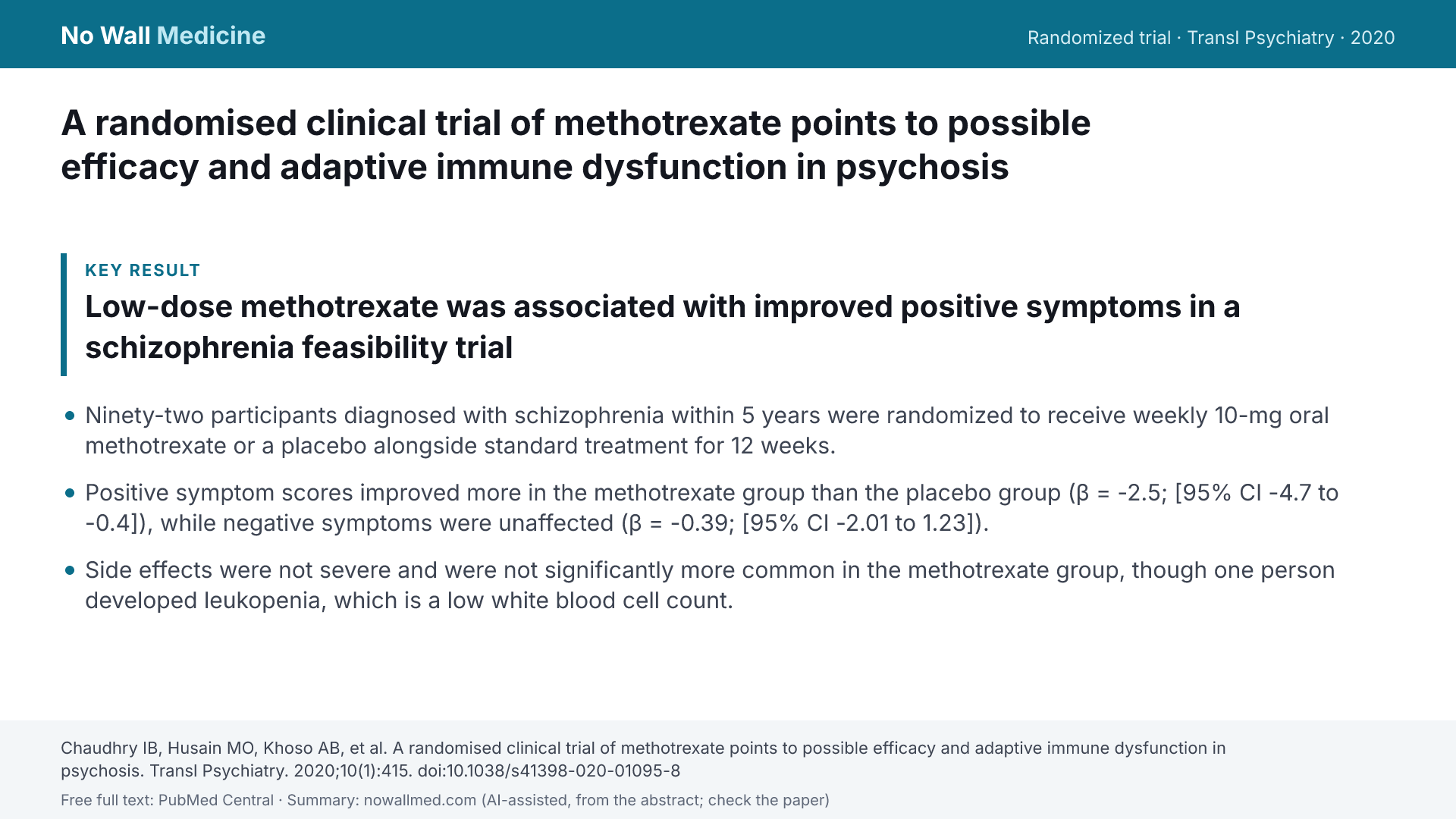
Key result: Low-dose methotrexate was associated with improved positive symptoms in a schizophrenia feasibility trial
Key points
- Ninety-two participants diagnosed with schizophrenia within 5 years were randomized to receive weekly 10-mg oral methotrexate or a placebo alongside standard treatment for 12 weeks.
- Positive symptom scores improved more in the methotrexate group than the placebo group (β = -2.5; [95% CI -4.7 to -0.4]), while negative symptoms were unaffected (β = -0.39; [95% CI -2.01 to 1.23]).
- Side effects were not severe and were not significantly more common in the methotrexate group, though one person developed leukopenia, which is a low white blood cell count.
Discussion prompts
- Would these patients look like yours? Who was left out?
- Is the main outcome one that matters to patients?
- Is the difference large enough to change what you do?
Cite: Chaudhry IB, Husain MO, Khoso AB, et al. A randomised clinical trial of methotrexate points to possible efficacy and adaptive immune dysfunction in psychosis. Transl Psychiatry. 2020;10(1):415. doi:10.1038/s41398-020-01095-8
Free full text: PubMed Central · Summary and visual abstract: nowallmed.com/a/a-randomised-clinical-trial-of-methotrexate-points-to-possible-19sf1un/ (AI-assisted from the abstract; check the paper before relying on it).