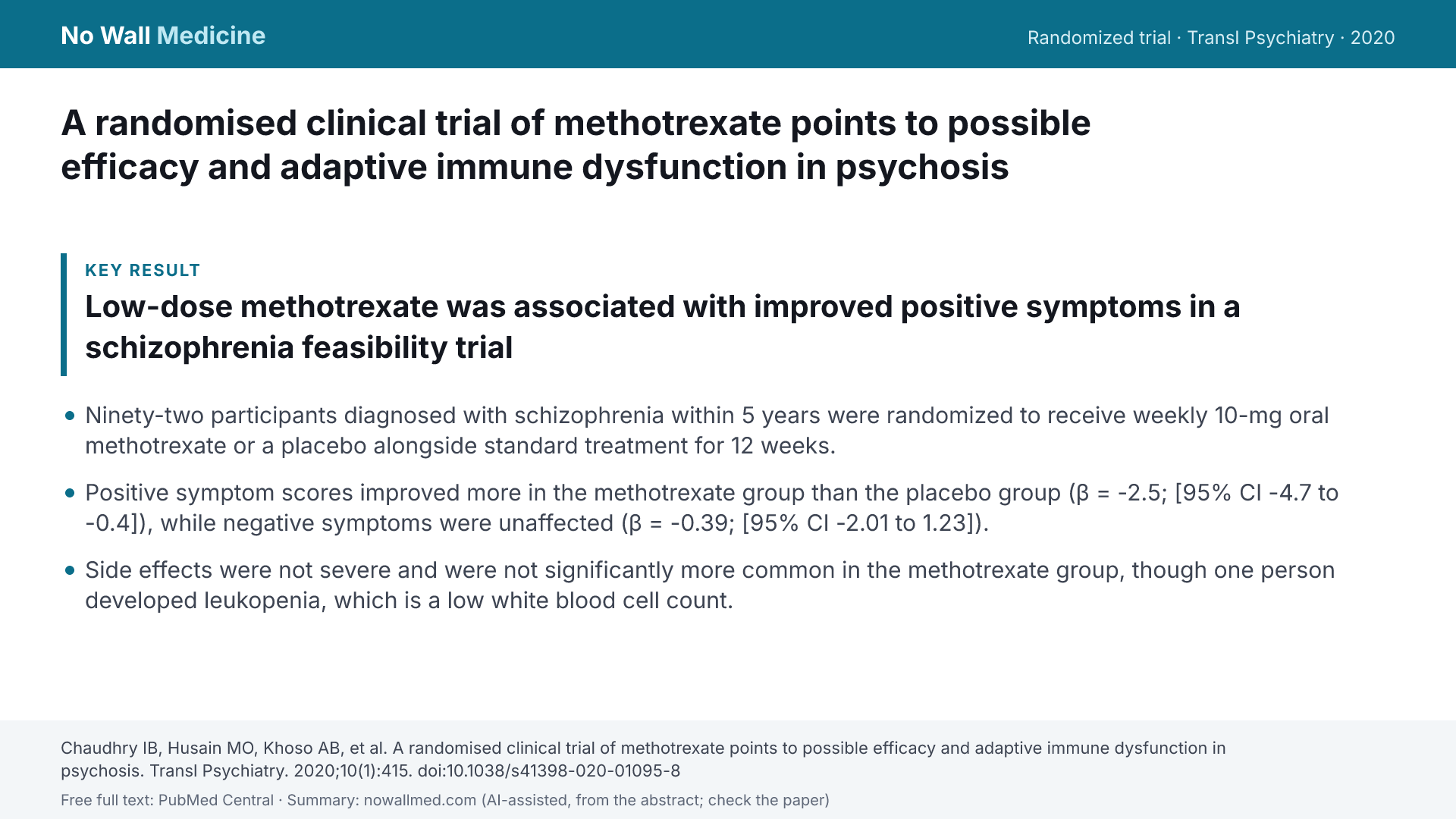
Low-dose methotrexate was associated with improved positive symptoms in a schizophrenia feasibility trial
A randomised clinical trial of methotrexate points to possible efficacy and adaptive immune dysfunction in psychosis
Why it matters: It was unknown if low-dose methotrexate, an immune-suppressing medication, was tolerable and effective for treating people with schizophrenia.
Key points
- Ninety-two participants diagnosed with schizophrenia within 5 years were randomized to receive weekly 10-mg oral methotrexate or a placebo alongside standard treatment for 12 weeks.
- Positive symptom scores improved more in the methotrexate group than the placebo group (β = -2.5; [95% CI -4.7 to -0.4]), while negative symptoms were unaffected (β = -0.39; [95% CI -2.01 to 1.23]).
- Side effects were not severe and were not significantly more common in the methotrexate group, though one person developed leukopenia, which is a low white blood cell count.
Headline and key points written with AI from the paper’s abstract, with every number checked against it. Read the paper before relying on them.
Was this summary helpful?
Subject terms
Cite this article
Chaudhry IB, Husain MO, Khoso AB, et al. A randomised clinical trial of methotrexate points to possible efficacy and adaptive immune dysfunction in psychosis. Transl Psychiatry. 2020. doi:10.1038/s41398-020-01095-8
Spotted a mistake? Suggest a correction