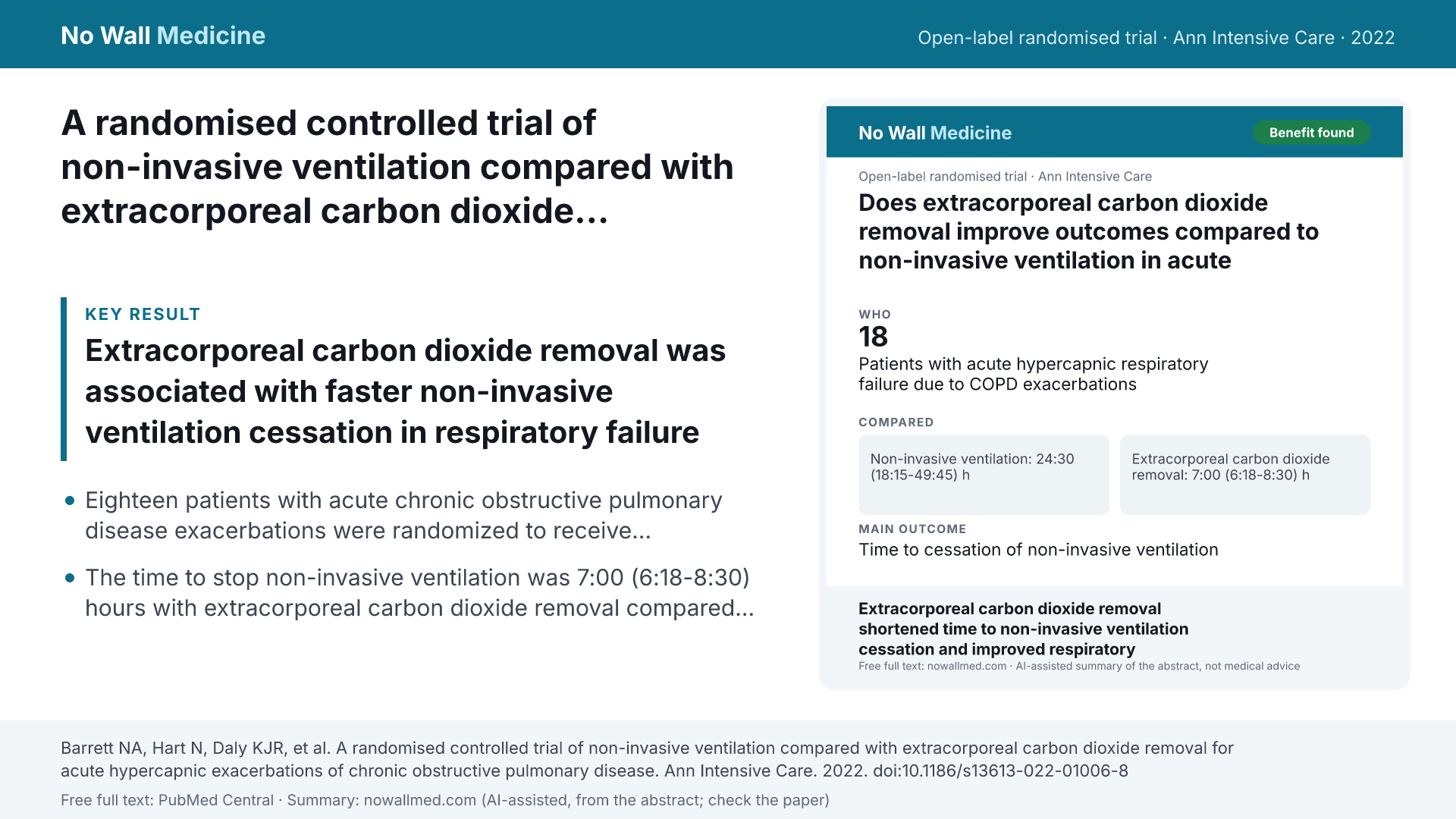
Extracorporeal carbon dioxide removal was associated with faster non-invasive ventilation cessation in respiratory failure
A randomised controlled trial of non-invasive ventilation compared with extracorporeal carbon dioxide removal for acute hypercapnic exacerbations of chronic obstructive pulmonary disease
Open-label randomised trialBenefit found
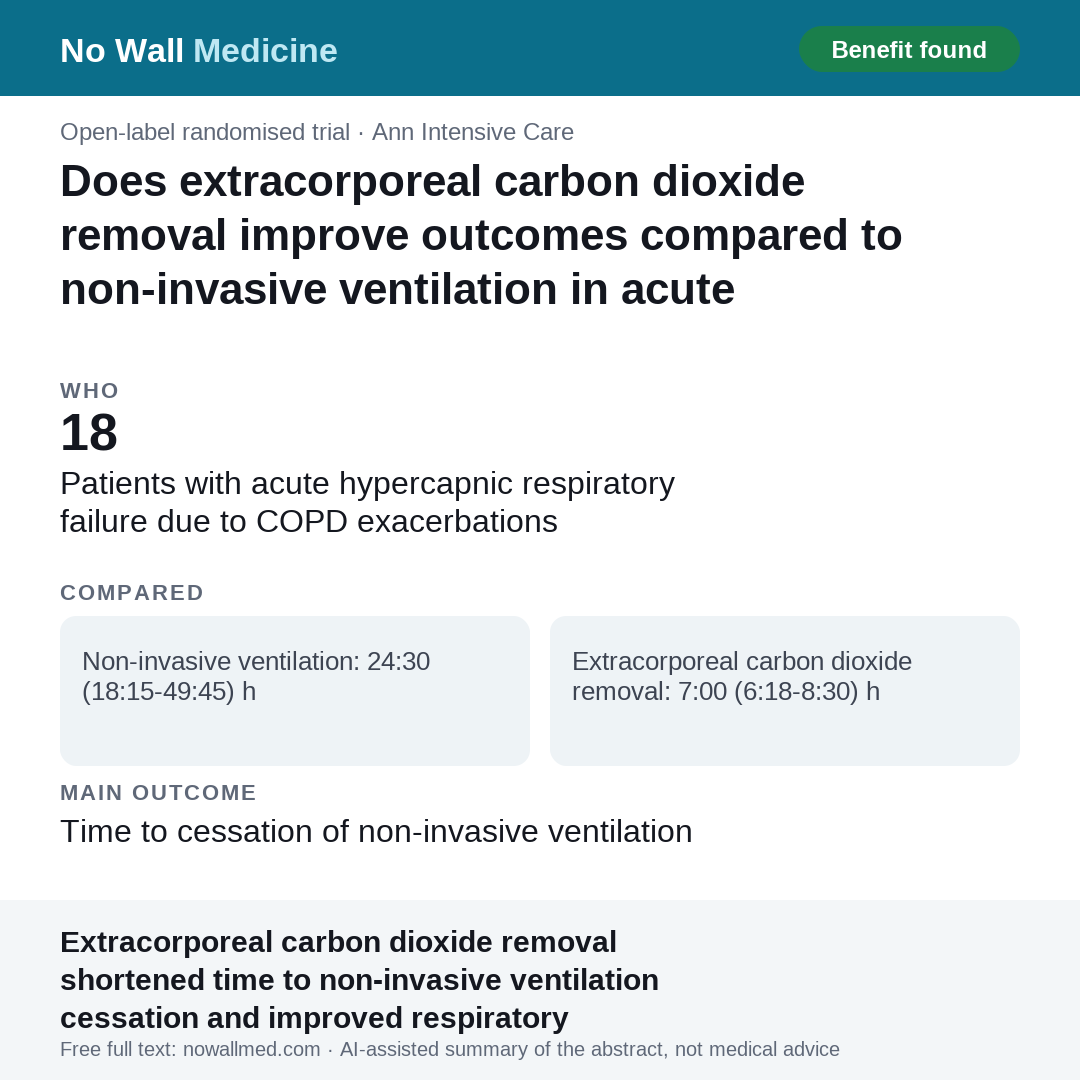
Does extracorporeal carbon dioxide removal improve outcomes compared to non-invasive ventilation in acute hypercapnic COPD exacerbations?
Who
18
Patients with acute hypercapnic respiratory failure due to COPD exacerbations
Compared
Non-invasive ventilation: 24:30 (18:15-49:45) h
Extracorporeal carbon dioxide removal: 7:00 (6:18-8:30) h
Main outcome
Time to cessation of non-invasive ventilation
Bottom line: Extracorporeal carbon dioxide removal shortened time to non-invasive ventilation cessation and improved respiratory physiology compared to non-invasive ventilation alone.
Limitation: Intensive care unit and hospital length of stay were longer with extracorporeal carbon dioxide removal.
Ann Intensive Care · 2022-04-21Download image
Clinical question: Does extracorporeal carbon dioxide removal improve outcomes compared to non-invasive ventilation in acute hypercapnic COPD exacerbations?
Why it matters: The impact of low-flow extracorporeal carbon dioxide removal on outcomes for patients at high risk of failing non-invasive ventilation has not been explored in randomized trials.
Key points
- Eighteen patients with acute chronic obstructive pulmonary disease exacerbations were randomized to receive either non-invasive ventilation or extracorporeal carbon dioxide removal.
- The time to stop non-invasive ventilation was 7:00 (6:18-8:30) hours with extracorporeal carbon dioxide removal compared to 24:30 (18:15-49:45) hours with non-invasive ventilation alone.
- Extracorporeal carbon dioxide removal was associated with higher arterial pH and lower carbon dioxide levels at 4 hours, though hospital stays were longer.
Headline and key points written with AI from the paper’s abstract, with every number checked against it. Read the paper before relying on them.
Was this summary helpful?
Cite this article
Barrett NA, Hart N, Daly KJR, et al. A randomised controlled trial of non-invasive ventilation compared with extracorporeal carbon dioxide removal for acute hypercapnic exacerbations of chronic obstructive pulmonary disease. Ann Intensive Care. 2022. doi:10.1186/s13613-022-01006-8
Spotted a mistake? Suggest a correction