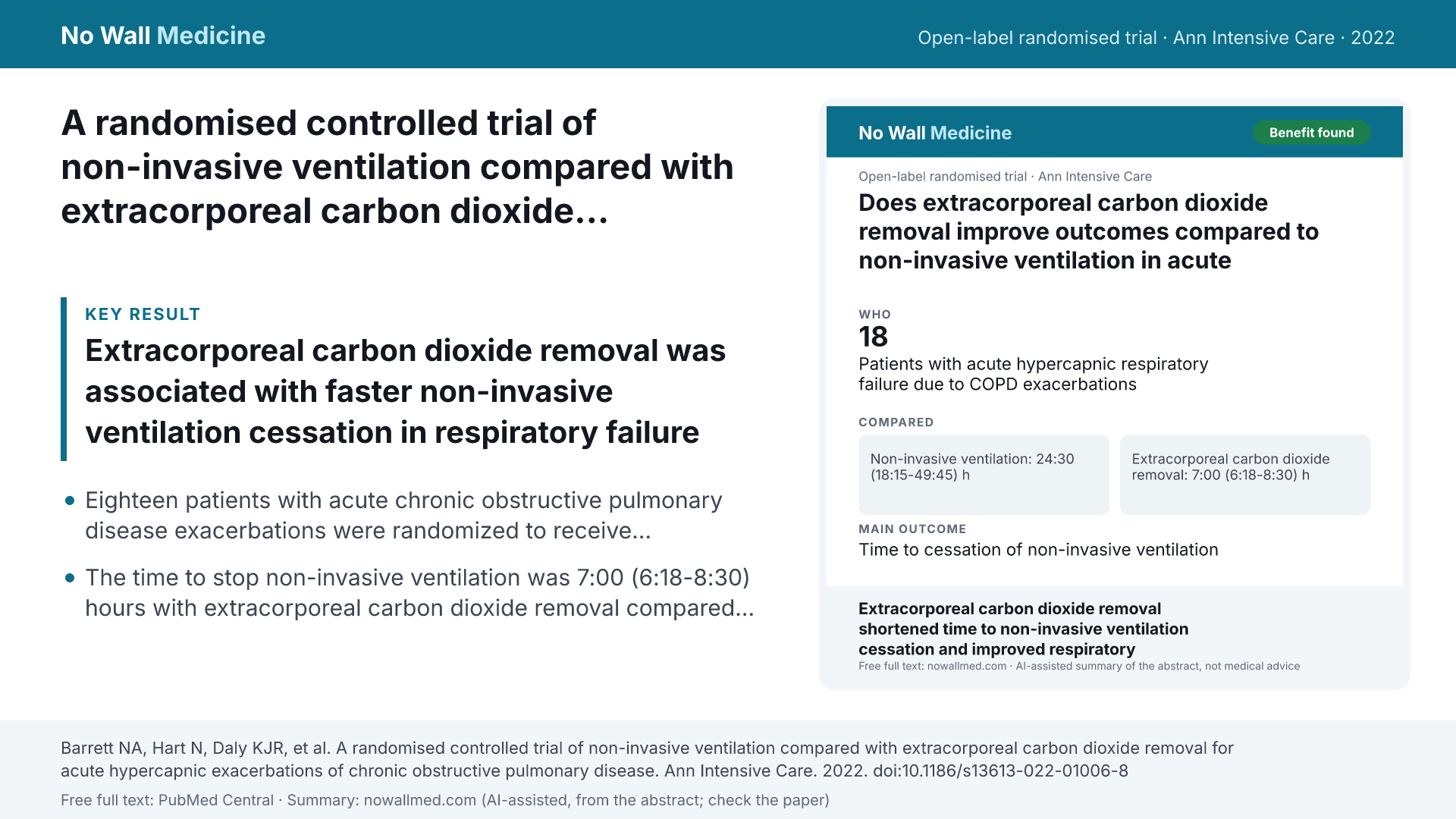
A randomised controlled trial of non-invasive ventilation compared with extracorporeal carbon dioxide removal for acute hypercapnic exacerbations of chronic obstructive pulmonary disease
Key result: Extracorporeal carbon dioxide removal was associated with faster non-invasive ventilation cessation in respiratory failure
Key points
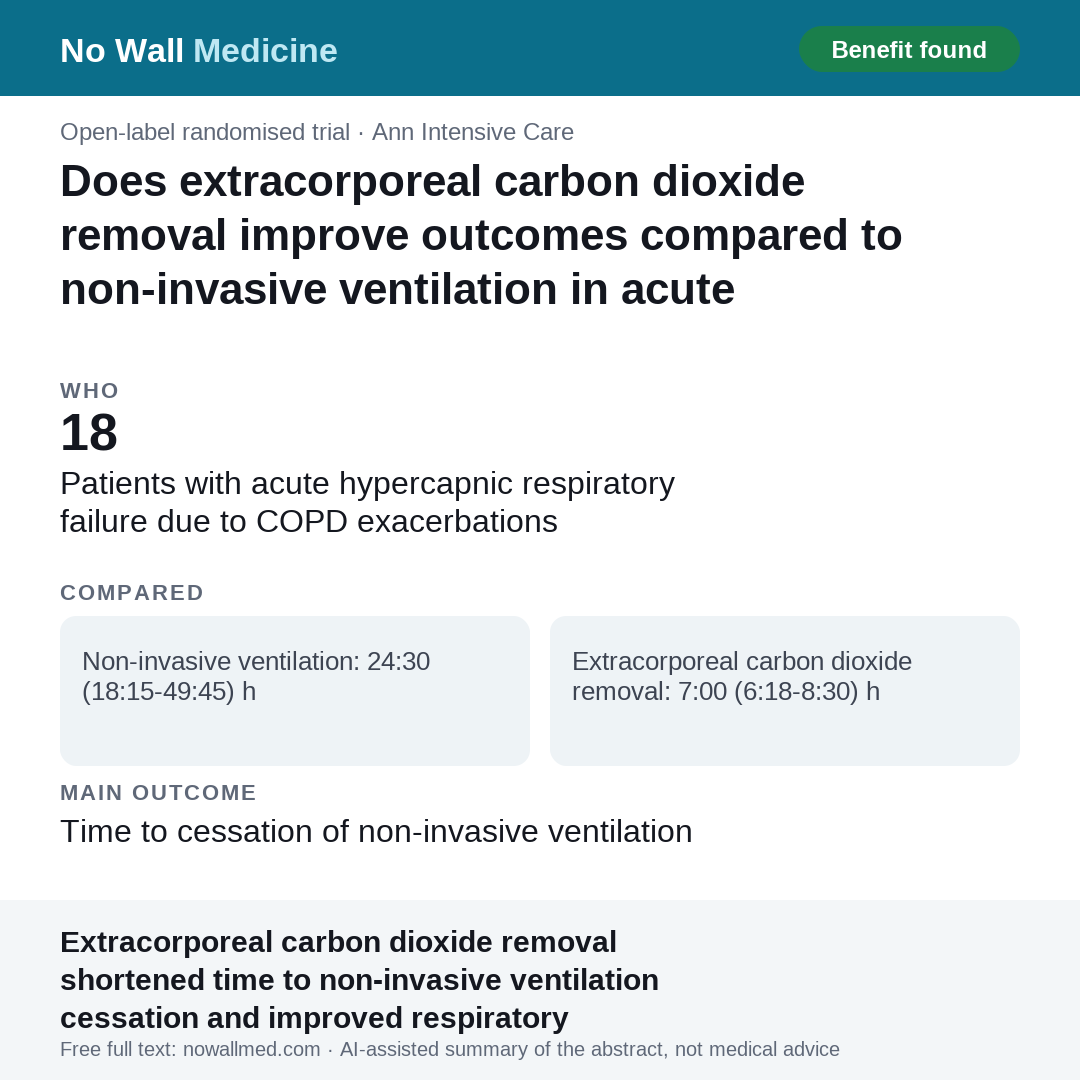
- Eighteen patients with acute chronic obstructive pulmonary disease exacerbations were randomized to receive either non-invasive ventilation or extracorporeal carbon dioxide removal.
- The time to stop non-invasive ventilation was 7:00 (6:18-8:30) hours with extracorporeal carbon dioxide removal compared to 24:30 (18:15-49:45) hours with non-invasive ventilation alone.
- Extracorporeal carbon dioxide removal was associated with higher arterial pH and lower carbon dioxide levels at 4 hours, though hospital stays were longer.
Why it matters: The impact of low-flow extracorporeal carbon dioxide removal on outcomes for patients at high risk of failing non-invasive ventilation has not been explored in randomized trials.
Discussion prompts
- Would these patients look like yours? Who was left out?
- Is the main outcome one that matters to patients?
- Is the difference large enough to change what you do?
Cite: Barrett NA, Hart N, Daly KJR, et al. A randomised controlled trial of non-invasive ventilation compared with extracorporeal carbon dioxide removal for acute hypercapnic exacerbations of chronic obstructive pulmonary disease. Ann Intensive Care. 2022. doi:10.1186/s13613-022-01006-8
Free full text: PubMed Central · Summary and visual abstract: nowallmed.com/a/a-randomised-controlled-trial-of-non-invasive-ventilation-compared-171v10s/ (AI-assisted from the abstract; check the paper before relying on it).