Inhaled insulin resulted in smaller glucose spikes after meals than rapid-acting insulin in adults
A Randomized Comparison of Postprandial Glucose Excursion Using Inhaled Insulin Versus Rapid-Acting Analog Insulin in Adults With Type 1 Diabetes Using Multiple Daily Injections of Insulin or Automated Insulin Delivery
Randomized trialBenefit found
Does inhaled technosphere insulin reduce postprandial glucose excursions compared to rapid-acting analog insulin?
Who
122
Adults with type 1 diabetes using multiple daily injections or automated insulin delivery
Compared
Inhaled technosphere insulin: smaller glucose excursion
Rapid-acting analog insulin
Main outcome
Area under the curve for glucose greater than 180 mg/dL over 2 hours
Result: adjusted difference -12 mg/dL (95% CI -22 to -2)
Bottom line: Inhaled technosphere insulin resulted in smaller postmeal glucose excursions compared to rapid-acting analog insulin.
Diabetes Care · 2024-07-23Download image
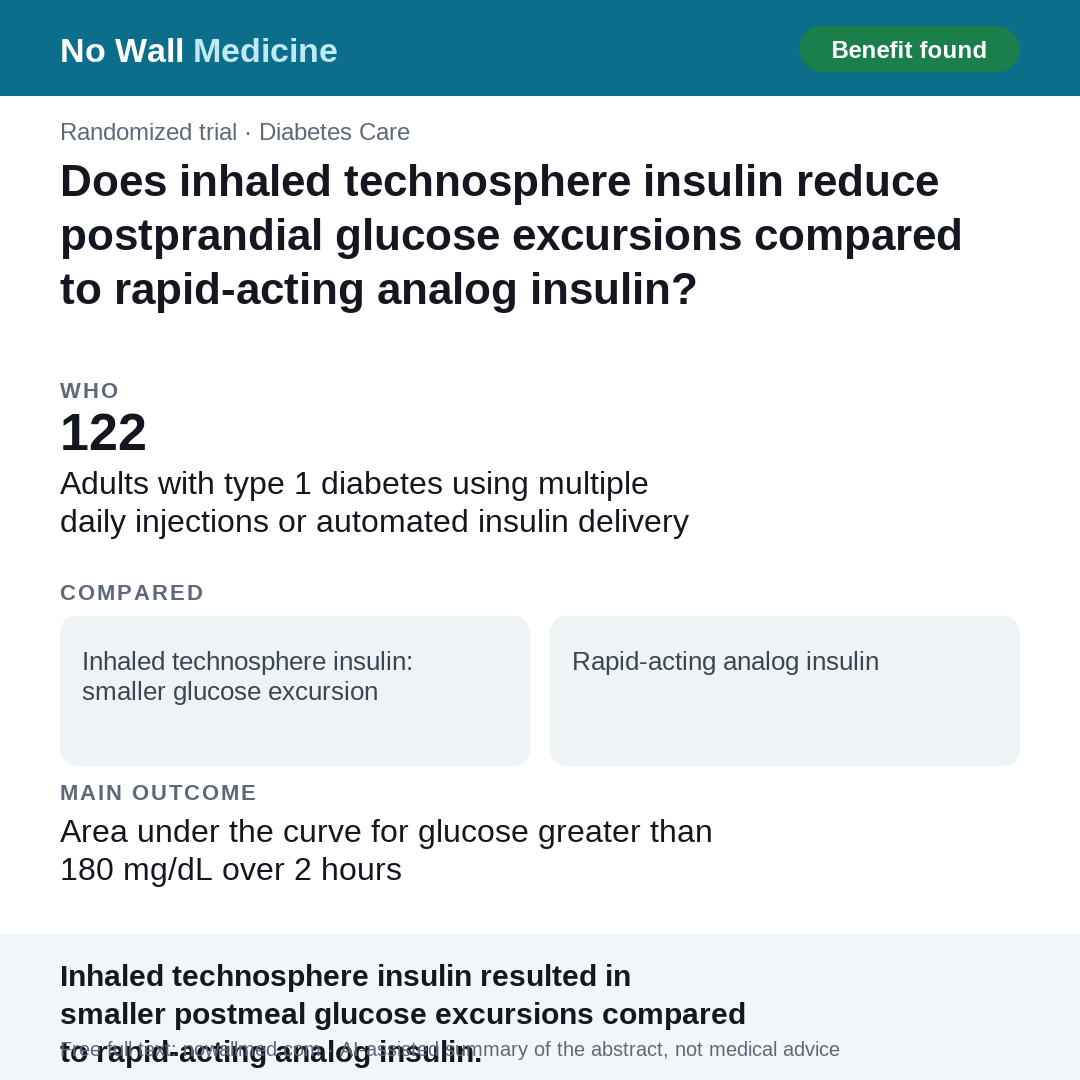
Clinical question: Does inhaled technosphere insulin reduce postprandial glucose excursions compared to rapid-acting analog insulin?
Why it matters: It was unknown how inhaled technosphere insulin compares to subcutaneous rapid-acting analog insulin regarding glucose spikes after meals in people using various insulin delivery methods.
Key points
- The study randomized 122 adults with type 1 diabetes using multiple daily injections or automated insulin delivery to receive either inhaled technosphere insulin or rapid-acting analog insulin.
- Inhaled insulin was associated with an adjusted difference of -12 mg/dL in the area under the curve for glucose levels above 180 mg/dL over 2 hours.
- Participants using inhaled insulin had smaller glucose excursions, lower peak glucose, and a shorter time to reach peak glucose compared to those using rapid-acting insulin.
Headline and key points written with AI from the paper’s abstract, with every number checked against it. Read the paper before relying on them.
Topics
Cite this article
Hirsch IB, Beck RW, Marak MC, Calhoun P, Mottalib A, Salhin A. A Randomized Comparison of Postprandial Glucose Excursion Using Inhaled Insulin Versus Rapid-Acting Analog Insulin in Adults With Type 1 Diabetes Using Multiple Daily Injections of Insulin or Automated Insulin Delivery. Diabetes Care. 2024. doi:10.2337/dc24-0838
Spotted a mistake? Suggest a correction
Top studies every Monday
The week’s key trials and guidelines in your specialties, by email. Free.
Get the weekly digest