Crowdsourced social media materials were associated with increased hepatitis B and C testing rates
A randomized controlled trial enhancing viral hepatitis testing in primary care via digital crowdsourced intervention
Randomized controlled trialBenefit found
Can digitally crowdsourced materials promote hepatitis B and C testing in primary care?
Who
750
Chinese primary care patients · China
Compared
Digitally crowdsourced materials
Facility-based care
Main outcome
Hepatitis B and hepatitis C testing uptake
Result: aOR 1.79 (95% CI 1.09-3.00) for HBV and aOR 1.95 (95% CI 1.29-2.99) for HCV
Bottom line: Digitally crowdsourced promotion messages could enhance hepatitis testing uptake and reduce hepatitis stigma.
NPJ Digit Med · 2022-07-19Download image
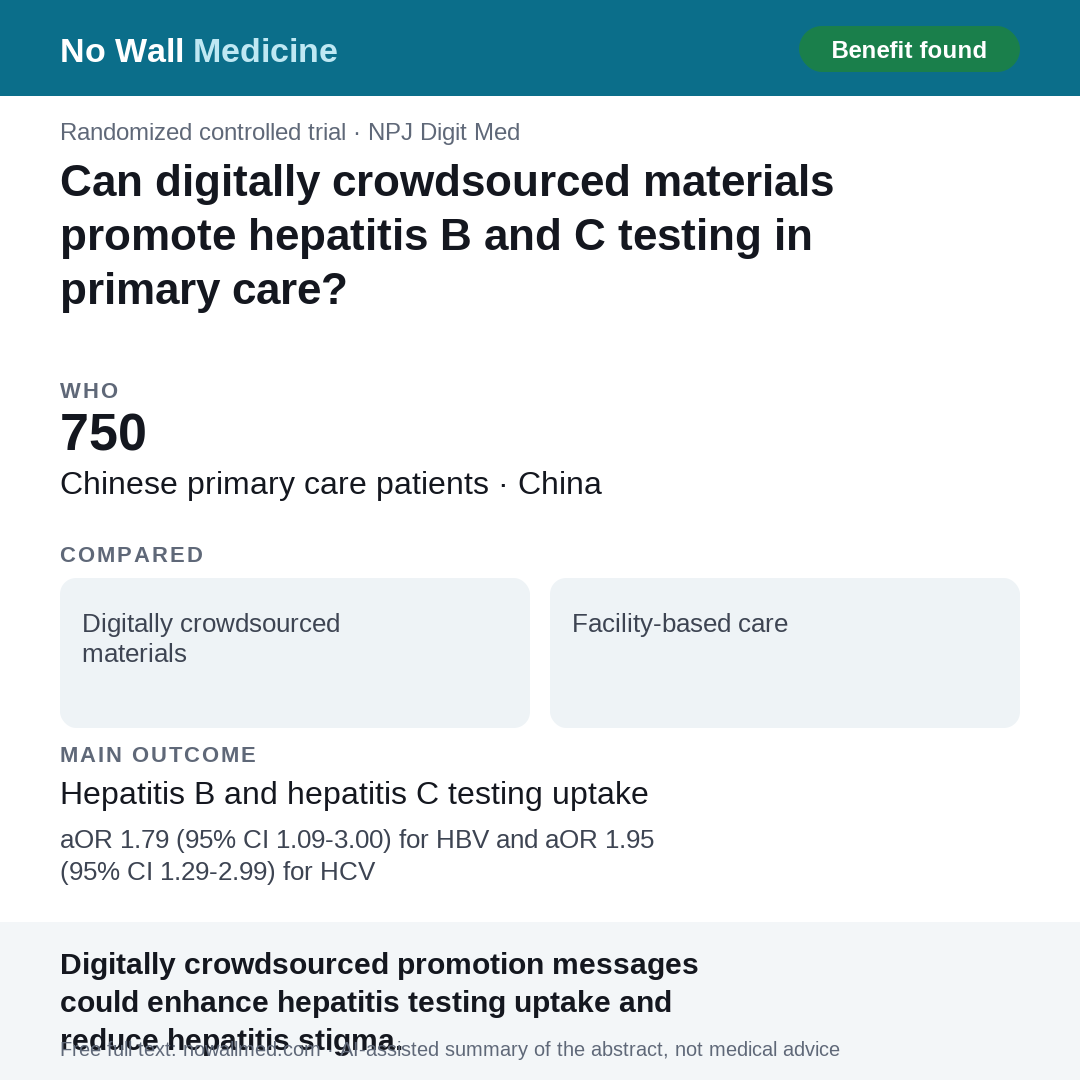
Clinical question: Can digitally crowdsourced materials promote hepatitis B and C testing in primary care?
Why it matters: Hepatitis B and hepatitis C testing rates remain low in Chinese primary care settings despite the availability of tests.
Key points
- Researchers conducted a randomized controlled trial with 750 Chinese primary care patients to compare social media promotion against standard facility-based care.
- Exposure to crowdsourced materials was associated with increased odds of hepatitis B testing (aOR = 1.79, 95% CI: 1.09-3.00) and hepatitis C testing (aOR = 1.95, 95% CI: 1.29-2.99).
- The intervention group also showed a significant reduction in hepatitis stigma (HBV slope: -0.15, p < 0.05; and HCV slope: -0.13, p < 0.05).
Headline and key points written with AI from the paper’s abstract, with every number checked against it. Read the paper before relying on them.
Was this summary helpful?
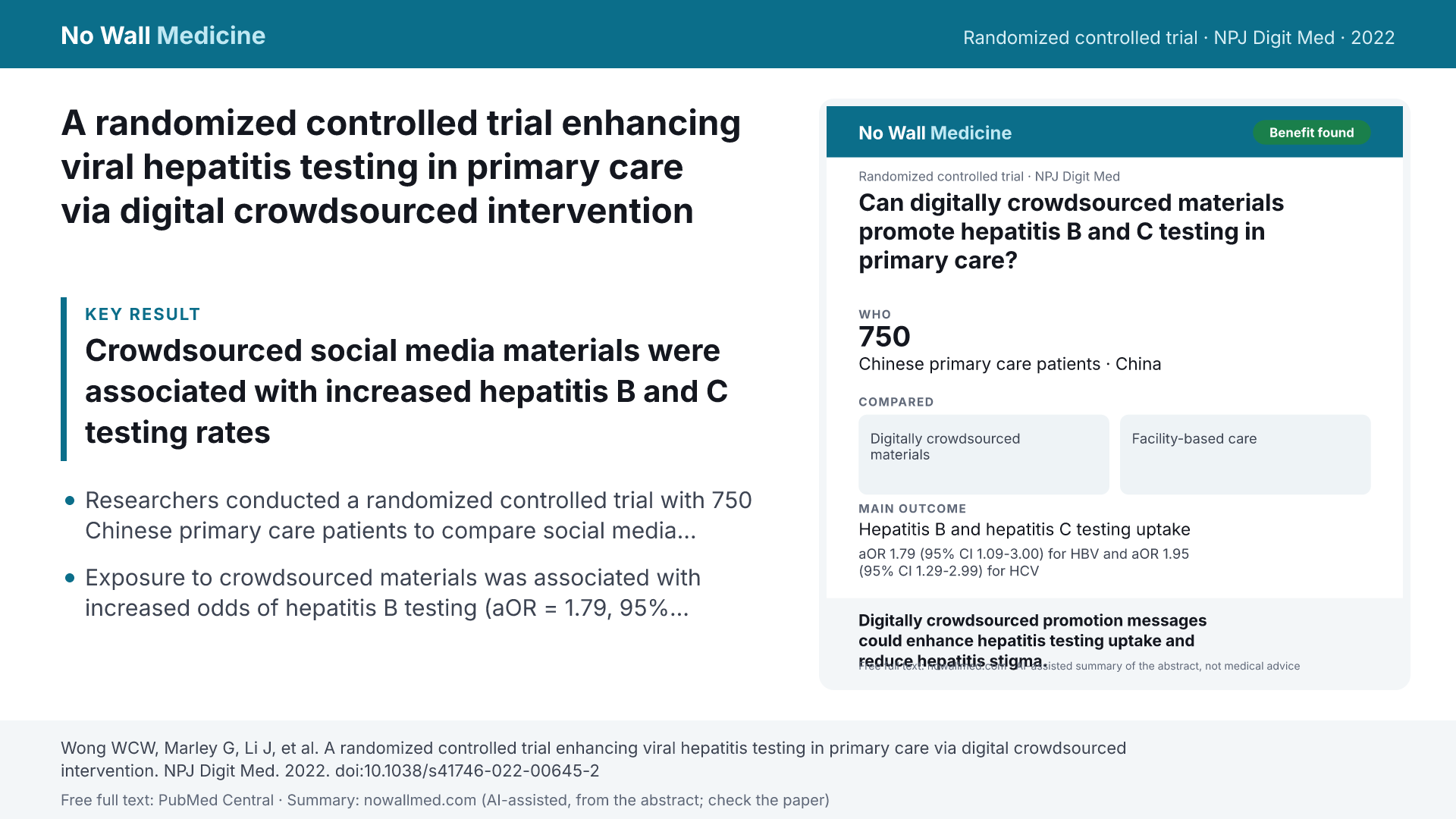
Headline, design, result, key points, caveat and citation as plain text.
Cite this article
Wong WCW, Marley G, Li J, et al. A randomized controlled trial enhancing viral hepatitis testing in primary care via digital crowdsourced intervention. NPJ Digit Med. 2022. doi:10.1038/s41746-022-00645-2
Spotted a mistake? Suggest a correction