A randomized controlled trial enhancing viral hepatitis testing in primary care via digital crowdsourced intervention
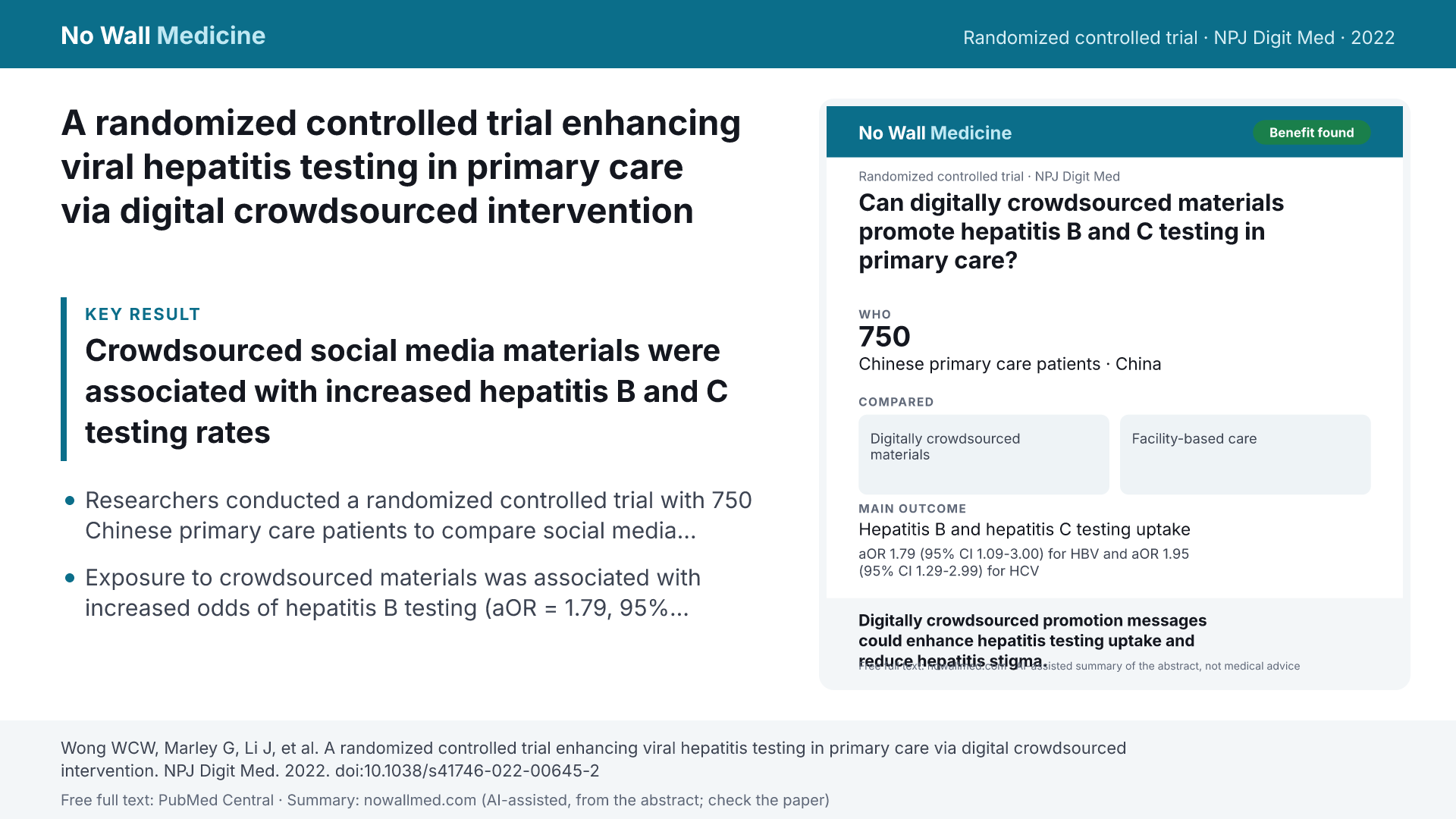
Key result: Crowdsourced social media materials were associated with increased hepatitis B and C testing rates
Randomized controlled trialBenefit found
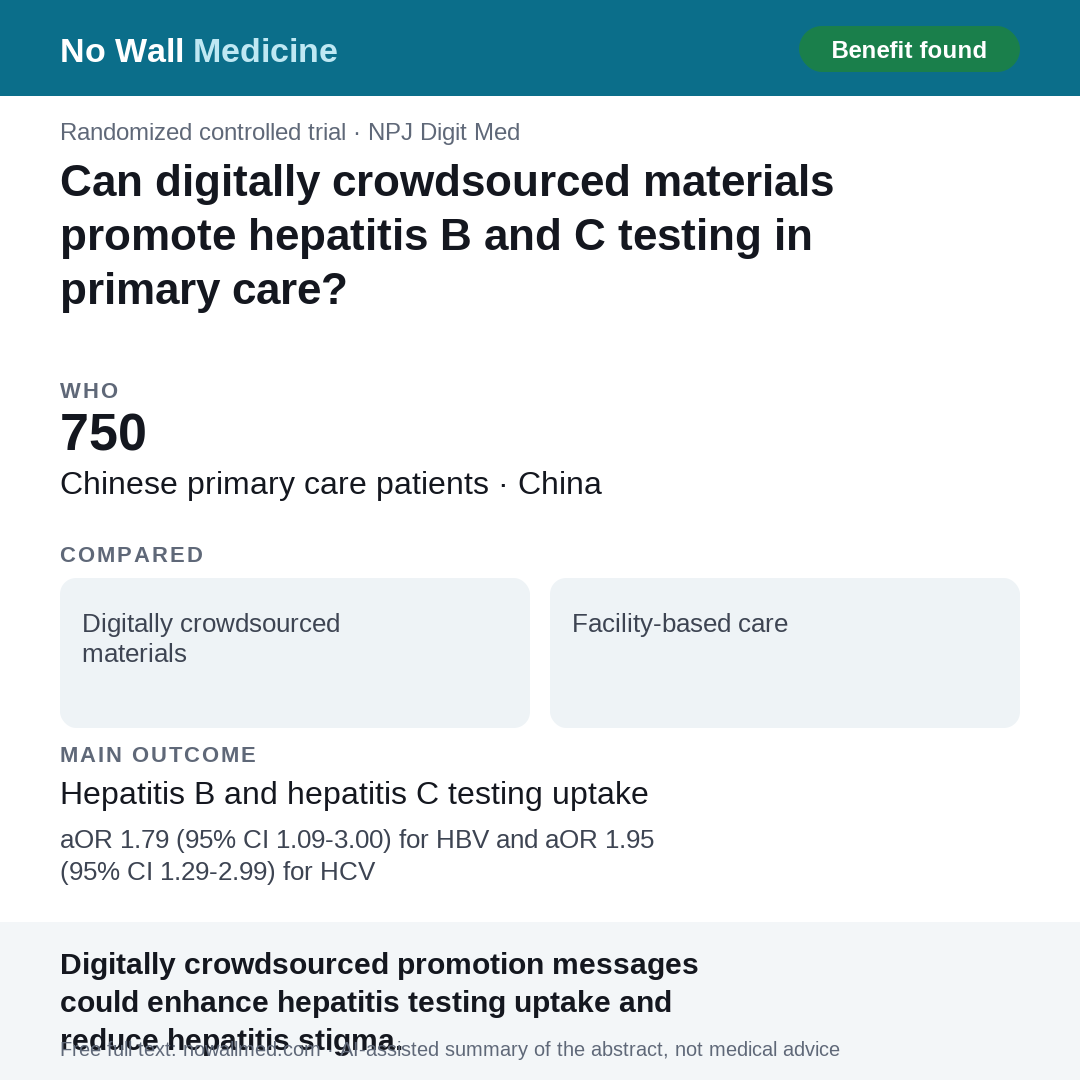
Can digitally crowdsourced materials promote hepatitis B and C testing in primary care?
Who
750
Chinese primary care patients · China
Compared
Digitally crowdsourced materials
Facility-based care
Main outcome
Hepatitis B and hepatitis C testing uptake
Result: aOR 1.79 (95% CI 1.09-3.00) for HBV and aOR 1.95 (95% CI 1.29-2.99) for HCV
Bottom line: Digitally crowdsourced promotion messages could enhance hepatitis testing uptake and reduce hepatitis stigma.
NPJ Digit Med · 2022-07-19Download image
Key points
- Researchers conducted a randomized controlled trial with 750 Chinese primary care patients to compare social media promotion against standard facility-based care.
- Exposure to crowdsourced materials was associated with increased odds of hepatitis B testing (aOR = 1.79, 95% CI: 1.09-3.00) and hepatitis C testing (aOR = 1.95, 95% CI: 1.29-2.99).
- The intervention group also showed a significant reduction in hepatitis stigma (HBV slope: -0.15, p < 0.05; and HCV slope: -0.13, p < 0.05).
Why it matters: Hepatitis B and hepatitis C testing rates remain low in Chinese primary care settings despite the availability of tests.
Discussion prompts
- Would these patients look like yours? Who was left out?
- Is the main outcome one that matters to patients?
- Is the difference large enough to change what you do?
Cite: Wong WCW, Marley G, Li J, et al. A randomized controlled trial enhancing viral hepatitis testing in primary care via digital crowdsourced intervention. NPJ Digit Med. 2022. doi:10.1038/s41746-022-00645-2
Free full text: PubMed Central · Summary and visual abstract: nowallmed.com/a/a-randomized-controlled-trial-enhancing-viral-hepatitis-testing-in-1w4yrum/ (AI-assisted from the abstract; check the paper before relying on it).