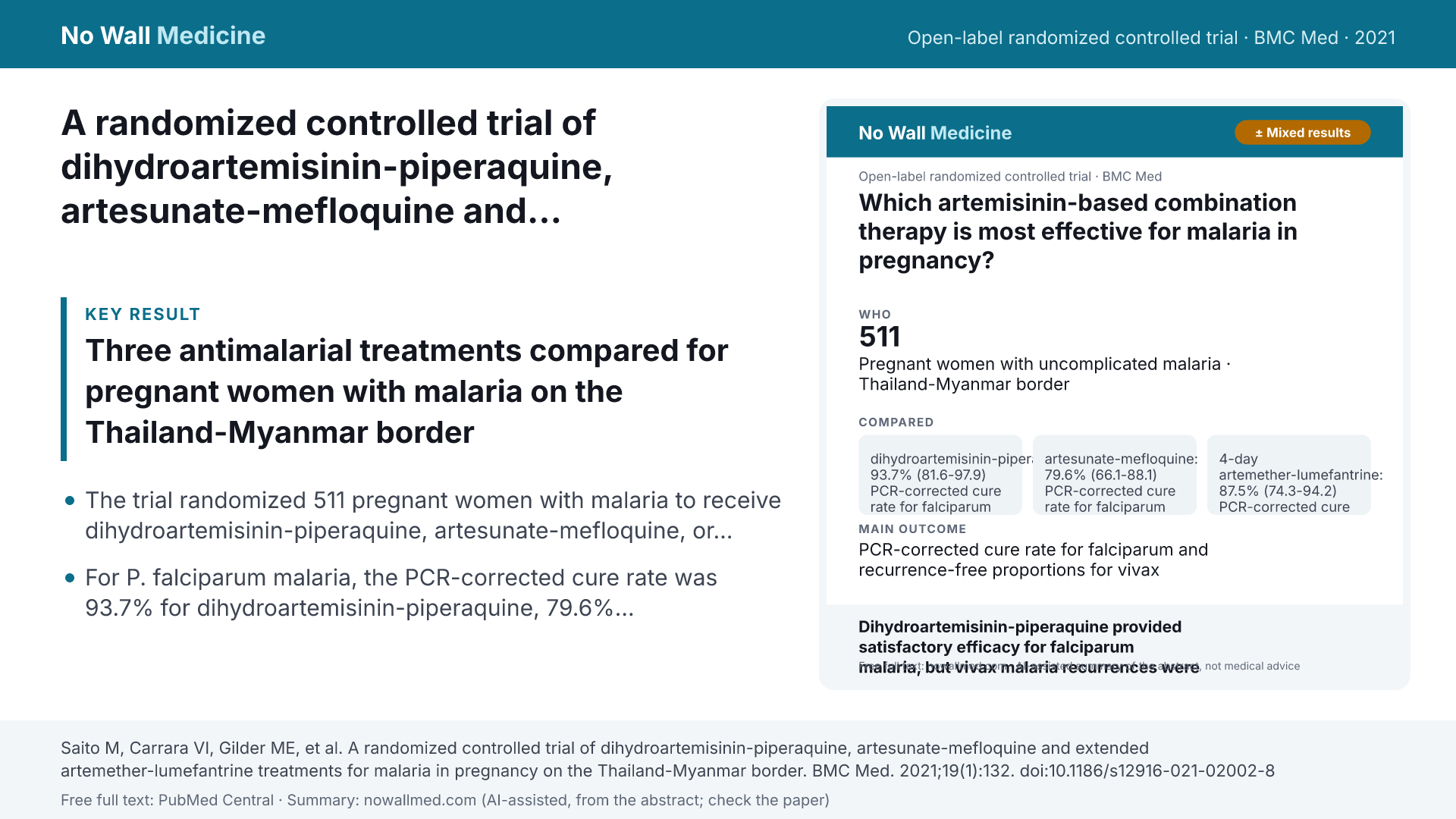
Three antimalarial treatments compared for pregnant women with malaria on the Thailand-Myanmar border
A randomized controlled trial of dihydroartemisinin-piperaquine, artesunate-mefloquine and extended artemether-lumefantrine treatments for malaria in pregnancy on the Thailand-Myanmar border
Open-label randomized controlled trialMixed results
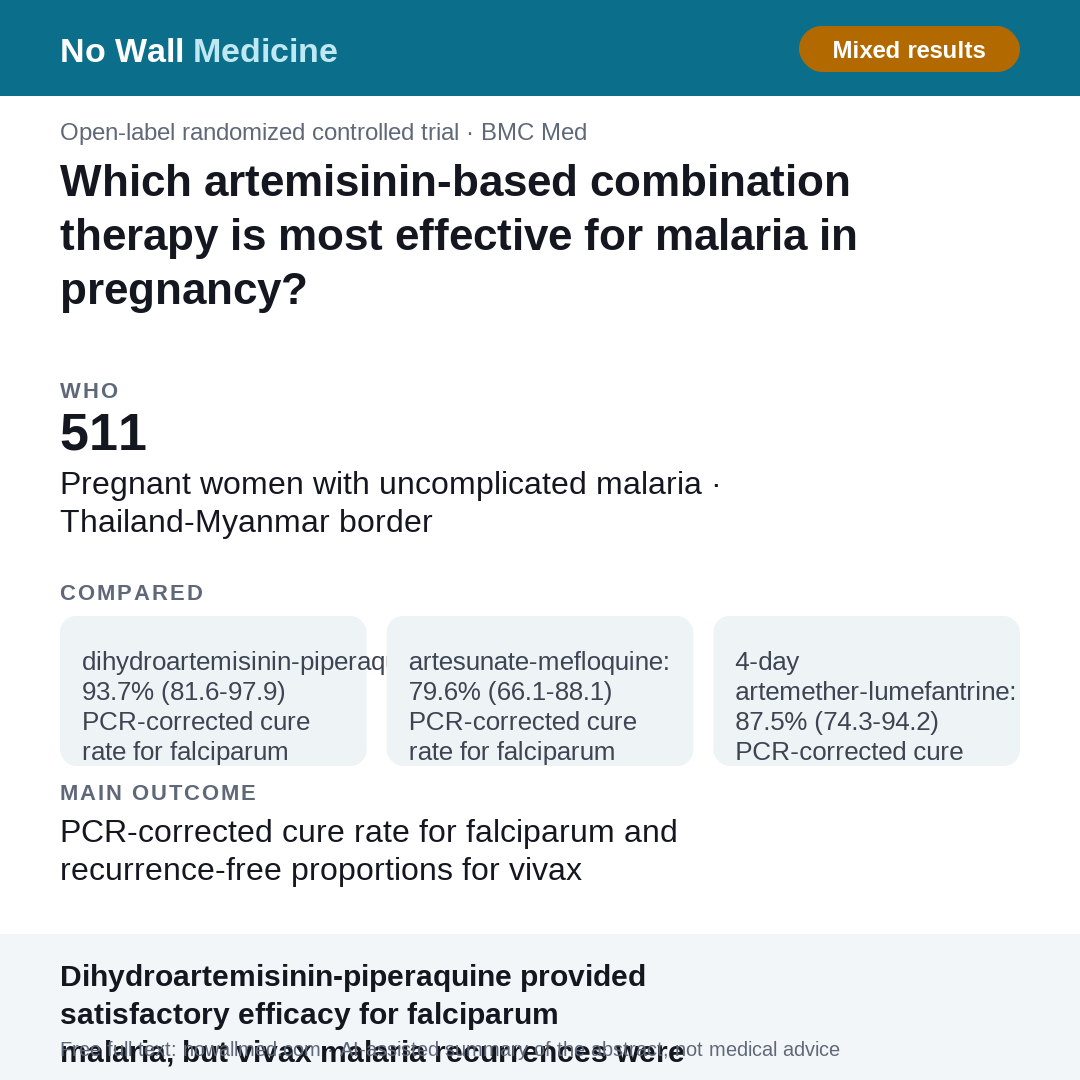
Which artemisinin-based combination therapy is most effective for malaria in pregnancy?
Who
511
Pregnant women with uncomplicated malaria · Thailand-Myanmar border
Compared
dihydroartemisinin-piperaquine: 93.7% (81.6-97.9) PCR-corrected cure rate for falciparum
artesunate-mefloquine: 79.6% (66.1-88.1) PCR-corrected cure rate for falciparum
4-day artemether-lumefantrine: 87.5% (74.3-94.2) PCR-corrected cure rate for falciparum
Main outcome
PCR-corrected cure rate for falciparum and recurrence-free proportions for vivax
Bottom line: Dihydroartemisinin-piperaquine provided satisfactory efficacy for falciparum malaria, but vivax malaria recurrences were very common across all treatments.
BMC Med · 2021-06-10Download image
Clinical question: Which artemisinin-based combination therapy is most effective for malaria in pregnancy?
Why it matters: The current 3-day artemether-lumefantrine regimen is associated with high treatment failure rates in pregnant women and clinical trials for P. vivax malaria in pregnancy are lacking.
Key points
- The trial randomized 511 pregnant women with malaria to receive dihydroartemisinin-piperaquine, artesunate-mefloquine, or a 4-day artemether-lumefantrine regimen.
- For P. falciparum malaria, the PCR-corrected cure rate was 93.7% for dihydroartemisinin-piperaquine, 79.6% for artesunate-mefloquine, and 87.5% for the 4-day artemether-lumefantrine regimen.
- For P. vivax malaria, recurrence-free proportions were 20.6% for dihydroartemisinin-piperaquine, 46.0% for artesunate-mefloquine, and 28.7% for the 4-day artemether-lumefantrine regimen.
Limitation the authors note: Successful malaria elimination efforts in the region resulted in premature termination of the trial.
Headline and key points written with AI from the paper’s abstract, with every number checked against it. Read the paper before relying on them.
Was this summary helpful?
Subject terms
Cite this article
Saito M, Carrara VI, Gilder ME, et al. A randomized controlled trial of dihydroartemisinin-piperaquine, artesunate-mefloquine and extended artemether-lumefantrine treatments for malaria in pregnancy on the Thailand-Myanmar border. BMC Med. 2021. doi:10.1186/s12916-021-02002-8
Spotted a mistake? Suggest a correction