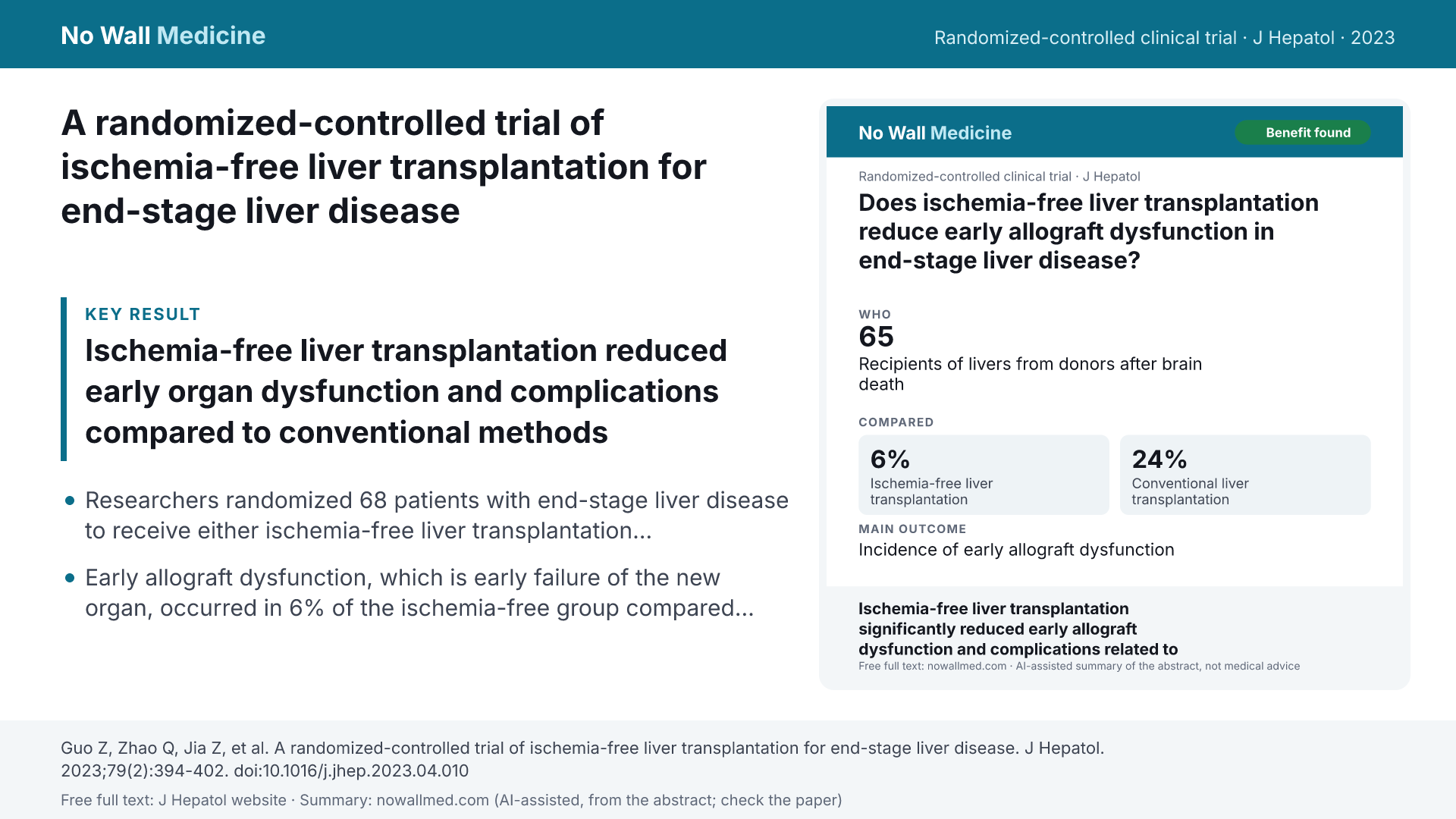
Ischemia-free liver transplantation reduced early organ dysfunction and complications compared to conventional methods
A randomized-controlled trial of ischemia-free liver transplantation for end-stage liver disease
Randomized-controlled clinical trialBenefit found
Does ischemia-free liver transplantation reduce early allograft dysfunction in end-stage liver disease?
Who
65
Recipients of livers from donors after brain death
Compared
6%Ischemia-free liver transplantation
24%Conventional liver transplantation
Main outcome
Incidence of early allograft dysfunction
Result: difference -18% (95% CI -35% to -1%)
Bottom line: Ischemia-free liver transplantation significantly reduced early allograft dysfunction and complications related to ischemia-reperfusion injury.
J Hepatol · 2023-04-20Download image
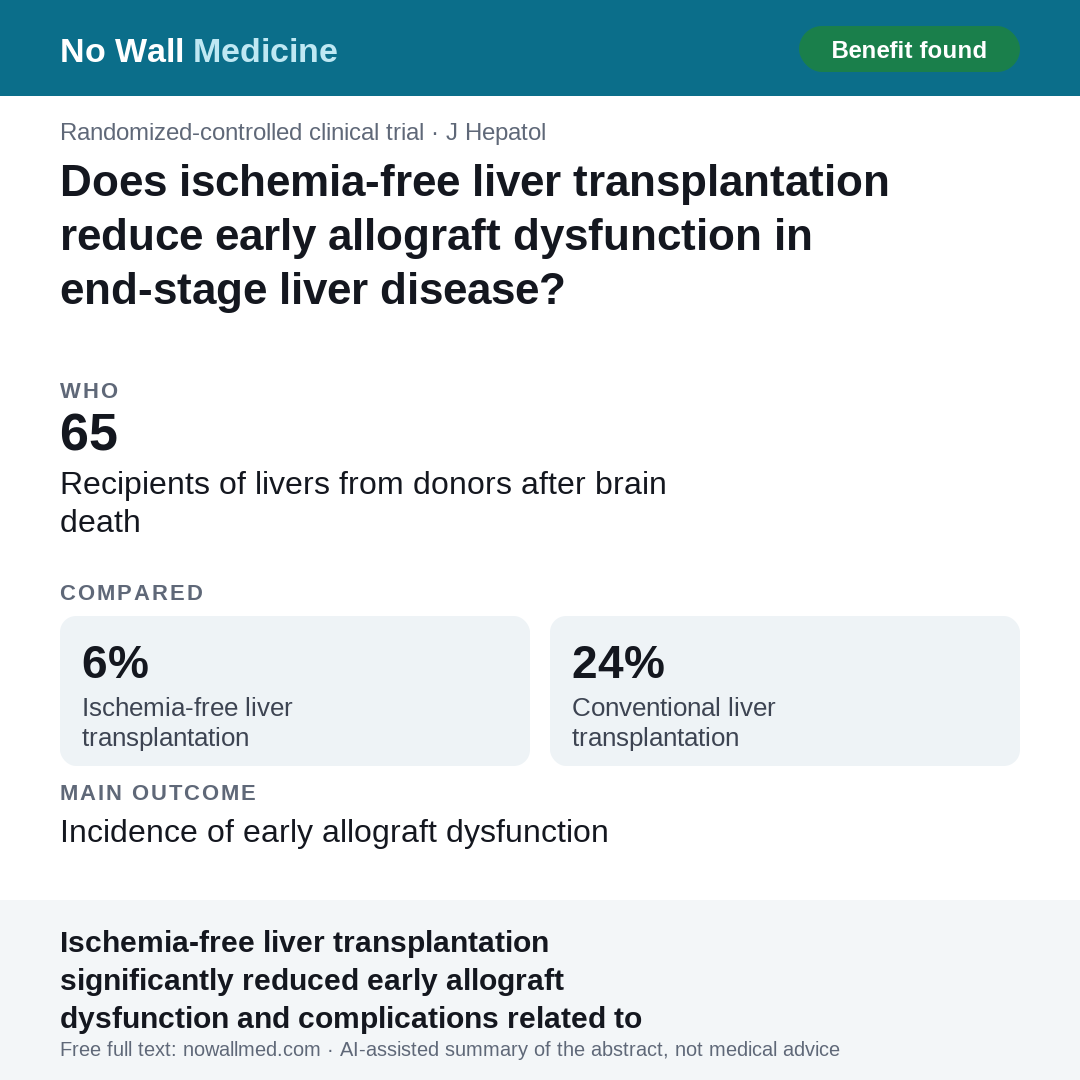
Clinical question: Does ischemia-free liver transplantation reduce early allograft dysfunction in end-stage liver disease?
Why it matters: Ischemia-reperfusion injury, which is damage caused when blood supply returns to an organ, has been considered an inevitable part of organ transplantation.
Key points
- Researchers randomized 68 patients with end-stage liver disease to receive either ischemia-free liver transplantation or conventional liver transplantation.
- Early allograft dysfunction, which is early failure of the new organ, occurred in 6% of the ischemia-free group compared to 24% in the conventional group.
- The ischemia-free group had lower rates of post-reperfusion syndrome, biliary strictures, and a lower comprehensive complication index at 1 year.
Headline and key points written with AI from the paper’s abstract, with every number checked against it. Read the paper before relying on them.
Was this summary helpful?
Subject terms
Headline, design, result, key points, caveat and citation as plain text.
Cite this article
Guo Z, Zhao Q, Jia Z, et al. A randomized-controlled trial of ischemia-free liver transplantation for end-stage liver disease. J Hepatol. 2023. doi:10.1016/j.jhep.2023.04.010
Spotted a mistake? Suggest a correction