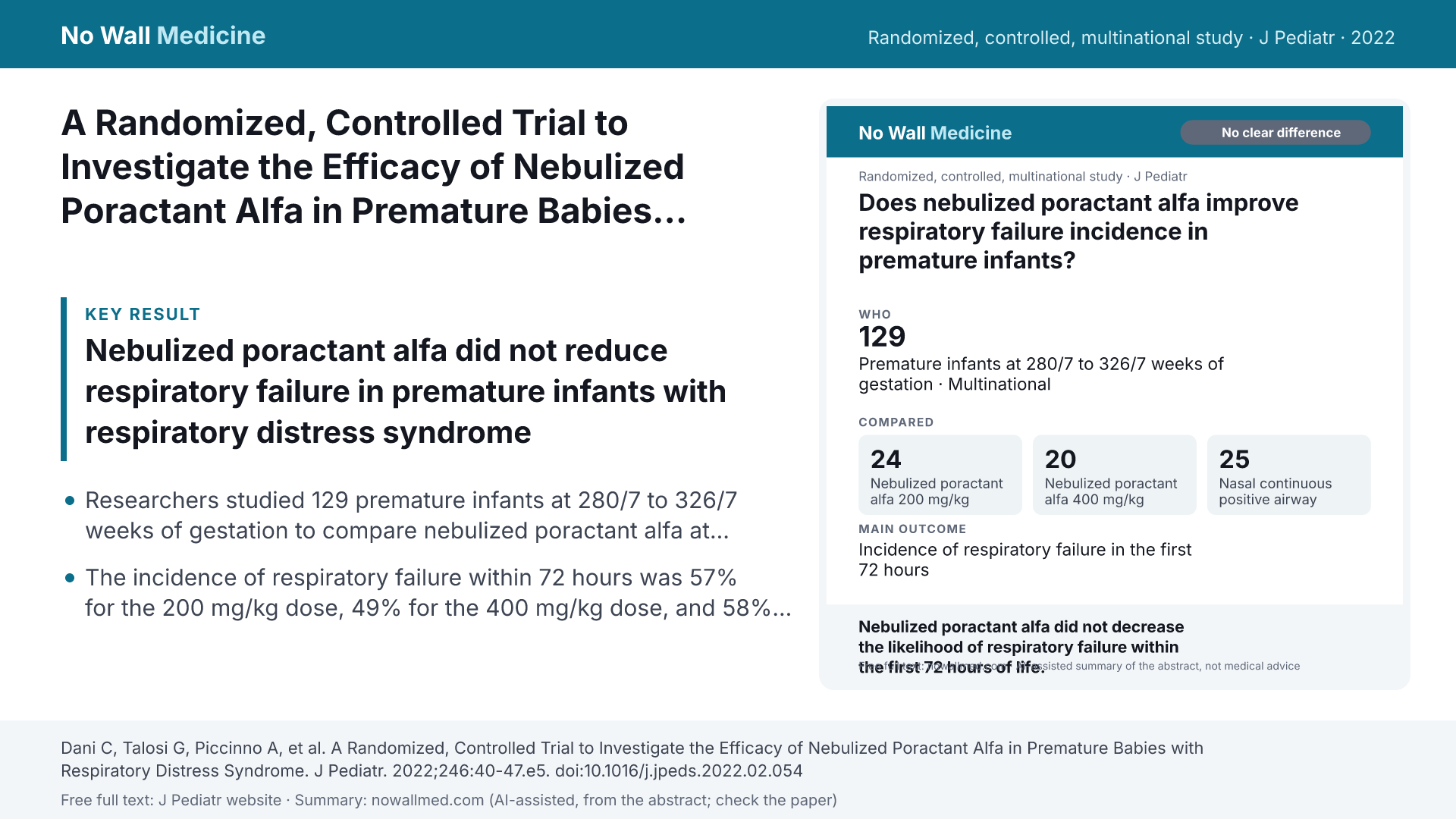
A Randomized, Controlled Trial to Investigate the Efficacy of Nebulized Poractant Alfa in Premature Babies with Respiratory Distress Syndrome
Key result: Nebulized poractant alfa did not reduce respiratory failure in premature infants with respiratory distress syndrome
Randomized, controlled, multinational studyNo clear difference
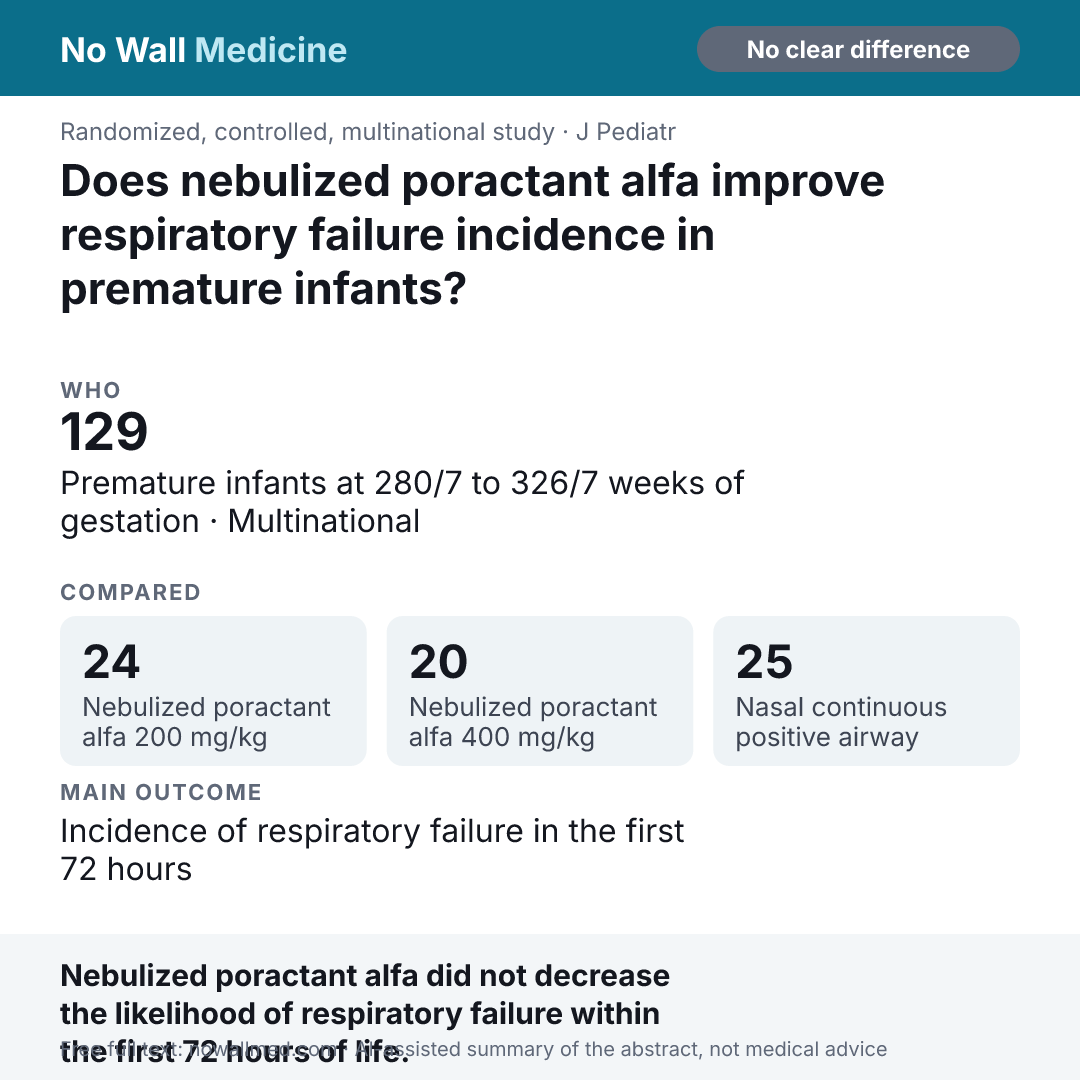
Does nebulized poractant alfa improve respiratory failure incidence in premature infants?
Who
129
Premature infants at 280/7 to 326/7 weeks of gestation · Multinational
Compared
24Nebulized poractant alfa 200 mg/kg (57%)
20Nebulized poractant alfa 400 mg/kg (49%)
25Nasal continuous positive airway pressure alone (58%)
Main outcome
Incidence of respiratory failure in the first 72 hours
Bottom line: Nebulized poractant alfa did not decrease the likelihood of respiratory failure within the first 72 hours of life.
J Pediatr · 2022-03-05 · Save PNG
Key points
- Researchers studied 129 premature infants at 280/7 to 326/7 weeks of gestation to compare nebulized poractant alfa at 200 mg/kg and 400 mg/kg doses against nasal continuous positive airway pressure alone.
- The incidence of respiratory failure within 72 hours was 57% for the 200 mg/kg dose, 49% for the 400 mg/kg dose, and 58% for the nasal continuous positive airway pressure group.
- The treatment was well-tolerated and no serious adverse events were related to the study treatment.
Discussion prompts
- Would these patients look like yours? Who was left out?
- Is the main outcome one that matters to patients?
- Is the difference large enough to change what you do?
Cite: Dani C, Talosi G, Piccinno A, et al. A Randomized, Controlled Trial to Investigate the Efficacy of Nebulized Poractant Alfa in Premature Babies with Respiratory Distress Syndrome. J Pediatr. 2022;246:40-47.e5. doi:10.1016/j.jpeds.2022.02.054
Free full text: J Pediatr website · Summary and visual abstract: nowallmed.com/a/a-randomized-controlled-trial-to-investigate-the-efficacy-of-1d2g0yg/ (AI-assisted from the abstract; check the paper before relying on it).