Indoor clubbing event was associated with higher risk of other respiratory virus transmission
A Randomized Controlled Trial to Study the Transmission of SARS-CoV-2 and Other Respiratory Viruses During Indoor Clubbing Events (ANRS0066s ITOC Study)
Randomized controlled trialMixed results
Does indoor clubbing increase SARS-CoV-2 and other respiratory virus transmission risk?
Who
1216
Healthy, fully vaccinated volunteers aged 18-49 years · Nightclub in the Paris region, France
Compared
attendees: one
non-attendees: one
Main outcome
SARS-CoV-2-positive subjects using saliva reverse transcriptase-polymerase chain reaction
Result: risk of infection 1.59 (95% CI, 1.04-2.61)
Bottom line: No SARS-CoV-2 transmission was found, but the risk of other respiratory virus transmission was higher.
Clin Infect Dis · 2023-10-05Download image
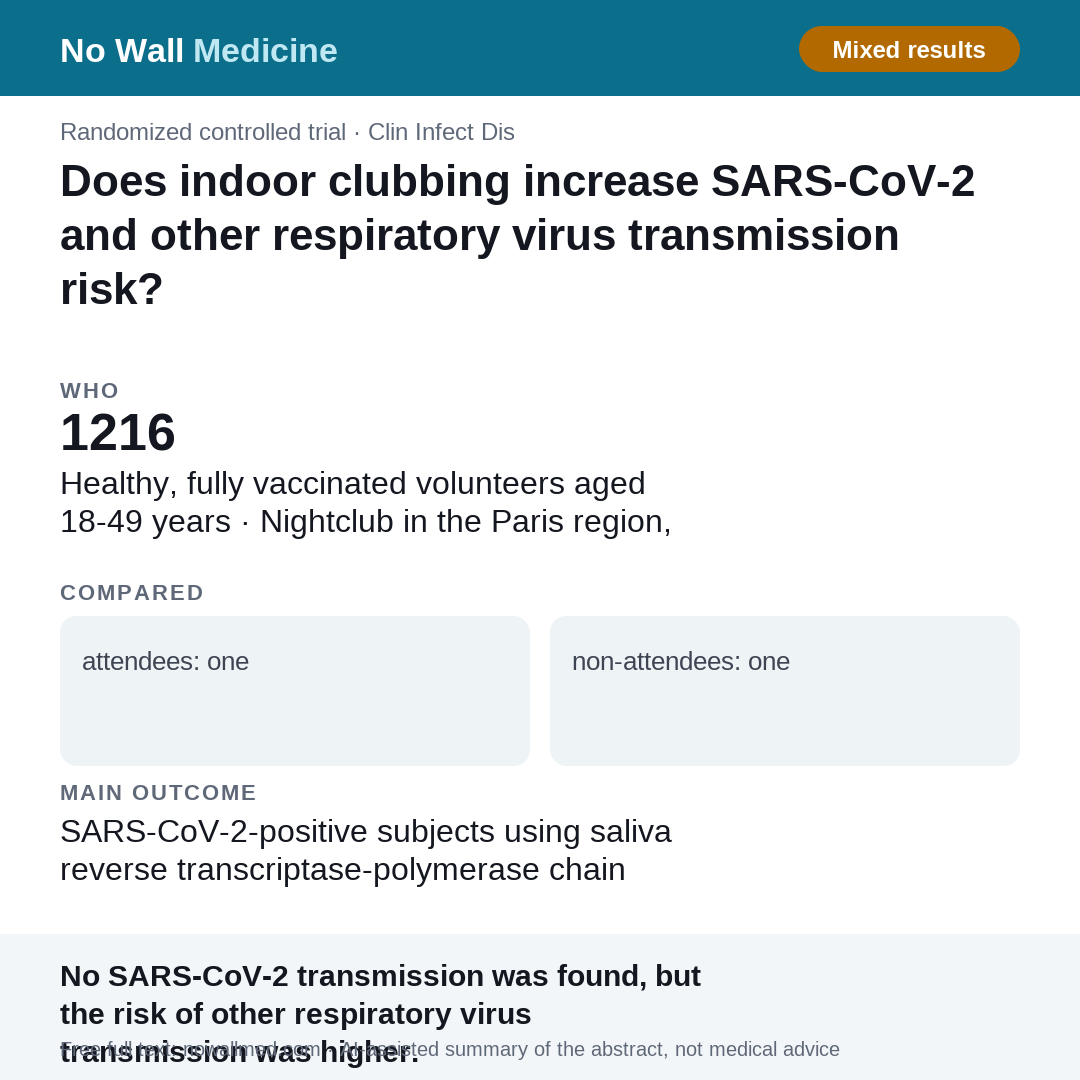
Clinical question: Does indoor clubbing increase SARS-CoV-2 and other respiratory virus transmission risk?
Why it matters: It was unknown if mass indoor gatherings posed a transmission risk for SARS-CoV-2 or other respiratory viruses among fully vaccinated individuals.
Key points
- Researchers randomized 1216 healthy, fully vaccinated volunteers aged 18-49 to attend or not attend a 7-hour indoor nightclub event.
- No SARS-CoV-2 transmission was found among participants, with only one positive saliva sample in each group at day 7.
- The clubbing event was associated with an increased risk of infection for 20 other respiratory viruses by 1.59 (95% CI, 1.04-2.61).
Headline and key points written with AI from the paper’s abstract, with every number checked against it. Read the paper before relying on them.
Was this summary helpful?
Subject terms
Cite this article
Luong Nguyen LB, Goupil de Bouillé J, Menant L, Noret M, Dumas A, Salmona M. A Randomized Controlled Trial to Study the Transmission of SARS-CoV-2 and Other Respiratory Viruses During Indoor Clubbing Events (ANRS0066s ITOC Study). Clin Infect Dis. 2023. doi:10.1093/cid/ciad603
Spotted a mistake? Suggest a correction
Top studies every Monday
The week’s key trials and guidelines in your specialties, plus any topics you follow. By email, free.
Get the weekly digest