A randomized phase 2 trial of azacitidine with or without durvalumab as first-line therapy for higher-risk myelodysplastic syndromes
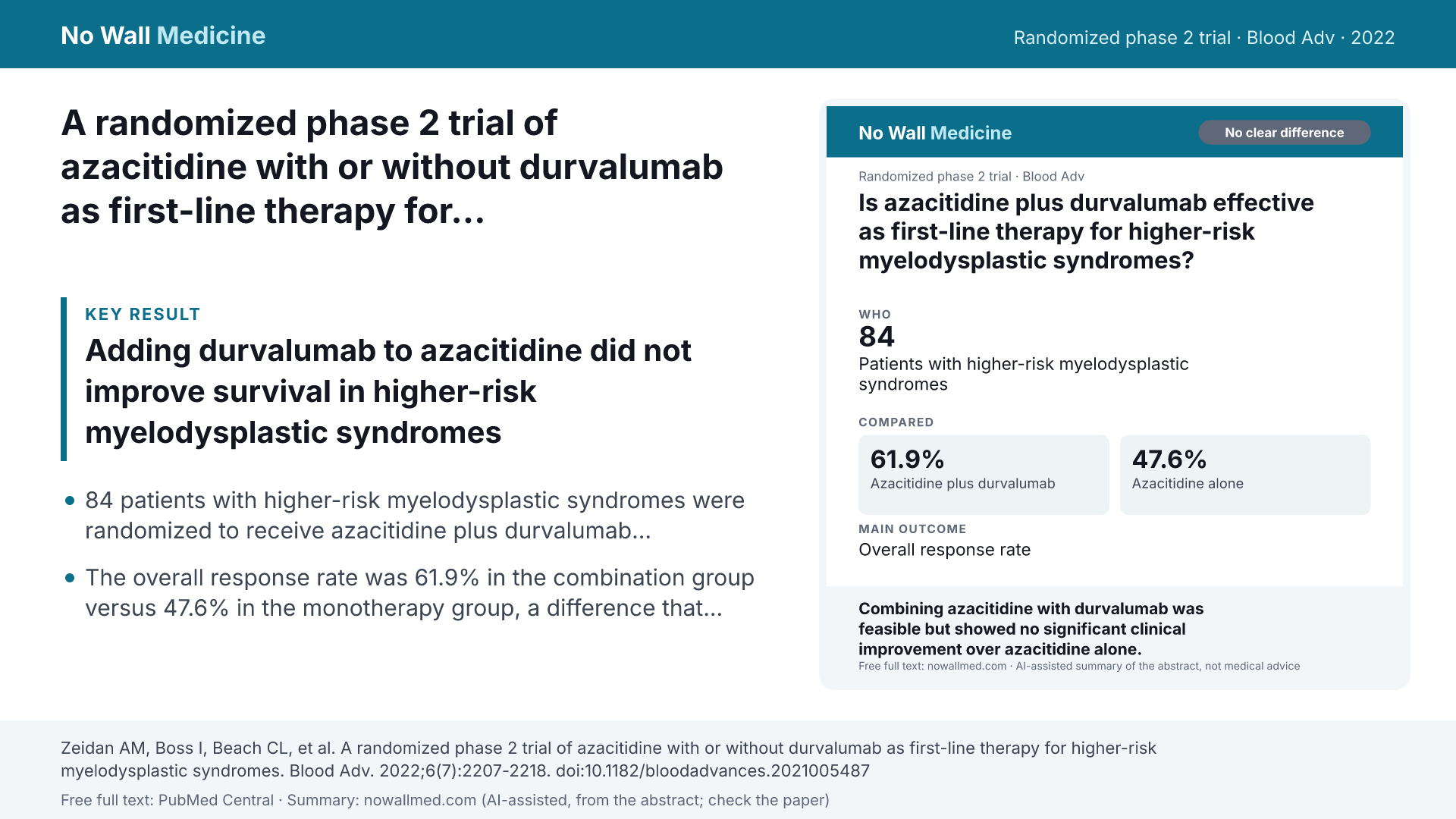
Key result: Adding durvalumab to azacitidine did not improve survival in higher-risk myelodysplastic syndromes
Randomized phase 2 trialNo clear difference
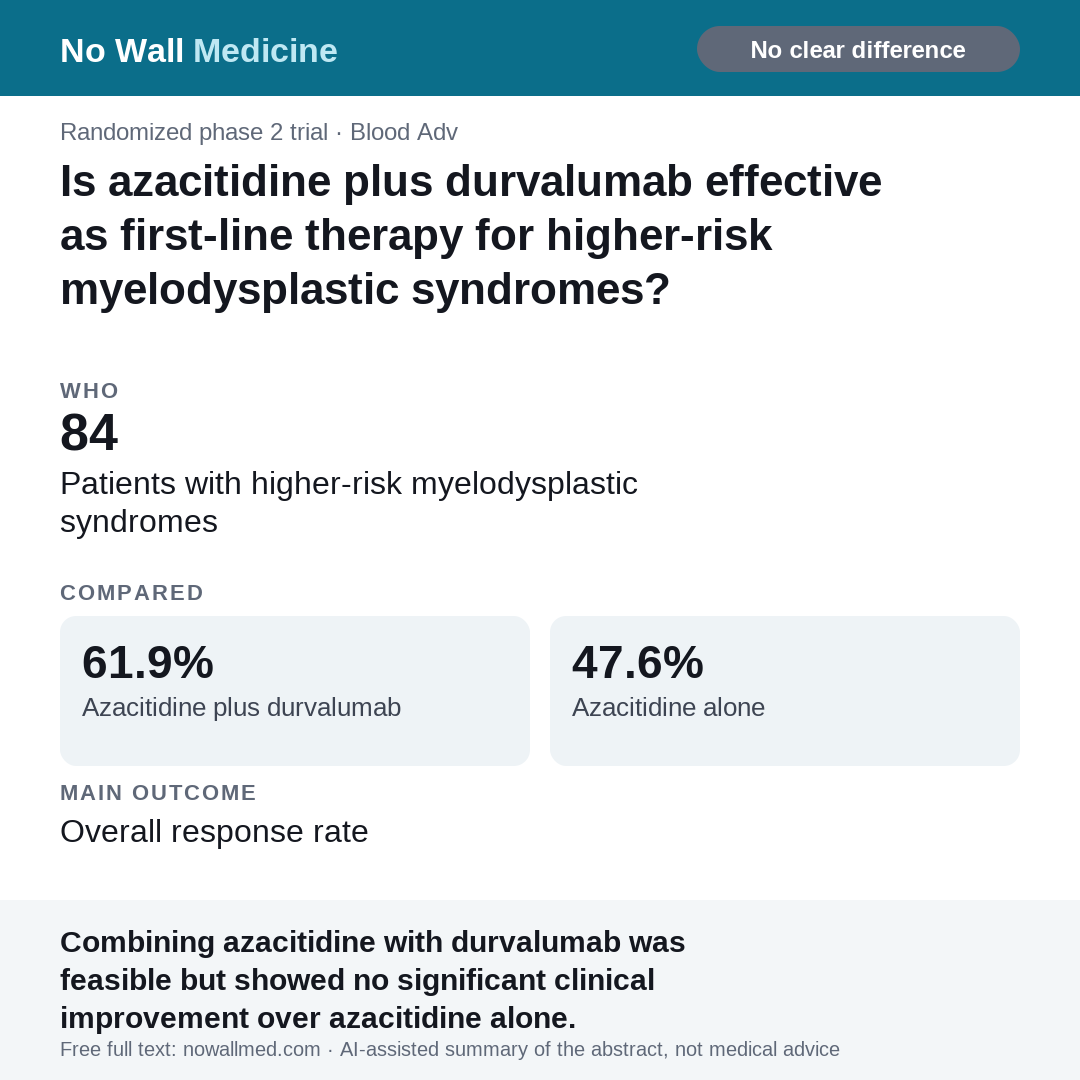
Is azacitidine plus durvalumab effective as first-line therapy for higher-risk myelodysplastic syndromes?
Who
84
Patients with higher-risk myelodysplastic syndromes
Compared
61.9%Azacitidine plus durvalumab (26 of 42)
47.6%Azacitidine alone (20 of 42)
Main outcome
Overall response rate
Bottom line: Combining azacitidine with durvalumab was feasible but showed no significant clinical improvement over azacitidine alone.
Blood Adv · 2022-01-01Download image
Key points
- 84 patients with higher-risk myelodysplastic syndromes were randomized to receive azacitidine plus durvalumab or azacitidine alone as first-line therapy.
- The overall response rate was 61.9% in the combination group versus 47.6% in the monotherapy group, a difference that was not statistically significant.
- Median overall survival was 11.6 months for the combination group and 16.7 months for the monotherapy group, with no significant difference between arms.
Discussion prompts
- Would these patients look like yours? Who was left out?
- Is the main outcome one that matters to patients?
- Is the difference large enough to change what you do?
Cite: Zeidan AM, Boss I, Beach CL, et al. A randomized phase 2 trial of azacitidine with or without durvalumab as first-line therapy for higher-risk myelodysplastic syndromes. Blood Adv. 2022. doi:10.1182/bloodadvances.2021005487
Free full text: PubMed Central · Summary and visual abstract: nowallmed.com/a/a-randomized-phase-2-trial-of-azacitidine-with-or-without-durvalumab-3mtmhf/ (AI-assisted from the abstract; check the paper before relying on it).