Allogeneic stem cell transplantation showed no significant survival benefit over autologous transplantation in T-NHL
A randomized phase 3 trial of autologous vs allogeneic transplantation as part of first-line therapy in poor-risk peripheral T-NHL
Randomized phase 3 trialNo clear difference
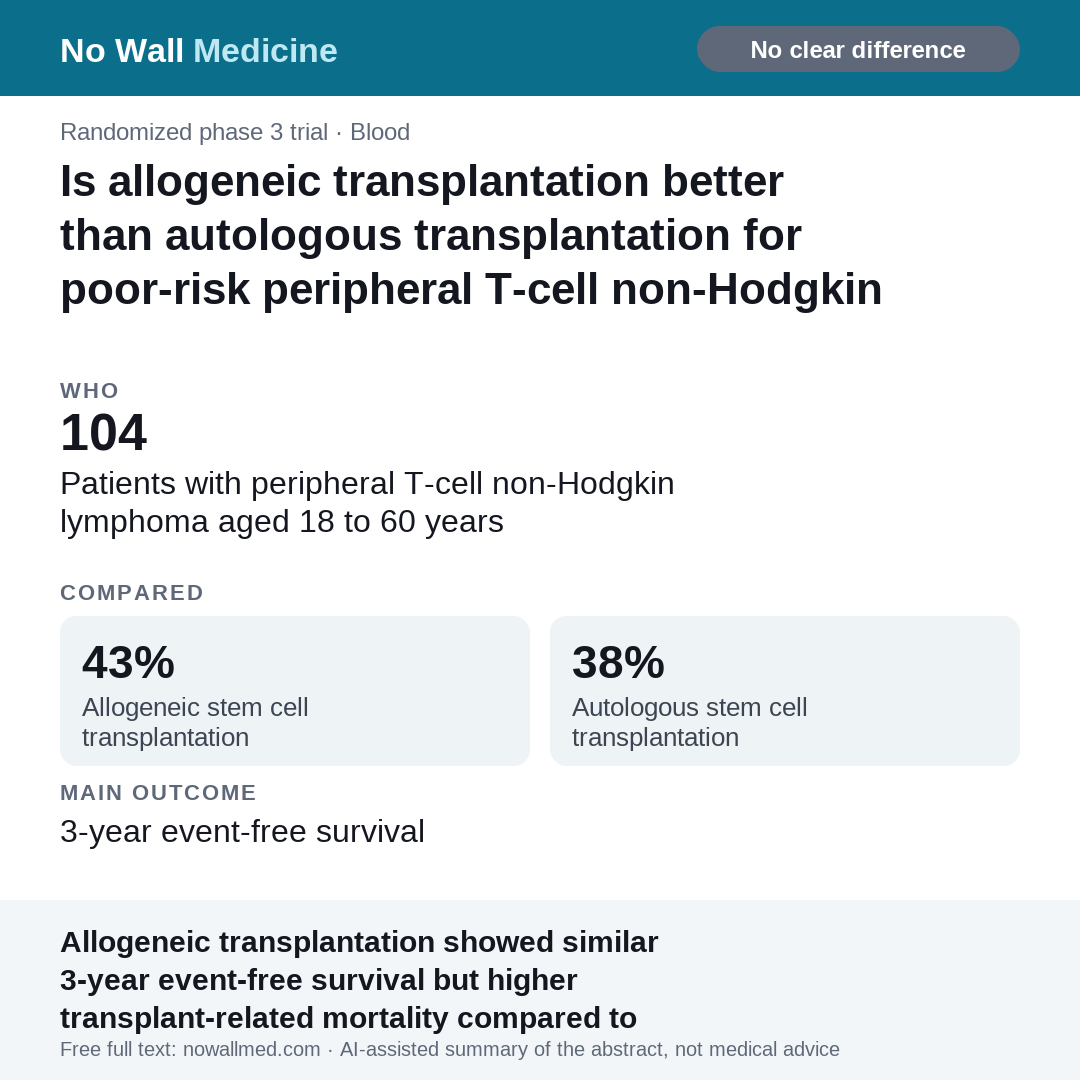
Is allogeneic transplantation better than autologous transplantation for poor-risk peripheral T-cell non-Hodgkin lymphoma?
Who
104
Patients with peripheral T-cell non-Hodgkin lymphoma aged 18 to 60 years
Compared
43%Allogeneic stem cell transplantation
38%Autologous stem cell transplantation
Main outcome
3-year event-free survival
Bottom line: Allogeneic transplantation showed similar 3-year event-free survival but higher transplant-related mortality compared to autologous transplantation.
Blood · 2021-01-30Download image
Clinical question: Is allogeneic transplantation better than autologous transplantation for poor-risk peripheral T-cell non-Hodgkin lymphoma?
Why it matters: It was unknown if allogeneic stem cell transplantation, which uses donor cells, improves outcomes compared to autologous stem cell transplantation, which uses a patient's own cells, for this patient group.
Key points
- Researchers randomized 104 patients with peripheral T-cell non-Hodgkin lymphoma to receive either autologous stem cell transplantation or allogeneic stem cell transplantation.
- The 3-year event-free survival was 43% for allogeneic transplantation compared to 38% for autologous transplantation, while 3-year overall survival was 57% versus 70%.
- Transplant-related mortality occurred in 31% of the allogeneic group compared to 0% of the autologous group.
Headline and key points written with AI from the paper’s abstract, with every number checked against it. Read the paper before relying on them.
Was this summary helpful?
Subject terms
Cite this article
Schmitz N, Truemper L, Bouabdallah K, Ziepert M, Leclerc M, Cartron G. A randomized phase 3 trial of autologous vs allogeneic transplantation as part of first-line therapy in poor-risk peripheral T-NHL. Blood. 2021. doi:10.1182/blood.2020008825
Spotted a mistake? Suggest a correction
Top studies every Monday
The week’s key trials and guidelines in your specialties, plus any topics you follow. By email, free.
Get the weekly digest