A randomized phase 3 trial of interferon-α vs hydroxyurea in polycythemia vera and essential thrombocythemia
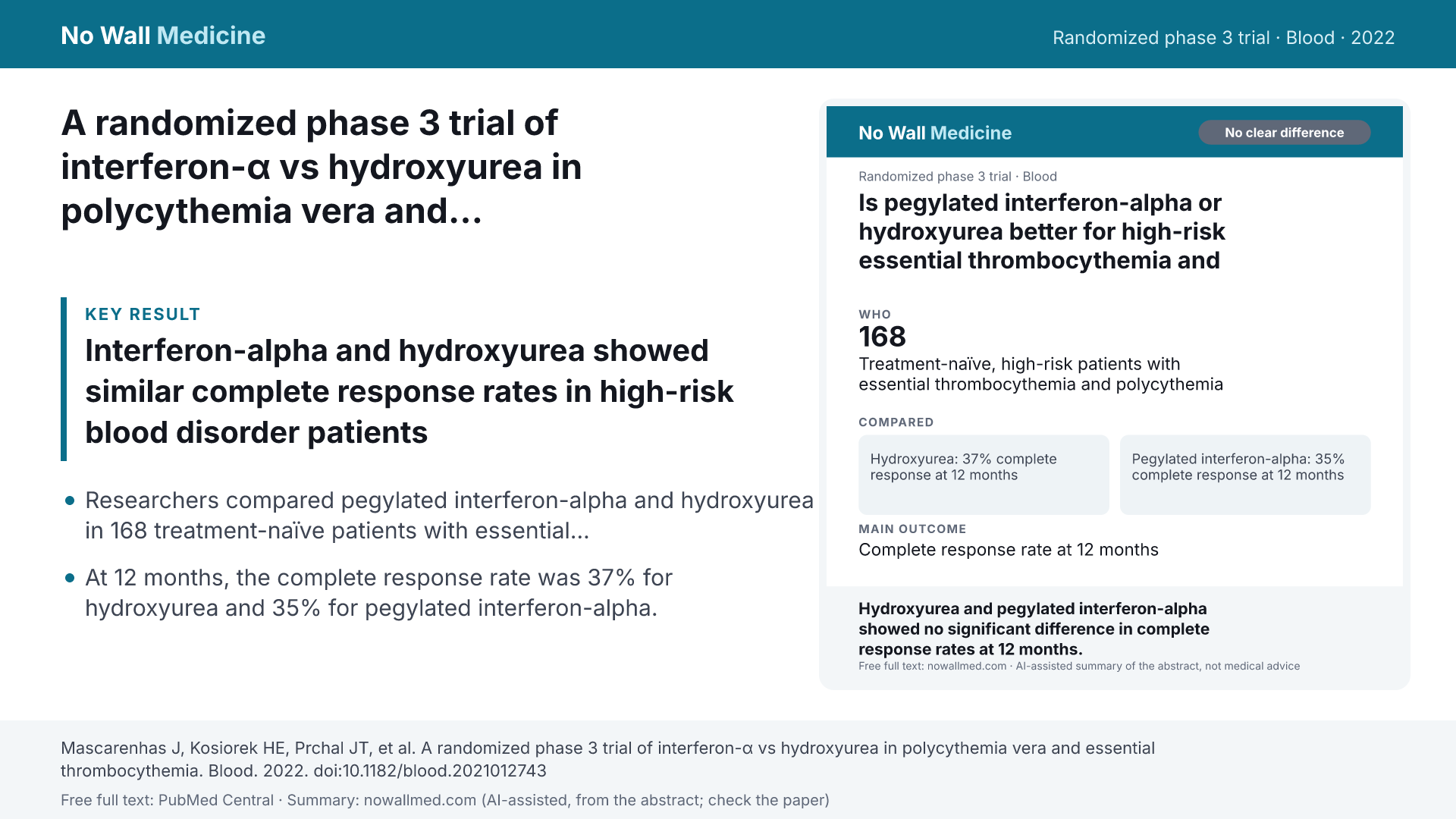
Key result: Interferon-alpha and hydroxyurea showed similar complete response rates in high-risk blood disorder patients
Randomized phase 3 trialNo clear difference
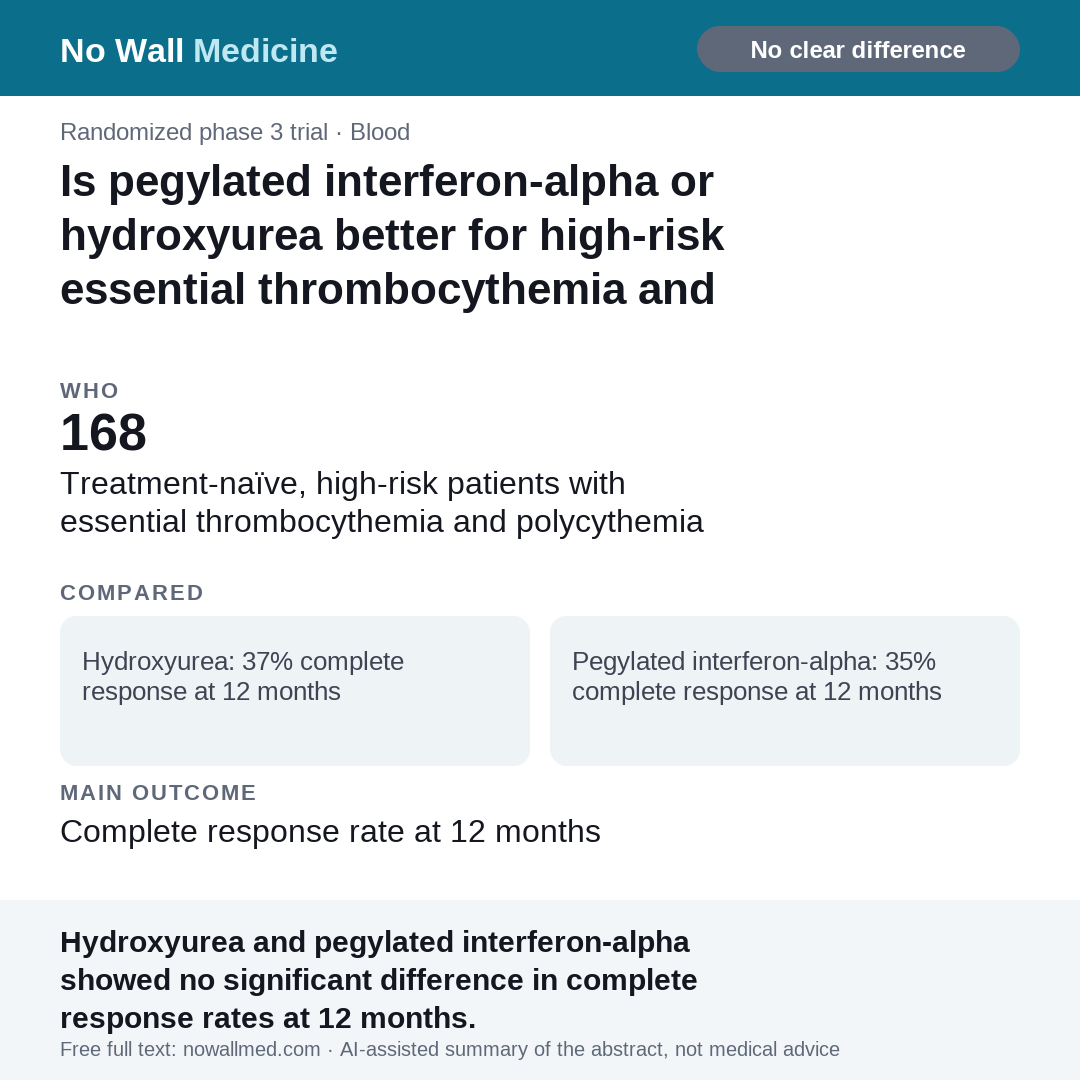
Is pegylated interferon-alpha or hydroxyurea better for high-risk essential thrombocythemia and polycythemia vera?
Who
168
Treatment-naïve, high-risk patients with essential thrombocythemia and polycythemia vera
Compared
Hydroxyurea: 37% complete response at 12 months
Pegylated interferon-alpha: 35% complete response at 12 months
Main outcome
Complete response rate at 12 months
Bottom line: Hydroxyurea and pegylated interferon-alpha showed no significant difference in complete response rates at 12 months.
Blood · 2022-01-11Download image
Key points
- Researchers compared pegylated interferon-alpha and hydroxyurea in 168 treatment-naïve patients with essential thrombocythemia or polycythemia vera.
- At 12 months, the complete response rate was 37% for hydroxyurea and 35% for pegylated interferon-alpha.
- Pegylated interferon-alpha was associated with more frequent grade 3/4 adverse events at 46% compared to 28% for hydroxyurea.
Why it matters: It was unknown whether pegylated interferon-alpha or hydroxyurea is more effective at achieving complete response in high-risk patients with essential thrombocythemia or polycythemia vera.
Discussion prompts
- Would these patients look like yours? Who was left out?
- Is the main outcome one that matters to patients?
- Is the difference large enough to change what you do?
Cite: Mascarenhas J, Kosiorek HE, Prchal JT, et al. A randomized phase 3 trial of interferon-α vs hydroxyurea in polycythemia vera and essential thrombocythemia. Blood. 2022. doi:10.1182/blood.2021012743
Free full text: PubMed Central · Summary and visual abstract: nowallmed.com/a/a-randomized-phase-3-trial-of-interferon-vs-hydroxyurea-in-1o9aebj/ (AI-assisted from the abstract; check the paper before relying on it).