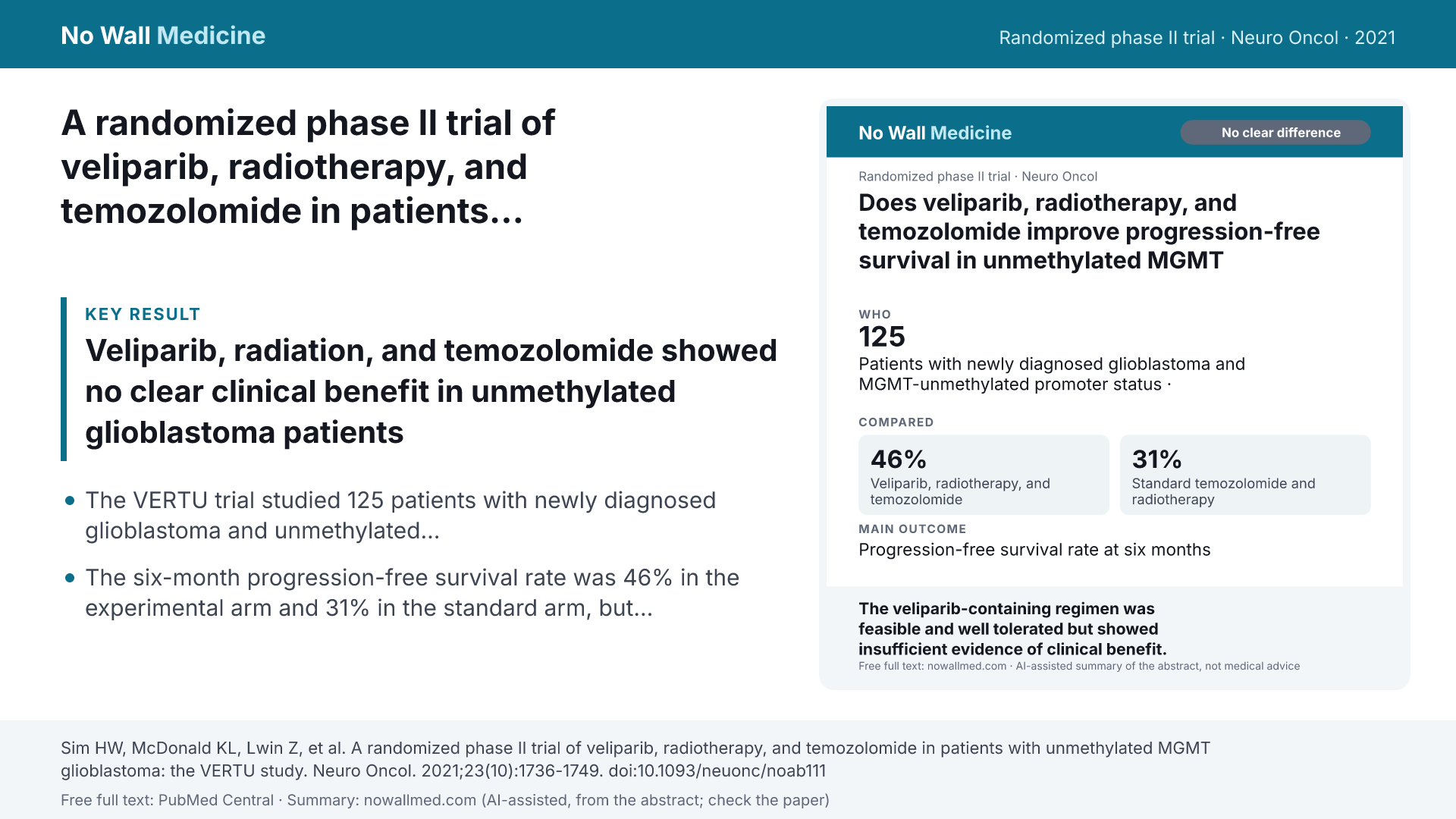
Veliparib, radiation, and temozolomide showed no clear clinical benefit in unmethylated glioblastoma patients
A randomized phase II trial of veliparib, radiotherapy, and temozolomide in patients with unmethylated MGMT glioblastoma: the VERTU study
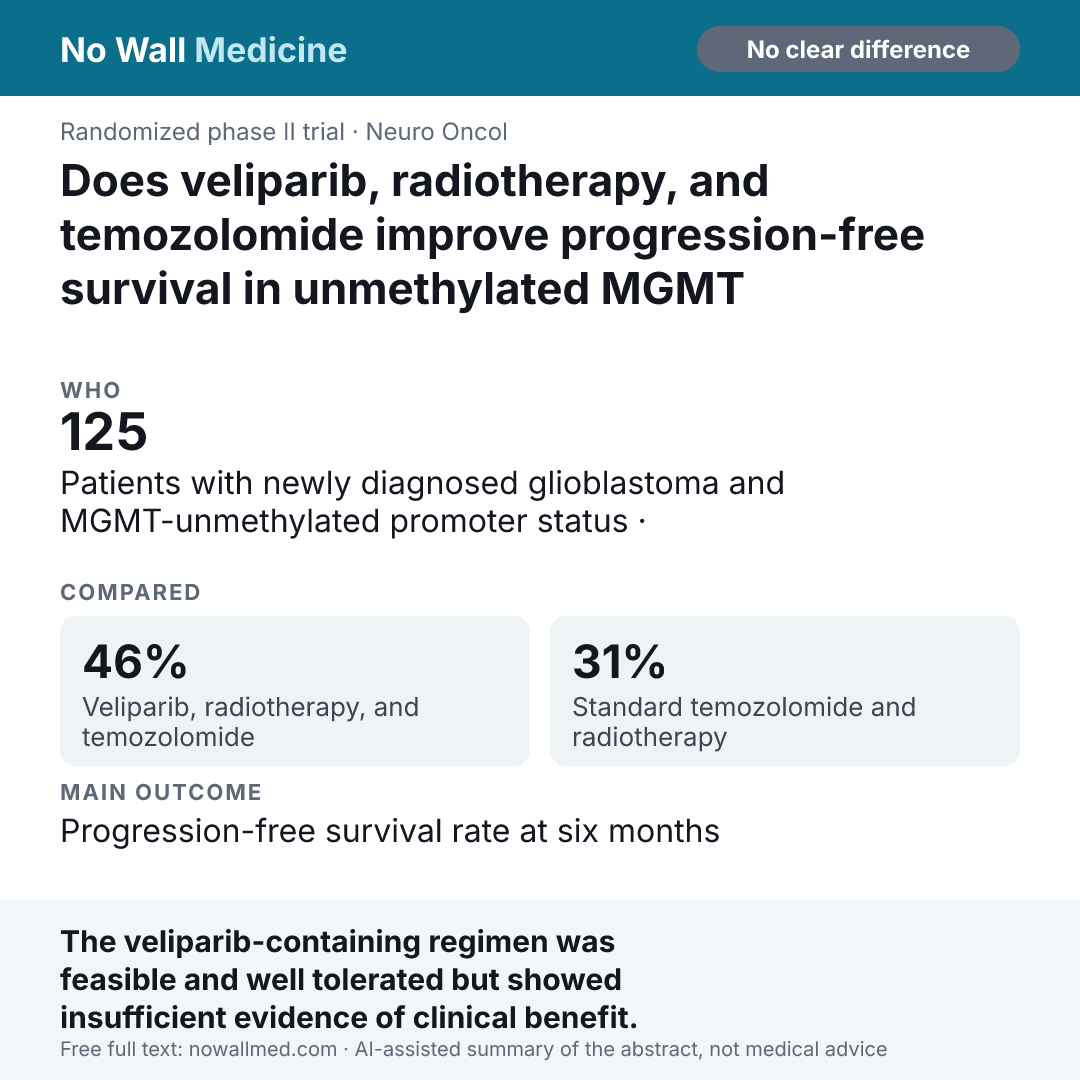
Randomized phase II trialNo clear difference
Does veliparib, radiotherapy, and temozolomide improve progression-free survival in unmethylated MGMT glioblastoma?
Who
125
Patients with newly diagnosed glioblastoma and MGMT-unmethylated promoter status · Multicenter
Compared
46%Veliparib, radiotherapy, and temozolomide (95% CI: 36%-57%)
31%Standard temozolomide and radiotherapy (95% CI: 18%-46%)
Main outcome
Progression-free survival rate at six months
Bottom line: The veliparib-containing regimen was feasible and well tolerated but showed insufficient evidence of clinical benefit.
Limitation: Further information from correlative translational work and other trials are still awaited.
Neuro Oncol · 2021-05-14 · Save PNG
Clinical question: Does veliparib, radiotherapy, and temozolomide improve progression-free survival in unmethylated MGMT glioblastoma?
Why it matters: Temozolomide offers minimal benefit for patients with unmethylated O6-methylguanine-DNA methyltransferase promoter status, creating a need for novel therapies.
Key points
- The VERTU trial studied 125 patients with newly diagnosed glioblastoma and unmethylated O6-methylguanine-DNA methyltransferase promoter status, comparing a veliparib regimen to standard therapy.
- The six-month progression-free survival rate was 46% in the experimental arm and 31% in the standard arm, but median overall survival was 12.7 months versus 12.8 months.
- The most common severe grade 3-4 adverse events were thrombocytopenia (low platelet count) and neutropenia (low white blood cell count).
Headline and key points written with AI from the paper’s abstract, with every number checked against it. Read the paper before relying on them.
Was this summary helpful?
Subject terms
Headline, design, result, key points, caveat and citation as plain text.
Cite this article
Sim HW, McDonald KL, Lwin Z, et al. A randomized phase II trial of veliparib, radiotherapy, and temozolomide in patients with unmethylated MGMT glioblastoma: the VERTU study. Neuro Oncol. 2021;23(10):1736-1749. doi:10.1093/neuonc/noab111
Spotted a mistake? Suggest a correction