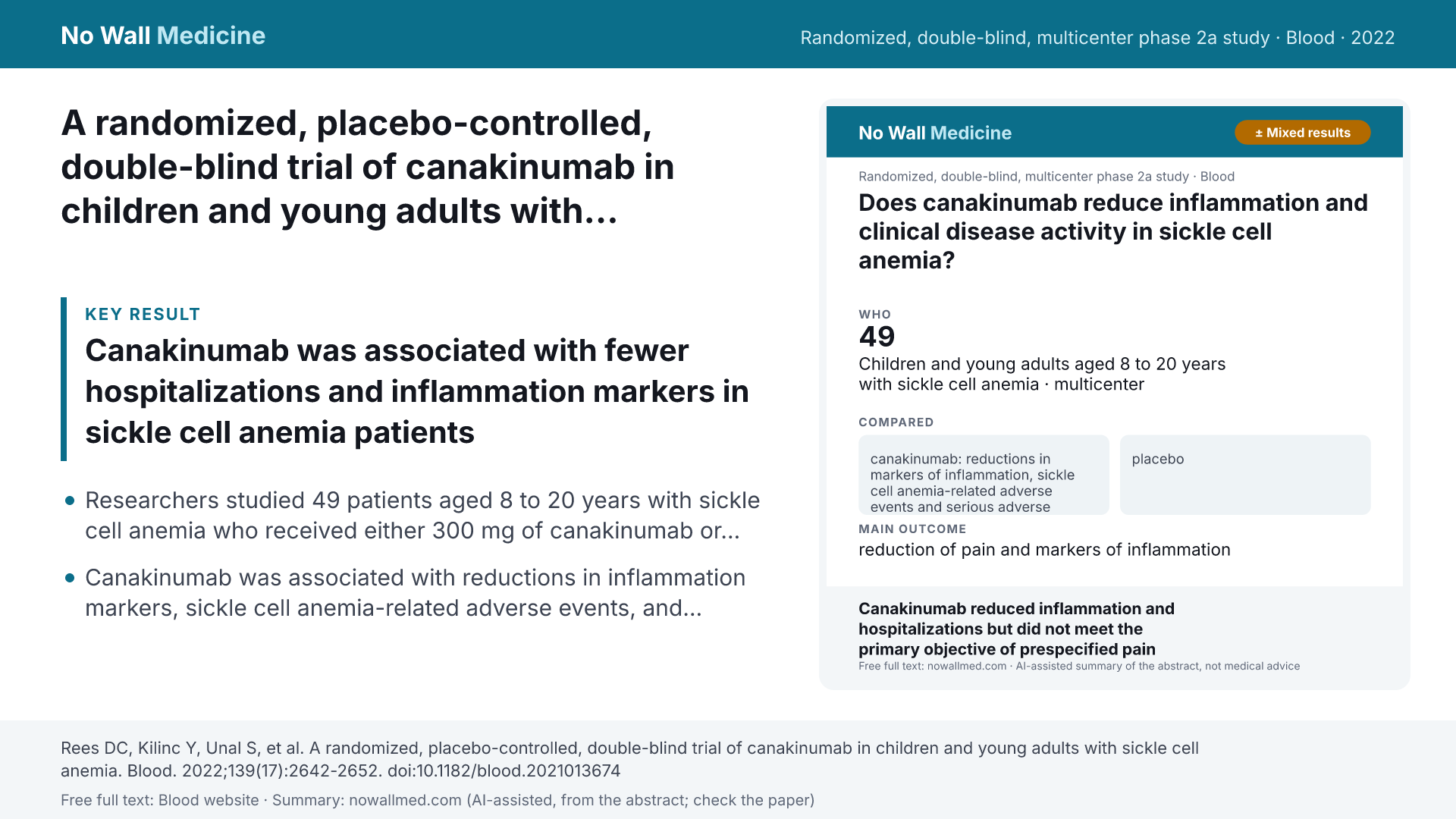
Canakinumab was associated with fewer hospitalizations and inflammation markers in sickle cell anemia patients
A randomized, placebo-controlled, double-blind trial of canakinumab in children and young adults with sickle cell anemia
Randomized, double-blind, multicenter phase 2a studyMixed results
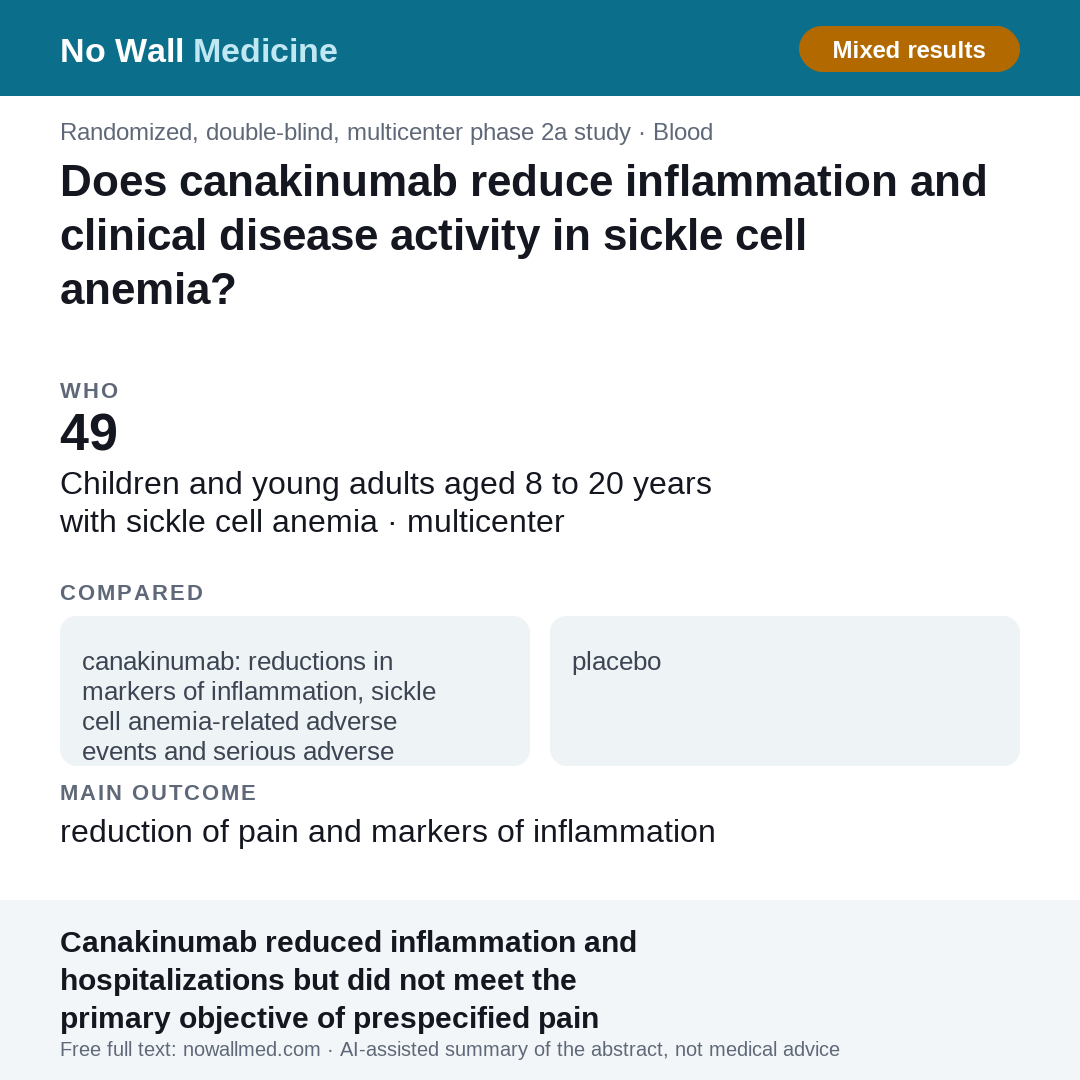
Does canakinumab reduce inflammation and clinical disease activity in sickle cell anemia?
Who
49
Children and young adults aged 8 to 20 years with sickle cell anemia · multicenter
Compared
canakinumab: reductions in markers of inflammation, sickle cell anemia-related adverse events and serious adverse events, and number and duration of hospitalizations
placebo
Main outcome
reduction of pain and markers of inflammation
Bottom line: Canakinumab reduced inflammation and hospitalizations but did not meet the primary objective of prespecified pain reduction.
Blood · 2022-03-01Download image
Clinical question: Does canakinumab reduce inflammation and clinical disease activity in sickle cell anemia?
Key points
- Researchers studied 49 patients aged 8 to 20 years with sickle cell anemia who received either 300 mg of canakinumab or a placebo.
- Canakinumab was associated with reductions in inflammation markers, sickle cell anemia-related adverse events, and the number and duration of hospitalizations compared to placebo.
- The primary objective of prespecified reduction of pain was not met, though trends for improvement in pain intensity and fatigue were observed.
Headline and key points written with AI from the paper’s abstract, with every number checked against it. Read the paper before relying on them.
Was this summary helpful?
Subject terms
Cite this article
Rees DC, Kilinc Y, Unal S, et al. A randomized, placebo-controlled, double-blind trial of canakinumab in children and young adults with sickle cell anemia. Blood. 2022;139(17):2642-2652. doi:10.1182/blood.2021013674
Spotted a mistake? Suggest a correction