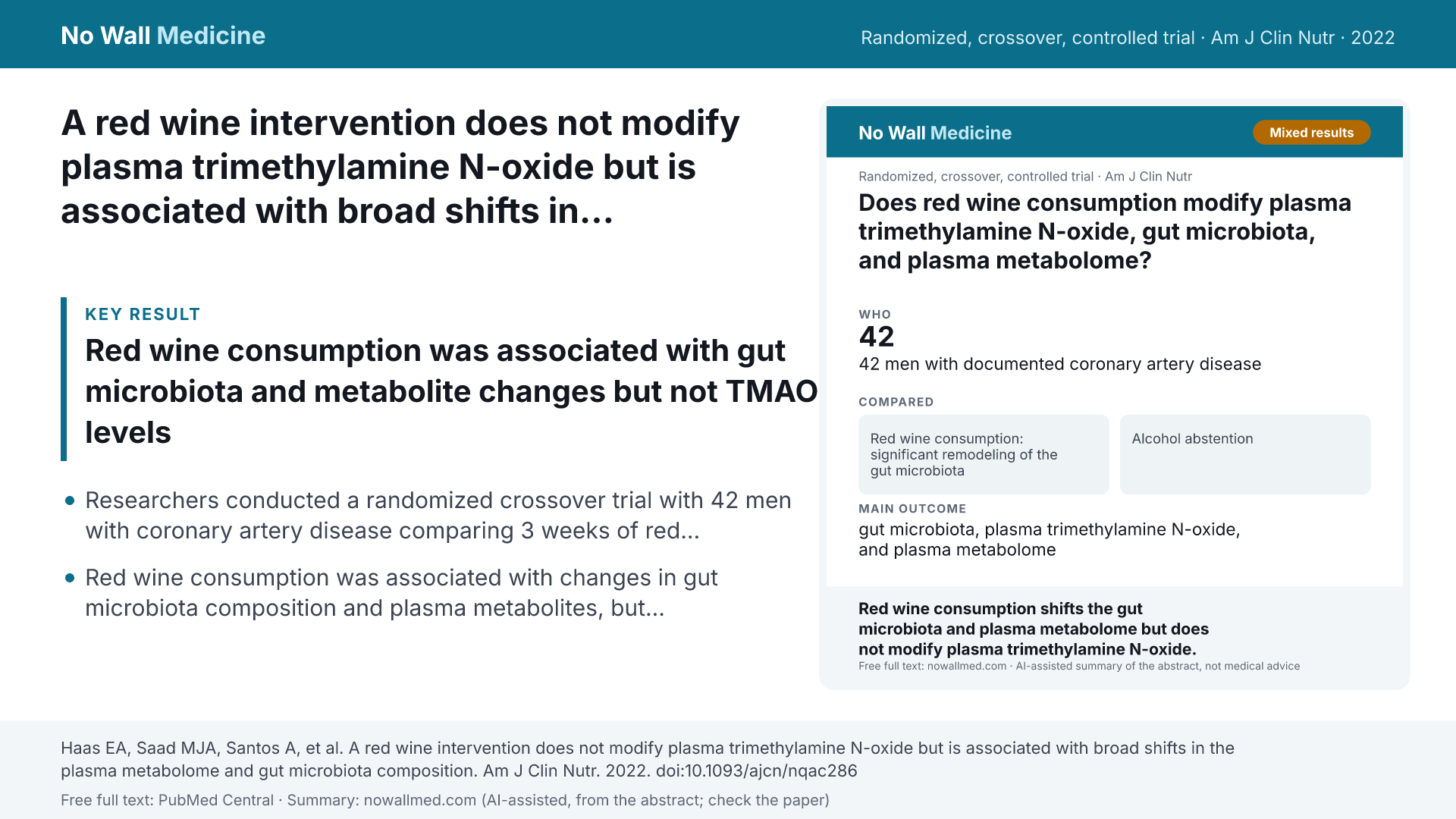
A red wine intervention does not modify plasma trimethylamine N-oxide but is associated with broad shifts in the plasma metabolome and gut microbiota composition
Key result: Red wine consumption was associated with gut microbiota and metabolite changes but not TMAO levels
Key points
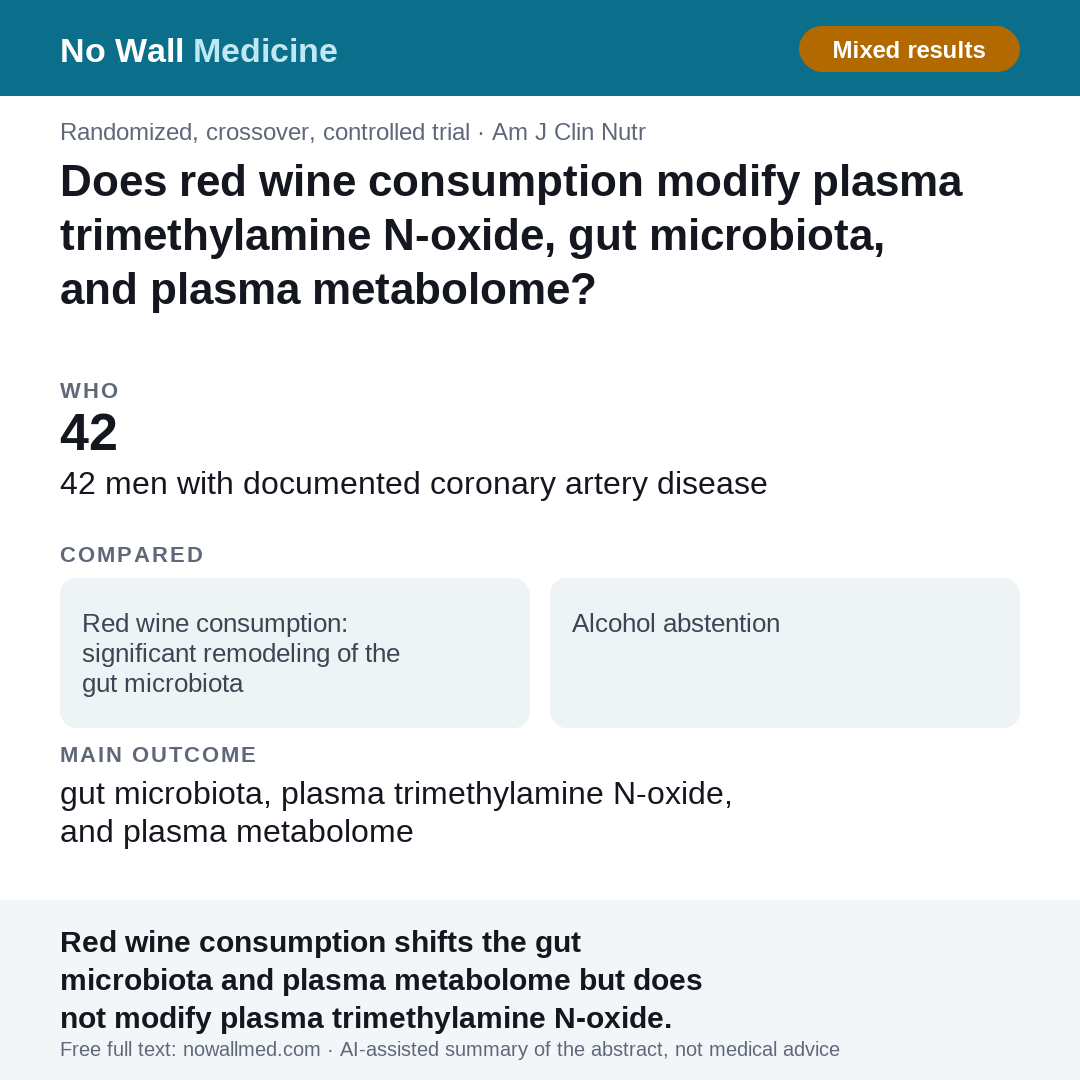
- Researchers conducted a randomized crossover trial with 42 men with coronary artery disease comparing 3 weeks of red wine consumption to alcohol abstention.
- Red wine consumption was associated with changes in gut microbiota composition and plasma metabolites, but plasma trimethylamine N-oxide levels did not differ.
- The study found low consistency in trimethylamine N-oxide levels over time, with an intraclass correlation coefficient of 0.049 during the control period.
Why it matters: It is unknown if moderate red wine consumption affects the gut microbiota or the metabolite trimethylamine N-oxide, which is linked to cardiovascular disease.
Discussion prompts
- Would these patients look like yours? Who was left out?
- Is the main outcome one that matters to patients?
- Is the difference large enough to change what you do?
Cite: Haas EA, Saad MJA, Santos A, et al. A red wine intervention does not modify plasma trimethylamine N-oxide but is associated with broad shifts in the plasma metabolome and gut microbiota composition. Am J Clin Nutr. 2022. doi:10.1093/ajcn/nqac286
Free full text: PubMed Central · Summary and visual abstract: nowallmed.com/a/a-red-wine-intervention-does-not-modify-plasma-trimethylamine-n-oxide-1dg65hq/ (AI-assisted from the abstract; check the paper before relying on it).