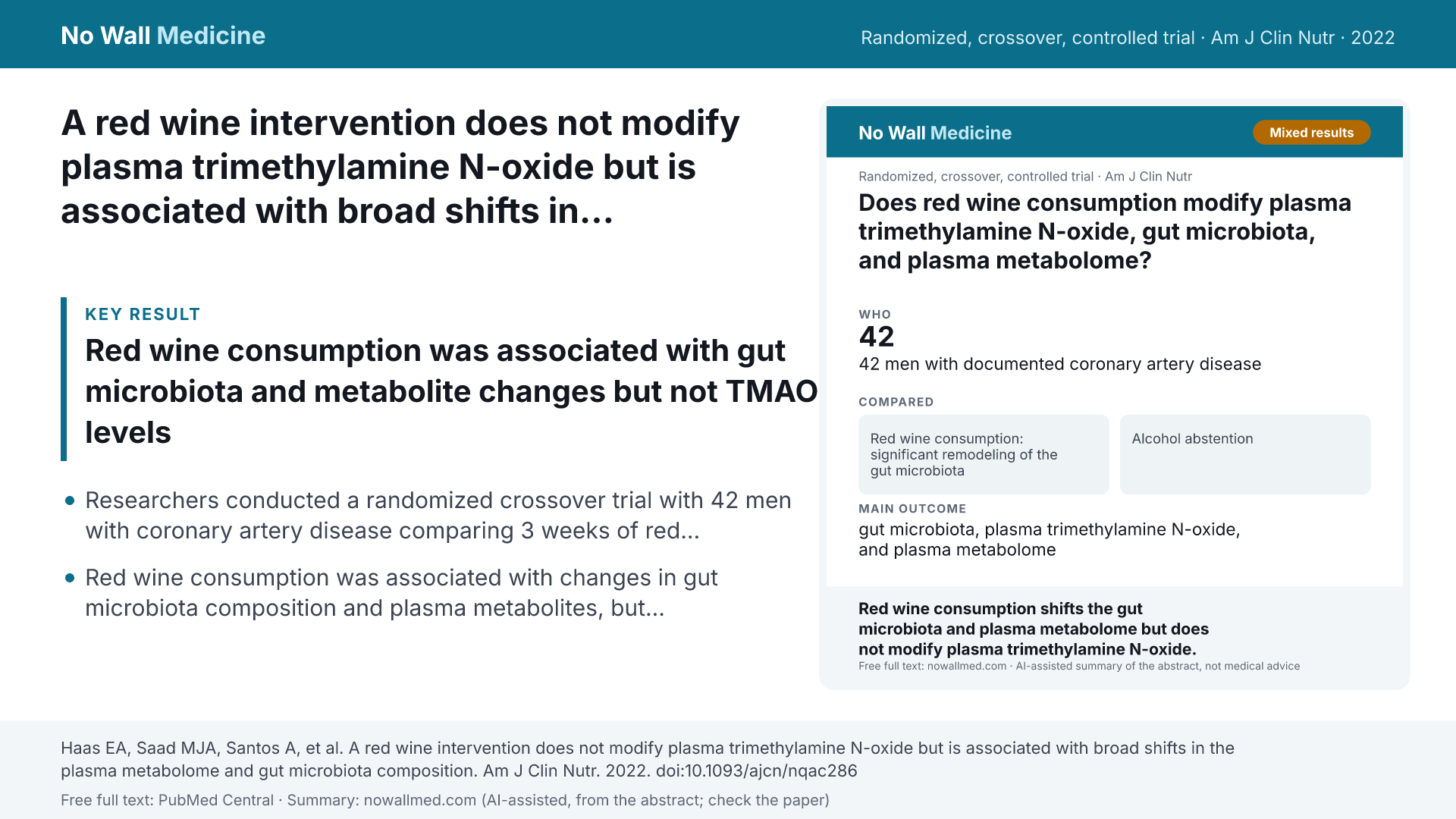
Red wine consumption was associated with gut microbiota and metabolite changes but not TMAO levels
A red wine intervention does not modify plasma trimethylamine N-oxide but is associated with broad shifts in the plasma metabolome and gut microbiota composition
Randomized, crossover, controlled trialMixed results
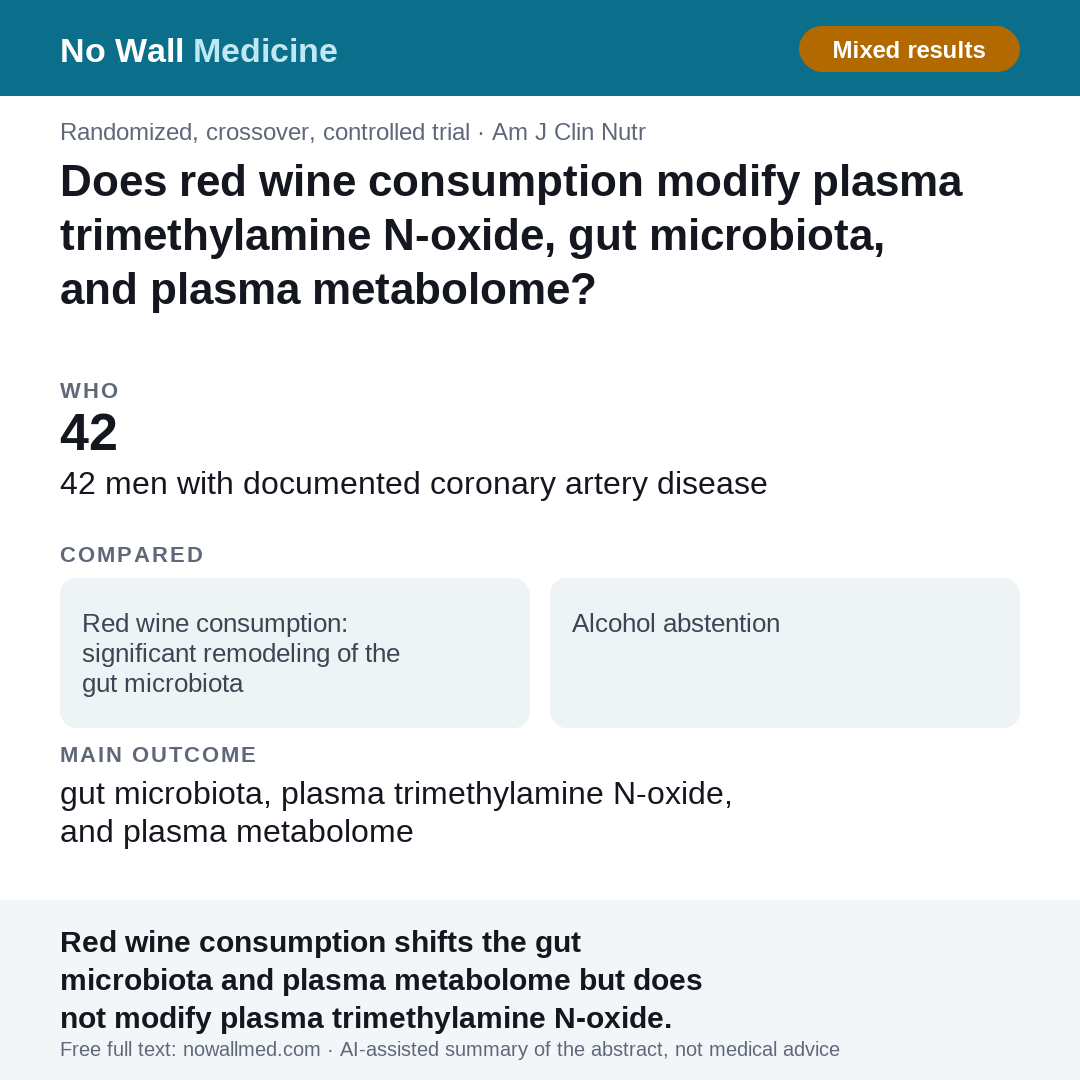
Does red wine consumption modify plasma trimethylamine N-oxide, gut microbiota, and plasma metabolome?
Who
42
42 men with documented coronary artery disease
Compared
Red wine consumption: significant remodeling of the gut microbiota
Alcohol abstention
Main outcome
gut microbiota, plasma trimethylamine N-oxide, and plasma metabolome
Bottom line: Red wine consumption shifts the gut microbiota and plasma metabolome but does not modify plasma trimethylamine N-oxide.
Am J Clin Nutr · 2022-10-08Download image
Clinical question: Does red wine consumption modify plasma trimethylamine N-oxide, gut microbiota, and plasma metabolome?
Why it matters: It is unknown if moderate red wine consumption affects the gut microbiota or the metabolite trimethylamine N-oxide, which is linked to cardiovascular disease.
Key points
- Researchers conducted a randomized crossover trial with 42 men with coronary artery disease comparing 3 weeks of red wine consumption to alcohol abstention.
- Red wine consumption was associated with changes in gut microbiota composition and plasma metabolites, but plasma trimethylamine N-oxide levels did not differ.
- The study found low consistency in trimethylamine N-oxide levels over time, with an intraclass correlation coefficient of 0.049 during the control period.
Headline and key points written with AI from the paper’s abstract, with every number checked against it. Read the paper before relying on them.
Was this summary helpful?
Subject terms
Cite this article
Haas EA, Saad MJA, Santos A, et al. A red wine intervention does not modify plasma trimethylamine N-oxide but is associated with broad shifts in the plasma metabolome and gut microbiota composition. Am J Clin Nutr. 2022. doi:10.1093/ajcn/nqac286
Spotted a mistake? Suggest a correction