Cognitive behavioral therapy and graded exercise therapy were associated with better outcomes in chronic fatigue syndrome
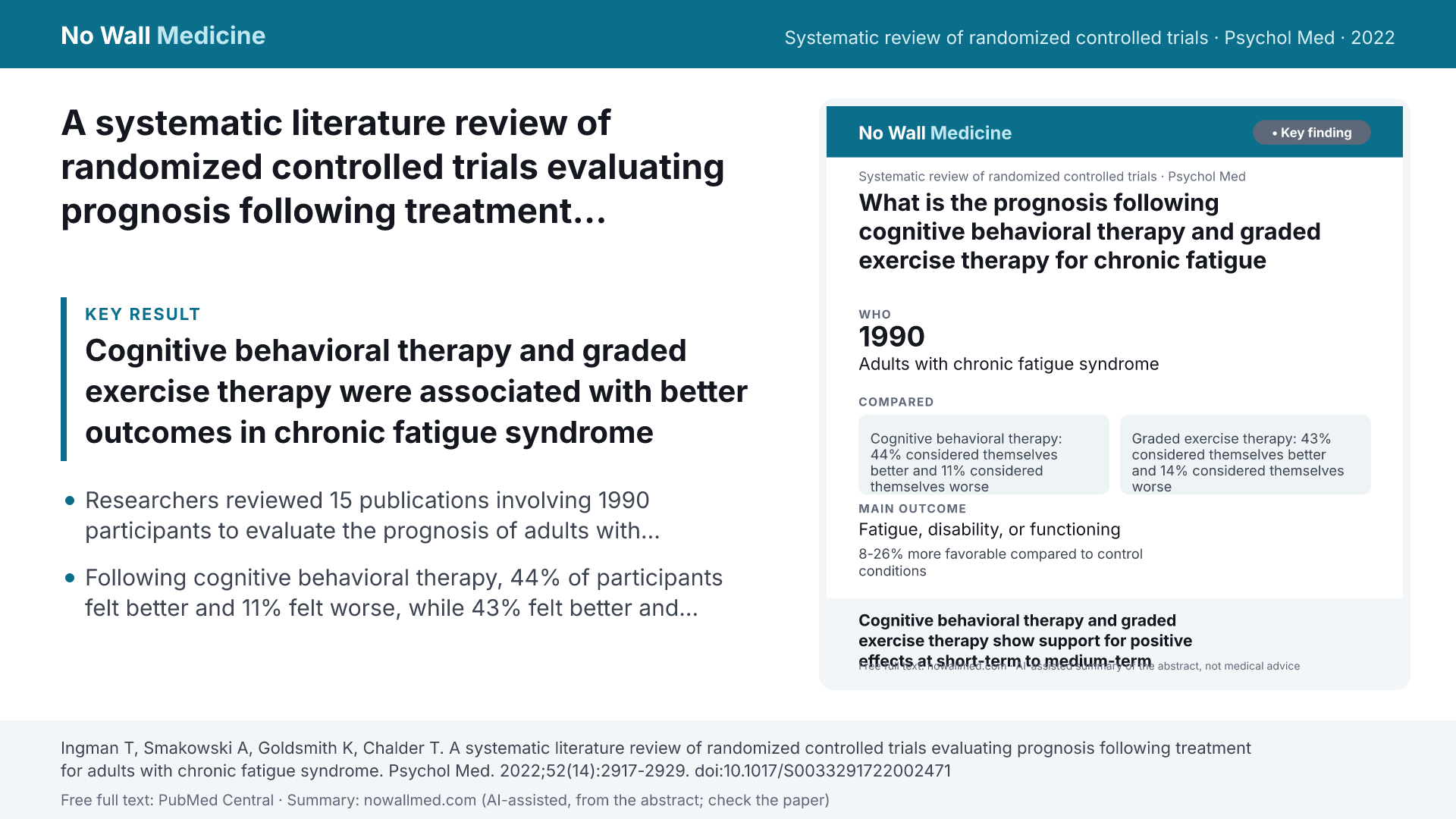
A systematic literature review of randomized controlled trials evaluating prognosis following treatment for adults with chronic fatigue syndrome
Systematic review of randomized controlled trialsKey finding
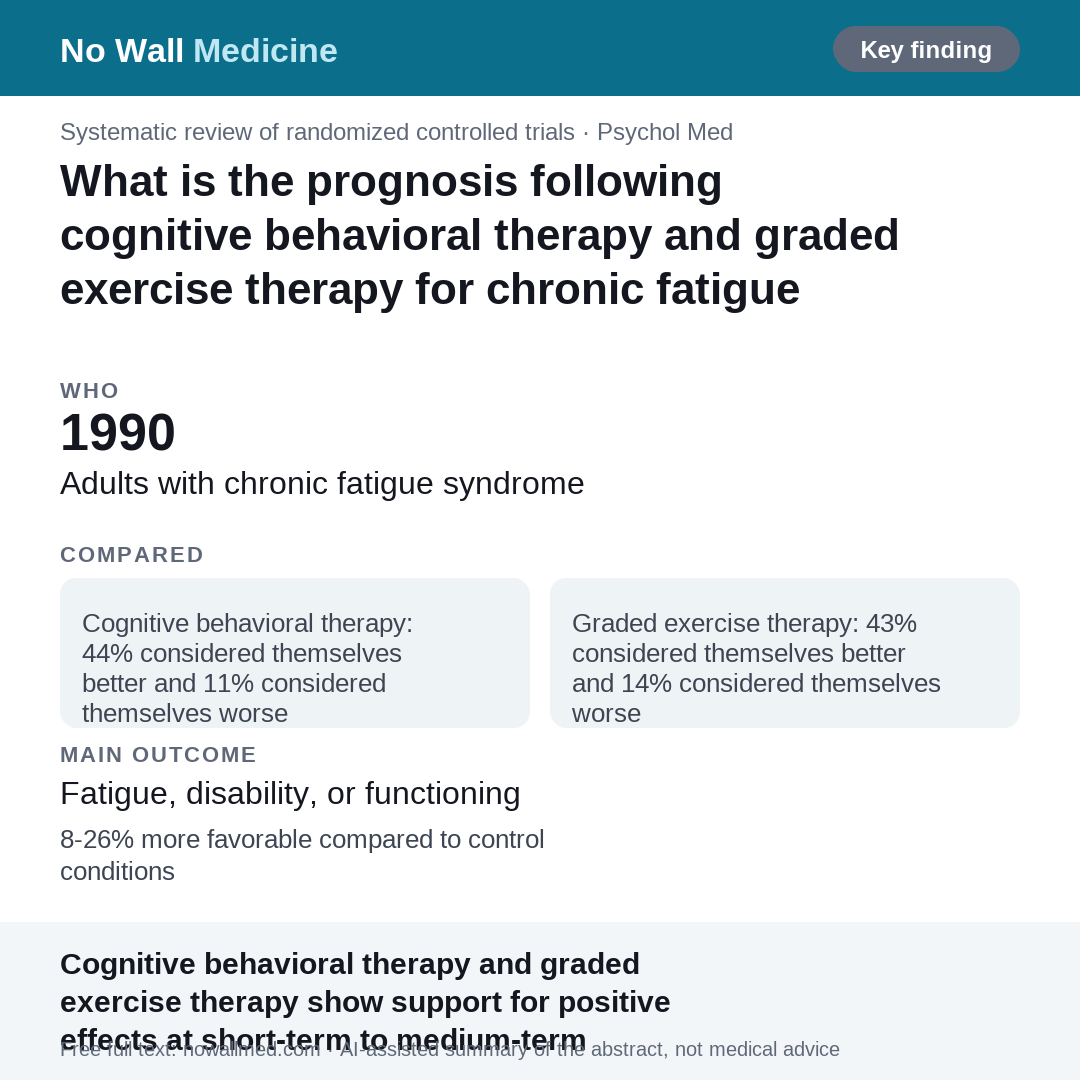
What is the prognosis following cognitive behavioral therapy and graded exercise therapy for chronic fatigue syndrome?
Who
1990
Adults with chronic fatigue syndrome
Compared
Cognitive behavioral therapy: 44% considered themselves better and 11% considered themselves worse
Graded exercise therapy: 43% considered themselves better and 14% considered themselves worse
Main outcome
Fatigue, disability, or functioning
Result: 8-26% more favorable compared to control conditions
Bottom line: Cognitive behavioral therapy and graded exercise therapy show support for positive effects at short-term to medium-term follow-up.
Limitation: Clinical heterogeneity of studies and most outcomes were self-reported.
Psychol Med · 2022-09-05Download image
Clinical question: What is the prognosis following cognitive behavioral therapy and graded exercise therapy for chronic fatigue syndrome?
Why it matters: Previous reviews have shown inconsistent findings regarding the effectiveness of cognitive behavioral therapy and graded exercise therapy for chronic fatigue syndrome.
Key points
- Researchers reviewed 15 publications involving 1990 participants to evaluate the prognosis of adults with chronic fatigue syndrome after treatment.
- Following cognitive behavioral therapy, 44% of participants felt better and 11% felt worse, while 43% felt better and 14% felt worse following graded exercise therapy.
- These outcomes were 8-26% more favorable compared to control conditions at short-term to medium-term follow-up.
Limitation the authors note: The review was limited by clinical heterogeneity among studies and the fact that most outcomes were self-reported.
Headline and key points written with AI from the paper’s abstract, with every number checked against it. Read the paper before relying on them.
Was this summary helpful?
Subject terms
Cite this article
Ingman T, Smakowski A, Goldsmith K, Chalder T. A systematic literature review of randomized controlled trials evaluating prognosis following treatment for adults with chronic fatigue syndrome. Psychol Med. 2022. doi:10.1017/S0033291722002471
Spotted a mistake? Suggest a correction