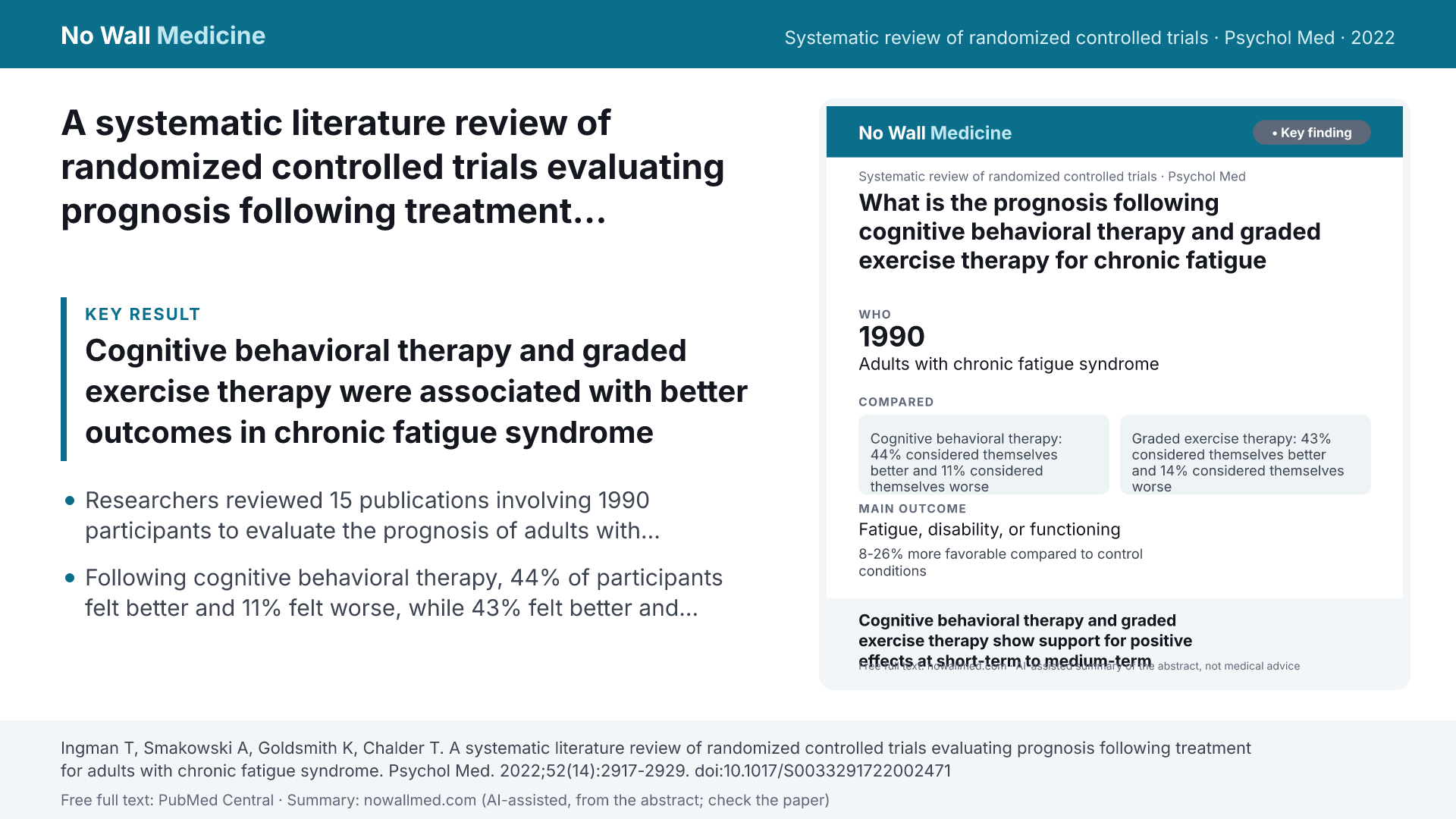
A systematic literature review of randomized controlled trials evaluating prognosis following treatment for adults with chronic fatigue syndrome
Key result: Cognitive behavioral therapy and graded exercise therapy were associated with better outcomes in chronic fatigue syndrome
Key points
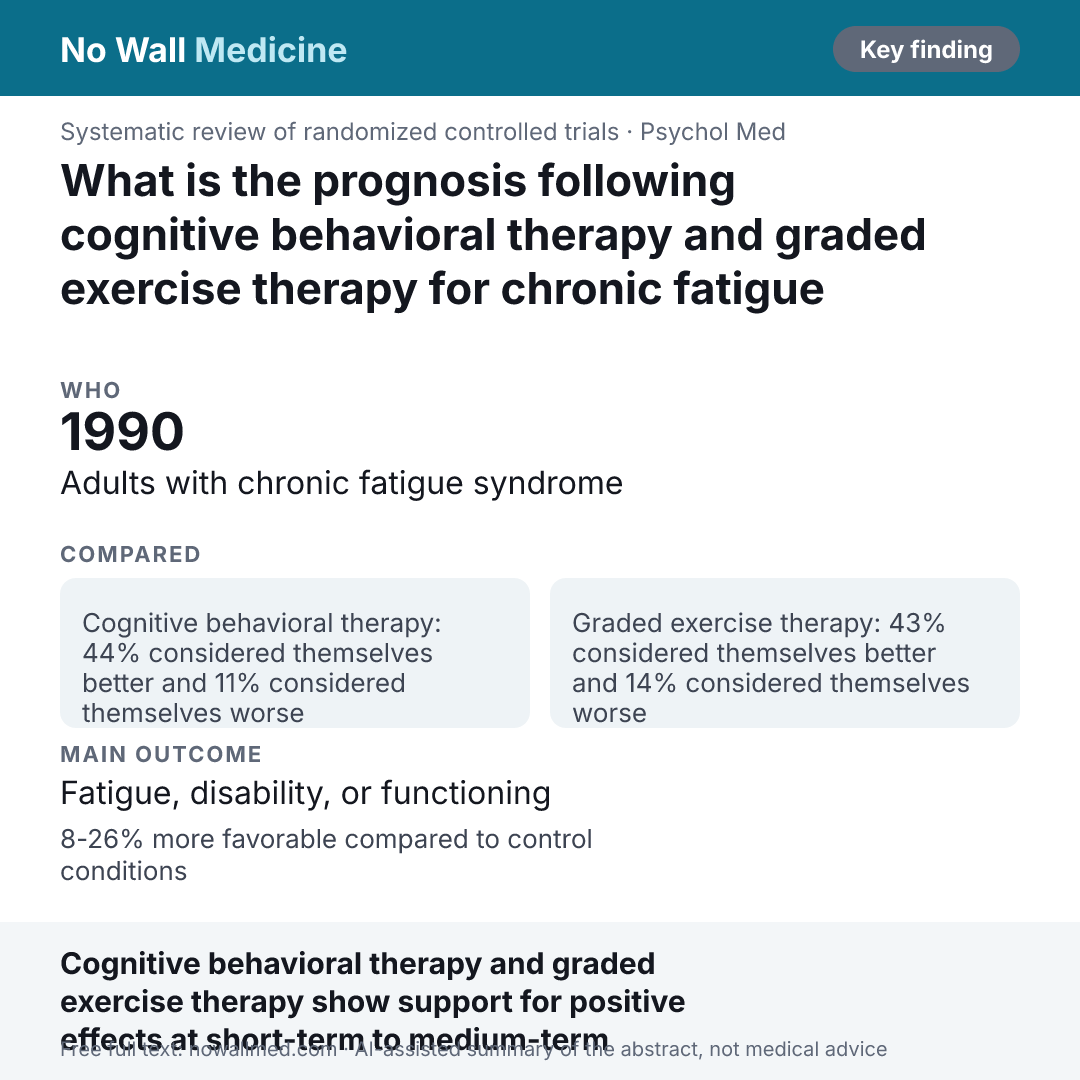
- Researchers reviewed 15 publications involving 1990 participants to evaluate the prognosis of adults with chronic fatigue syndrome after treatment.
- Following cognitive behavioral therapy, 44% of participants felt better and 11% felt worse, while 43% felt better and 14% felt worse following graded exercise therapy.
- These outcomes were 8-26% more favorable compared to control conditions at short-term to medium-term follow-up.
Limitation the authors note: The review was limited by clinical heterogeneity among studies and the fact that most outcomes were self-reported.
Discussion prompts
- Would these patients look like yours? Who was left out?
- Is the main outcome one that matters to patients?
- Is the difference large enough to change what you do?
Cite: Ingman T, Smakowski A, Goldsmith K, Chalder T. A systematic literature review of randomized controlled trials evaluating prognosis following treatment for adults with chronic fatigue syndrome. Psychol Med. 2022;52(14):2917-2929. doi:10.1017/S0033291722002471
Free full text: PubMed Central · Summary and visual abstract: nowallmed.com/a/a-systematic-literature-review-of-randomized-controlled-trials-kxsahg/ (AI-assisted from the abstract; check the paper before relying on it).