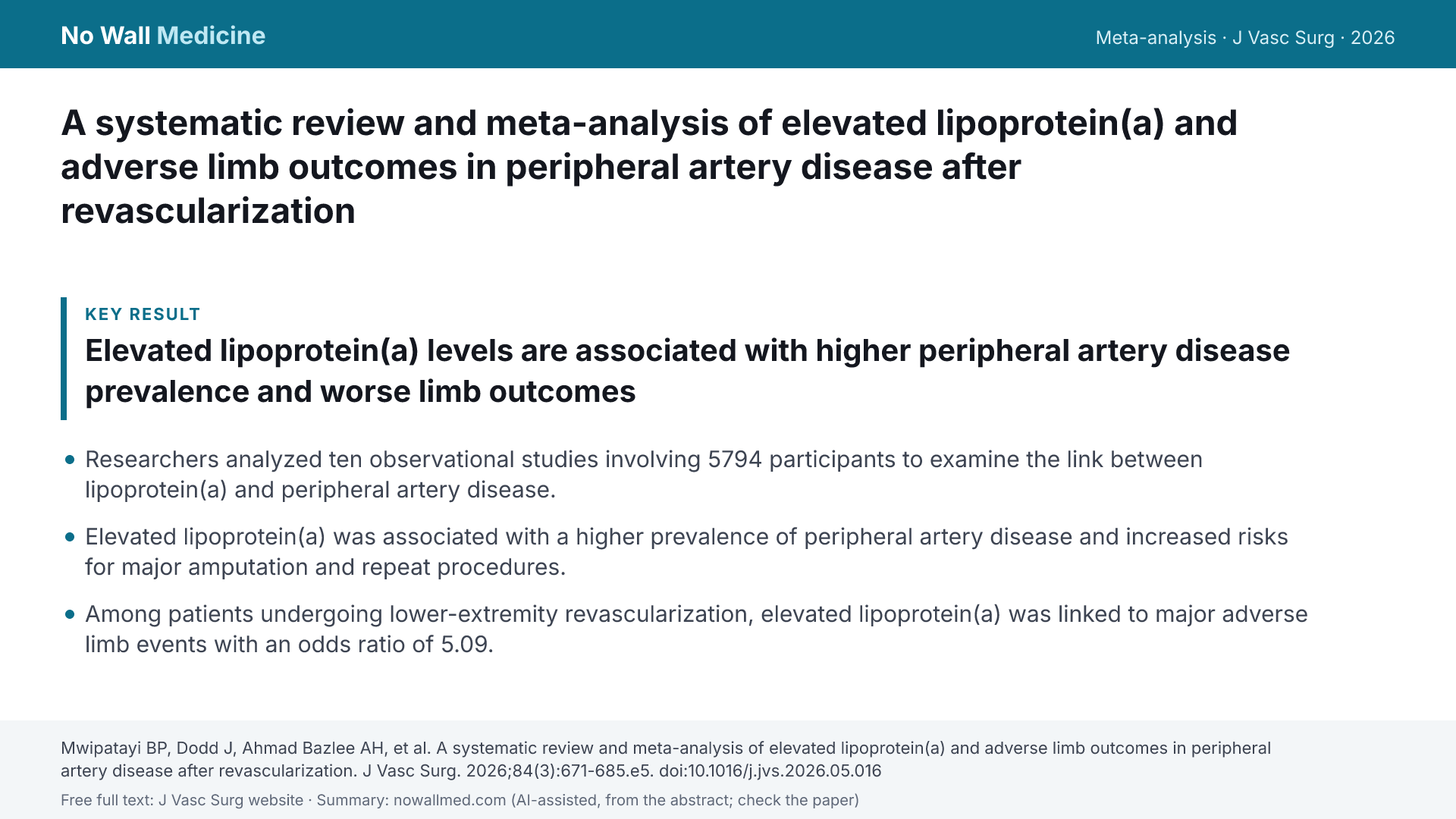
Elevated lipoprotein(a) levels are associated with higher peripheral artery disease prevalence and worse limb outcomes
A systematic review and meta-analysis of elevated lipoprotein(a) and adverse limb outcomes in peripheral artery disease after revascularization
Why it matters: The association between lipoprotein(a) levels and the prevalence of peripheral artery disease and limb-related outcomes after surgery remains incompletely defined.
Key points
- Researchers analyzed ten observational studies involving 5794 participants to examine the link between lipoprotein(a) and peripheral artery disease.
- Elevated lipoprotein(a) was associated with a higher prevalence of peripheral artery disease and increased risks for major amputation and repeat procedures.
- Among patients undergoing lower-extremity revascularization, elevated lipoprotein(a) was linked to major adverse limb events with an odds ratio of 5.09.
Limitation the authors note: Only two observational cohort studies contributed to the pooled analyses regarding limb outcomes after lower-extremity revascularization.
Headline and key points written with AI from the paper’s abstract, with every number checked against it. Read the paper before relying on them.
Was this summary helpful?
Subject terms
Headline, design, result, key points, caveat and citation as plain text.
Cite this article
Mwipatayi BP, Dodd J, Ahmad Bazlee AH, et al. A systematic review and meta-analysis of elevated lipoprotein(a) and adverse limb outcomes in peripheral artery disease after revascularization. J Vasc Surg. 2026;84(3):671-685.e5. doi:10.1016/j.jvs.2026.05.016
Spotted a mistake? Suggest a correction