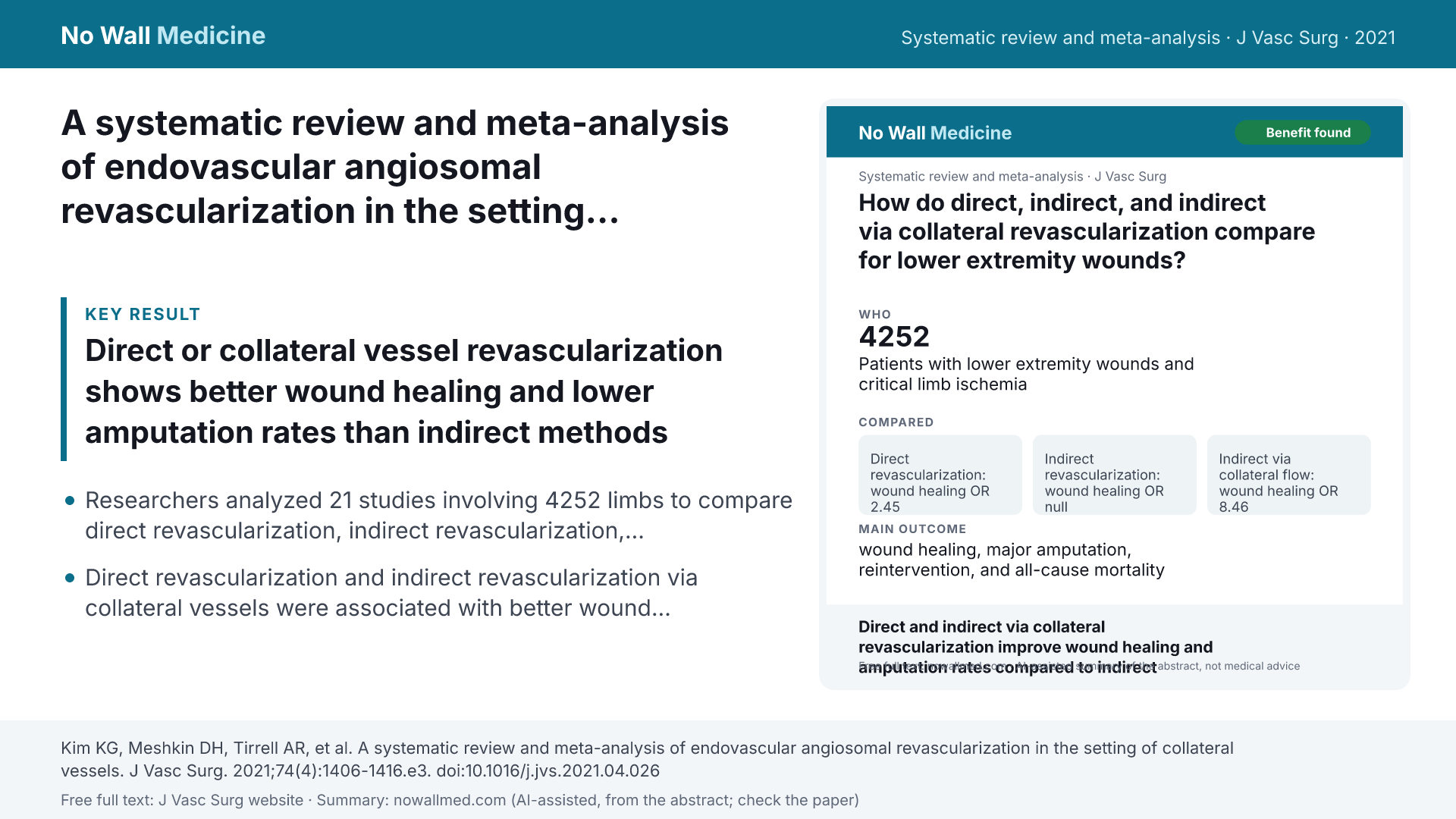
A systematic review and meta-analysis of endovascular angiosomal revascularization in the setting of collateral vessels
Key result: Direct or collateral vessel revascularization shows better wound healing and lower amputation rates than indirect methods
Key points
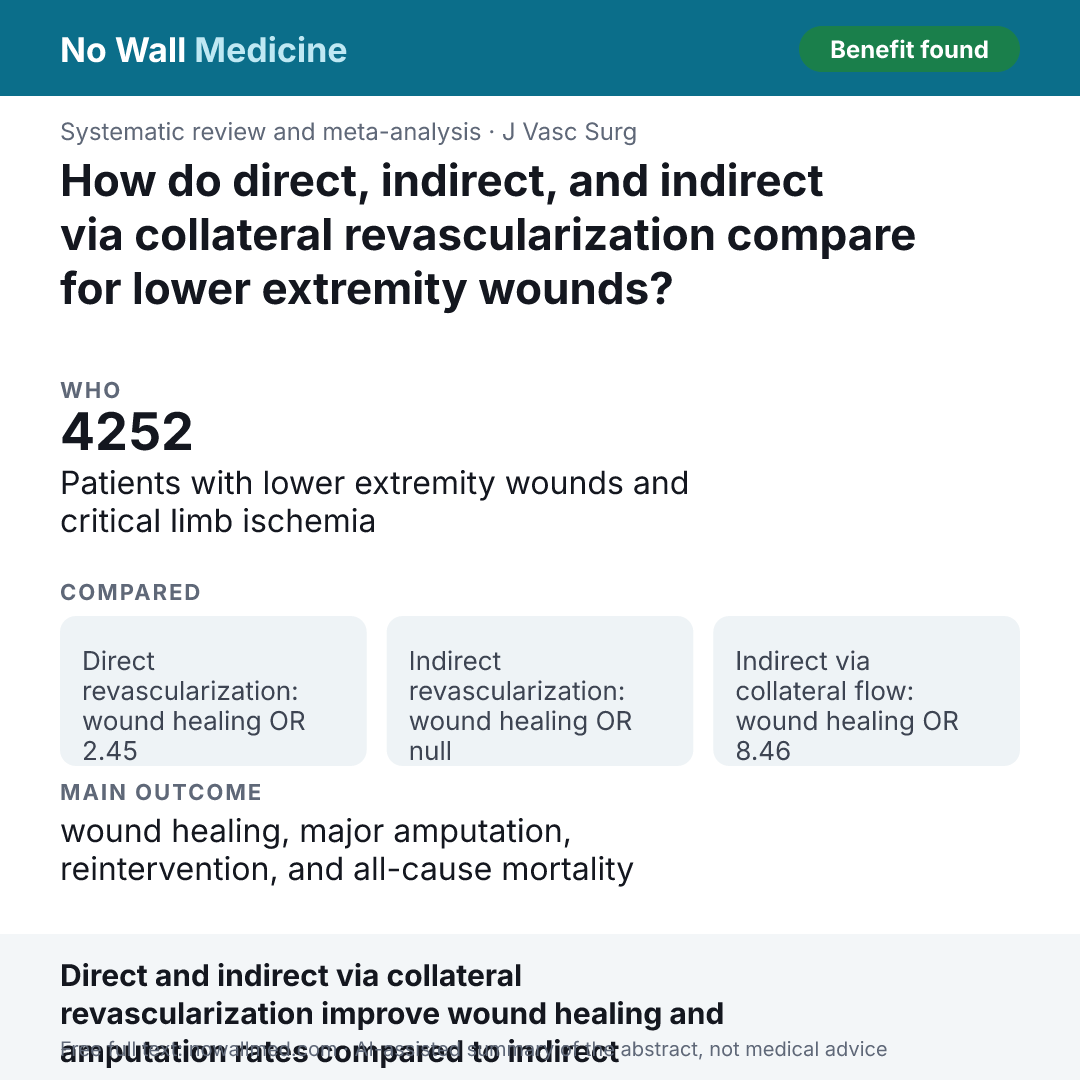
- Researchers analyzed 21 studies involving 4252 limbs to compare direct revascularization, indirect revascularization, and indirect revascularization via collateral vessels for treating lower extremity wounds.
- Direct revascularization and indirect revascularization via collateral vessels were associated with better wound healing and lower major amputation rates than indirect revascularization alone.
- No significant differences were found between the three methods regarding all-cause mortality or reintervention rates.
Why it matters: The role of collateral vessels in clinical outcomes for treating lower extremity wounds remains undefined compared to direct or indirect revascularization.
Limitation the authors note: The analysis was limited by a small sample size of collateral vessel limbs, a predominance of retrospective studies, and variability in outcome definitions.
Discussion prompts
- Would these patients look like yours? Who was left out?
- Is the main outcome one that matters to patients?
- Is the difference large enough to change what you do?
Cite: Kim KG, Meshkin DH, Tirrell AR, et al. A systematic review and meta-analysis of endovascular angiosomal revascularization in the setting of collateral vessels. J Vasc Surg. 2021;74(4):1406-1416.e3. doi:10.1016/j.jvs.2021.04.026
Free full text: J Vasc Surg website · Summary and visual abstract: nowallmed.com/a/a-systematic-review-and-meta-analysis-of-endovascular-angiosomal-11pcby9/ (AI-assisted from the abstract; check the paper before relying on it).