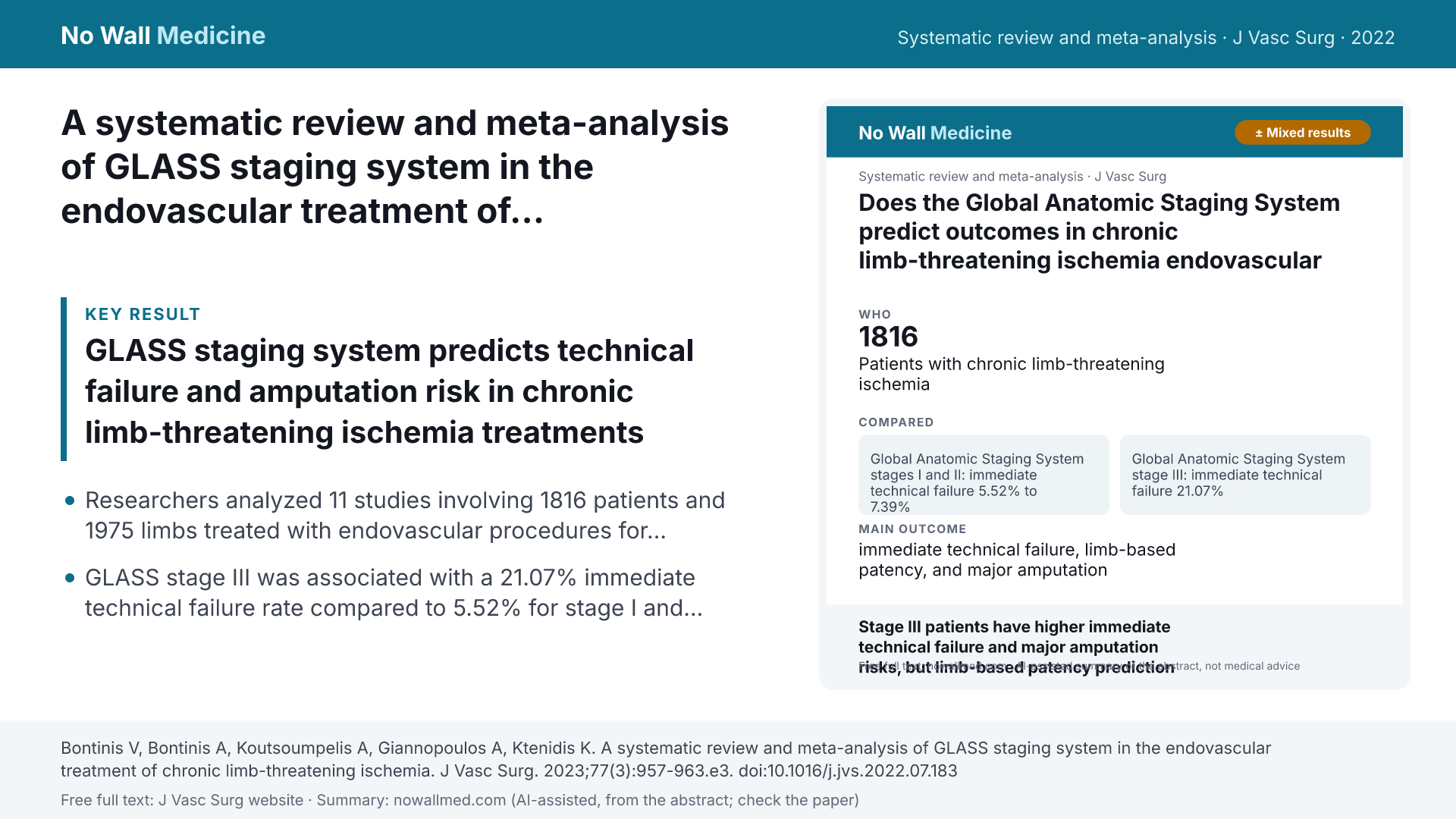
GLASS staging system predicts technical failure and amputation risk in chronic limb-threatening ischemia treatments
A systematic review and meta-analysis of GLASS staging system in the endovascular treatment of chronic limb-threatening ischemia
Systematic review and meta-analysisMixed results
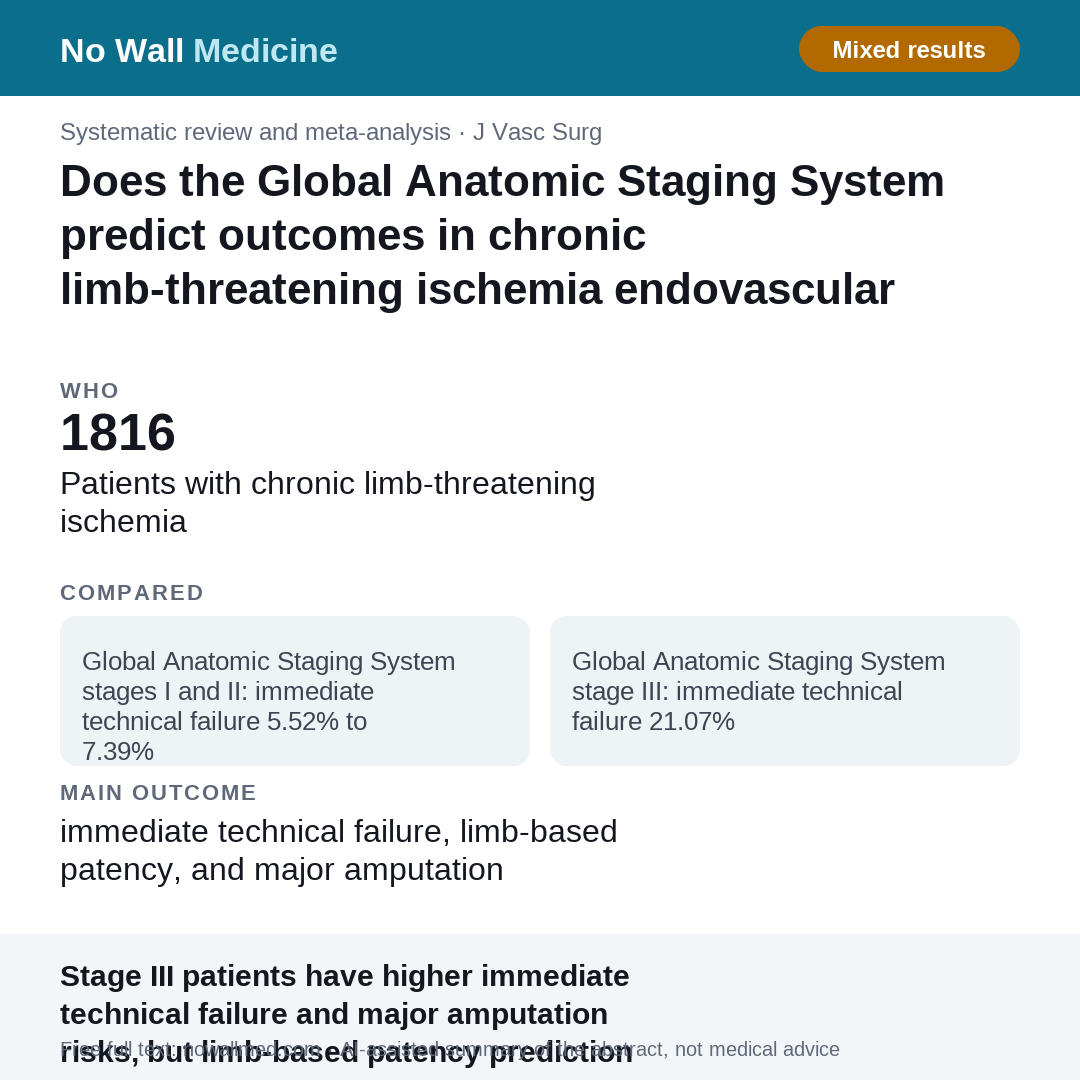
Does the Global Anatomic Staging System predict outcomes in chronic limb-threatening ischemia endovascular treatment?
Who
1816
Patients with chronic limb-threatening ischemia
Compared
Global Anatomic Staging System stages I and II: immediate technical failure 5.52% to 7.39%
Global Anatomic Staging System stage III: immediate technical failure 21.07%
Main outcome
immediate technical failure, limb-based patency, and major amputation
Result: relative risk 3.96 (95% CI, 1.96-7.98) for immediate technical failure
Bottom line: Stage III patients have higher immediate technical failure and major amputation risks, but limb-based patency prediction remains uncertain.
J Vasc Surg · 2022-08-08Download image
Clinical question: Does the Global Anatomic Staging System predict outcomes in chronic limb-threatening ischemia endovascular treatment?
Key points
- Researchers analyzed 11 studies involving 1816 patients and 1975 limbs treated with endovascular procedures for chronic limb-threatening ischemia.
- GLASS stage III was associated with a 21.07% immediate technical failure rate compared to 5.52% for stage I and 7.39% for stage II.
- Stage III patients had a 1.84 times higher risk of major amputation compared to patients in the composite GLASS I and II stages.
Limitation the authors note: The authors state that safe conclusions regarding limb-based patency cannot be drawn due to the low quality and small number of the included studies.
Headline and key points written with AI from the paper’s abstract, with every number checked against it. Read the paper before relying on them.
Was this summary helpful?
Subject terms
Headline, design, result, key points, caveat and citation as plain text.
Cite this article
Bontinis V, Bontinis A, Koutsoumpelis A, Giannopoulos A, Ktenidis K. A systematic review and meta-analysis of GLASS staging system in the endovascular treatment of chronic limb-threatening ischemia. J Vasc Surg. 2022. doi:10.1016/j.jvs.2022.07.183
Spotted a mistake? Suggest a correction