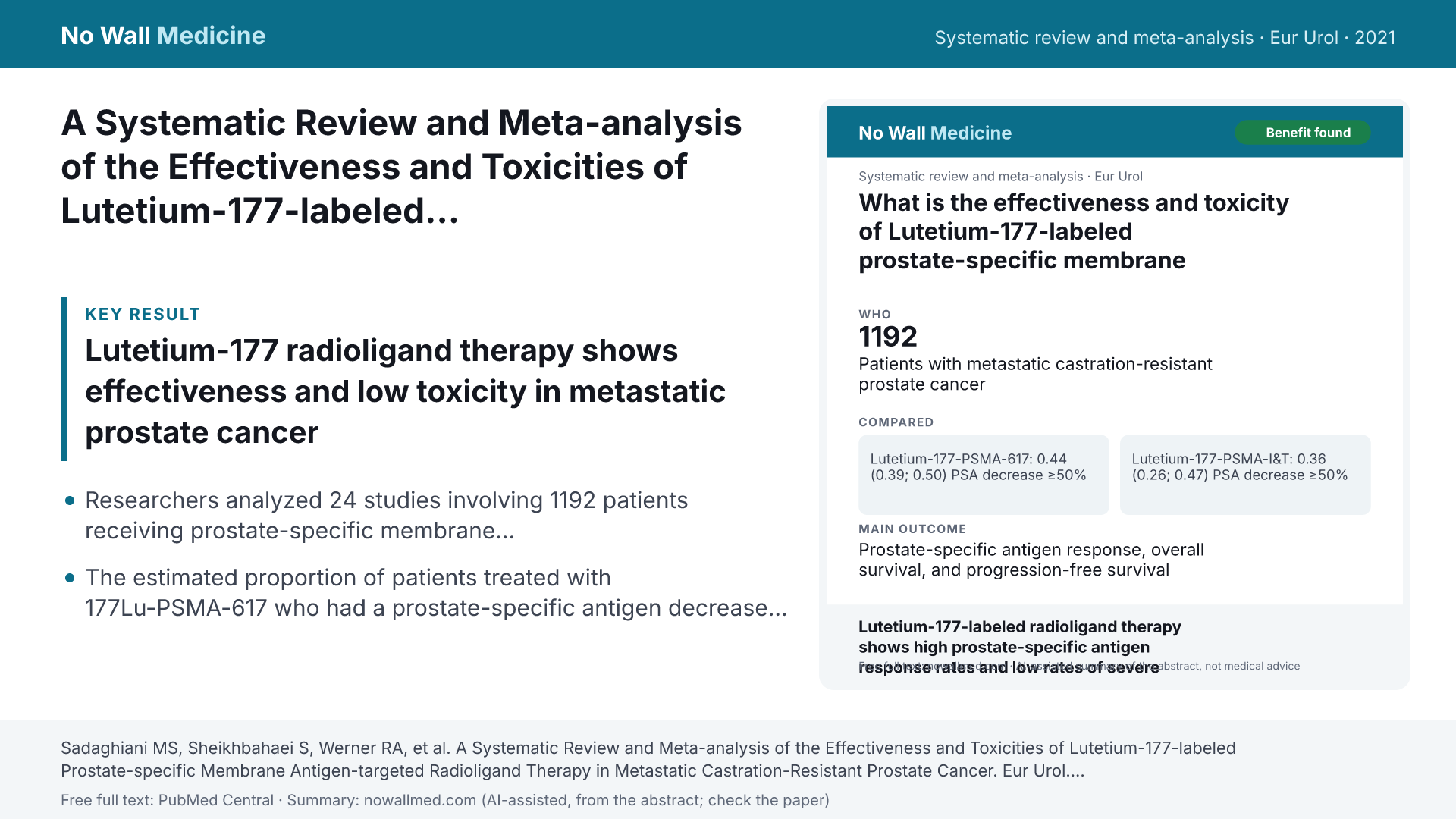
Lutetium-177 radioligand therapy shows effectiveness and low toxicity in metastatic prostate cancer
A Systematic Review and Meta-analysis of the Effectiveness and Toxicities of Lutetium-177-labeled Prostate-specific Membrane Antigen-targeted Radioligand Therapy in Metastatic Castration-Resistant Prostate Cancer
Systematic review and meta-analysisBenefit found
What is the effectiveness and toxicity of Lutetium-177-labeled prostate-specific membrane antigen-targeted radioligand therapy?
Who
1192
Patients with metastatic castration-resistant prostate cancer
Compared
Lutetium-177-PSMA-617: 0.44 (0.39; 0.50) PSA decrease ≥50%
Lutetium-177-PSMA-I&T: 0.36 (0.26; 0.47) PSA decrease ≥50%
Main outcome
Prostate-specific antigen response, overall survival, and progression-free survival
Result: hazard ratio 0.29 (0.18; 0.46) for overall survival with any PSA decline
Bottom line: Lutetium-177-labeled radioligand therapy shows high prostate-specific antigen response rates and low rates of severe toxicity in patients.
Eur Urol · 2021-04-08 · Save PNG
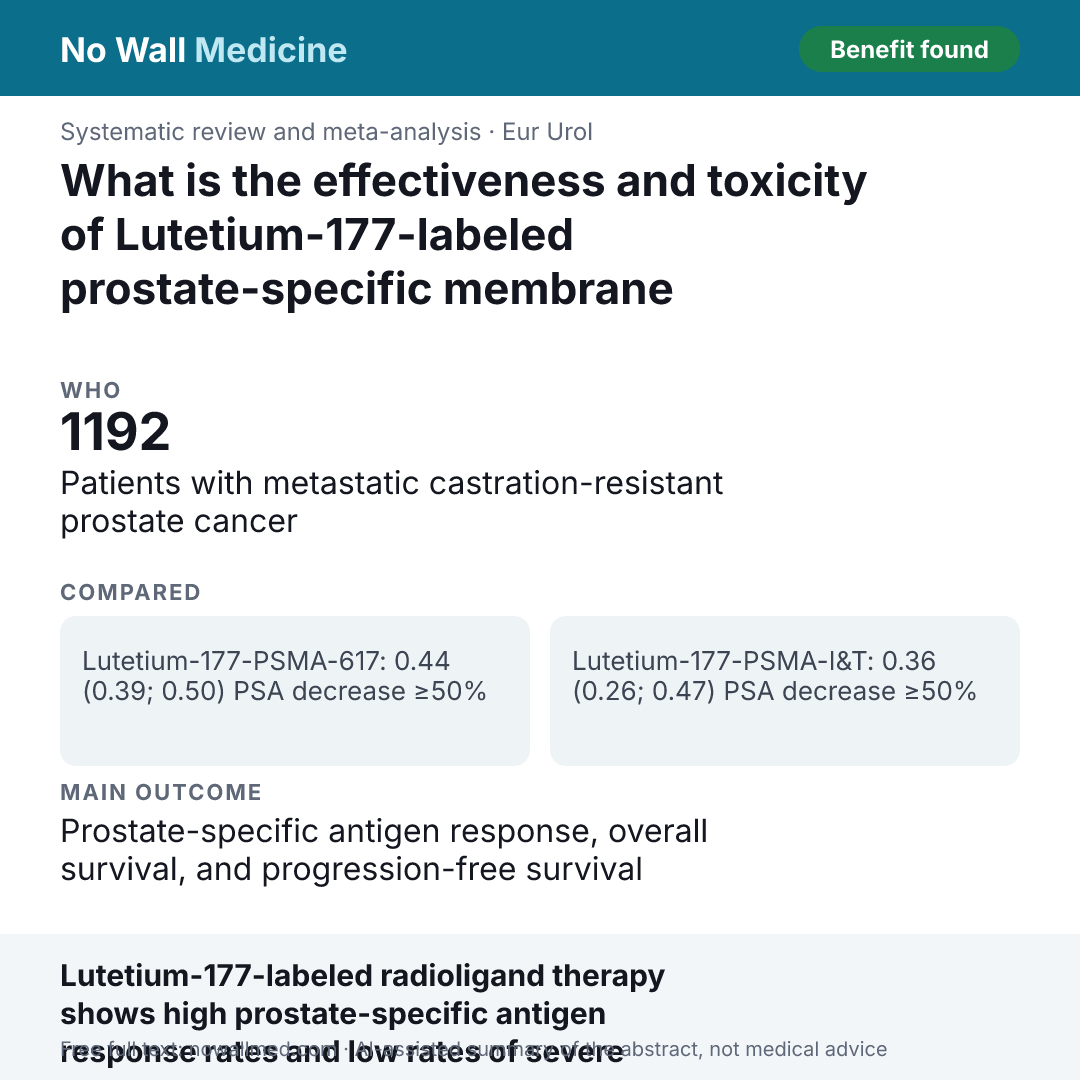
Clinical question: What is the effectiveness and toxicity of Lutetium-177-labeled prostate-specific membrane antigen-targeted radioligand therapy?
Why it matters: The effectiveness and toxicity profiles of different lutetium-177-labeled prostate-specific membrane antigen-targeted radioligand therapies were not fully synthesized.
Key points
- Researchers analyzed 24 studies involving 1192 patients receiving prostate-specific membrane antigen-targeted radioligand therapy for metastatic castration-resistant prostate cancer.
- The estimated proportion of patients treated with 177Lu-PSMA-617 who had a prostate-specific antigen decrease of ≥50% was 0.44 (0.39; 0.50).
- Severe grade 3 and 4 toxicities were uncommon, with estimated proportions ranging from 0.01 (0.00; 0.04) for nausea to 0.08 (0.05; 0.12) for anemia.
Limitation the authors note: There was considerable heterogeneity among the studies in the any-grade toxicity groups.
Headline and key points written with AI from the paper’s abstract, with every number checked against it. Read the paper before relying on them.
Was this summary helpful?
Subject terms
Headline, design, result, key points, caveat and citation as plain text.
Cite this article
Sadaghiani MS, Sheikhbahaei S, Werner RA, et al. A Systematic Review and Meta-analysis of the Effectiveness and Toxicities of Lutetium-177-labeled Prostate-specific Membrane Antigen-targeted Radioligand Therapy in Metastatic Castration-Resistant Prostate Cancer. Eur Urol. 2021. doi:10.1016/j.eururo.2021.03.004
Spotted a mistake? Suggest a correction