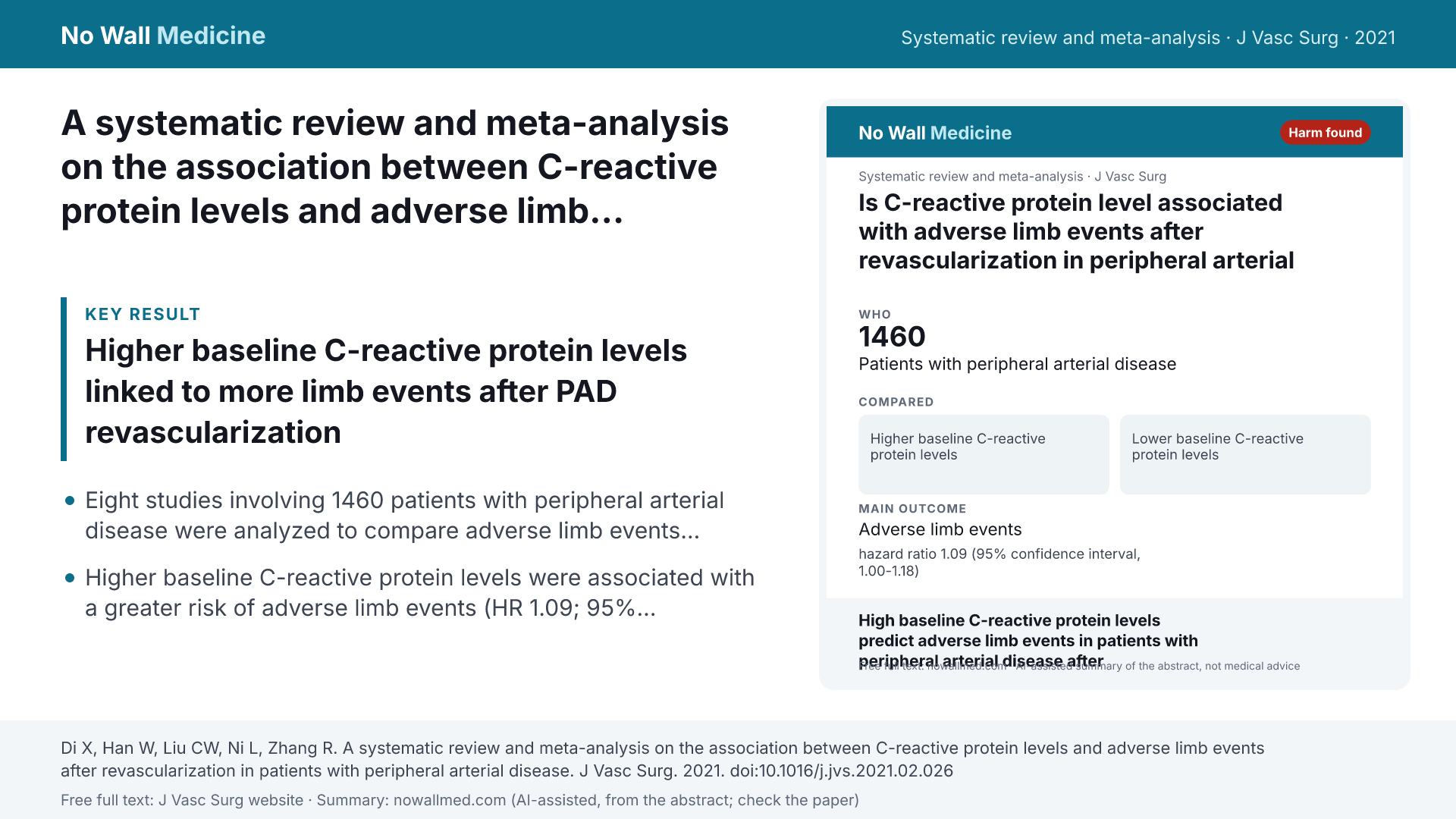
A systematic review and meta-analysis on the association between C-reactive protein levels and adverse limb events after revascularization in patients with peripheral arterial disease
Key result: Higher baseline C-reactive protein levels linked to more limb events after PAD revascularization
Key points
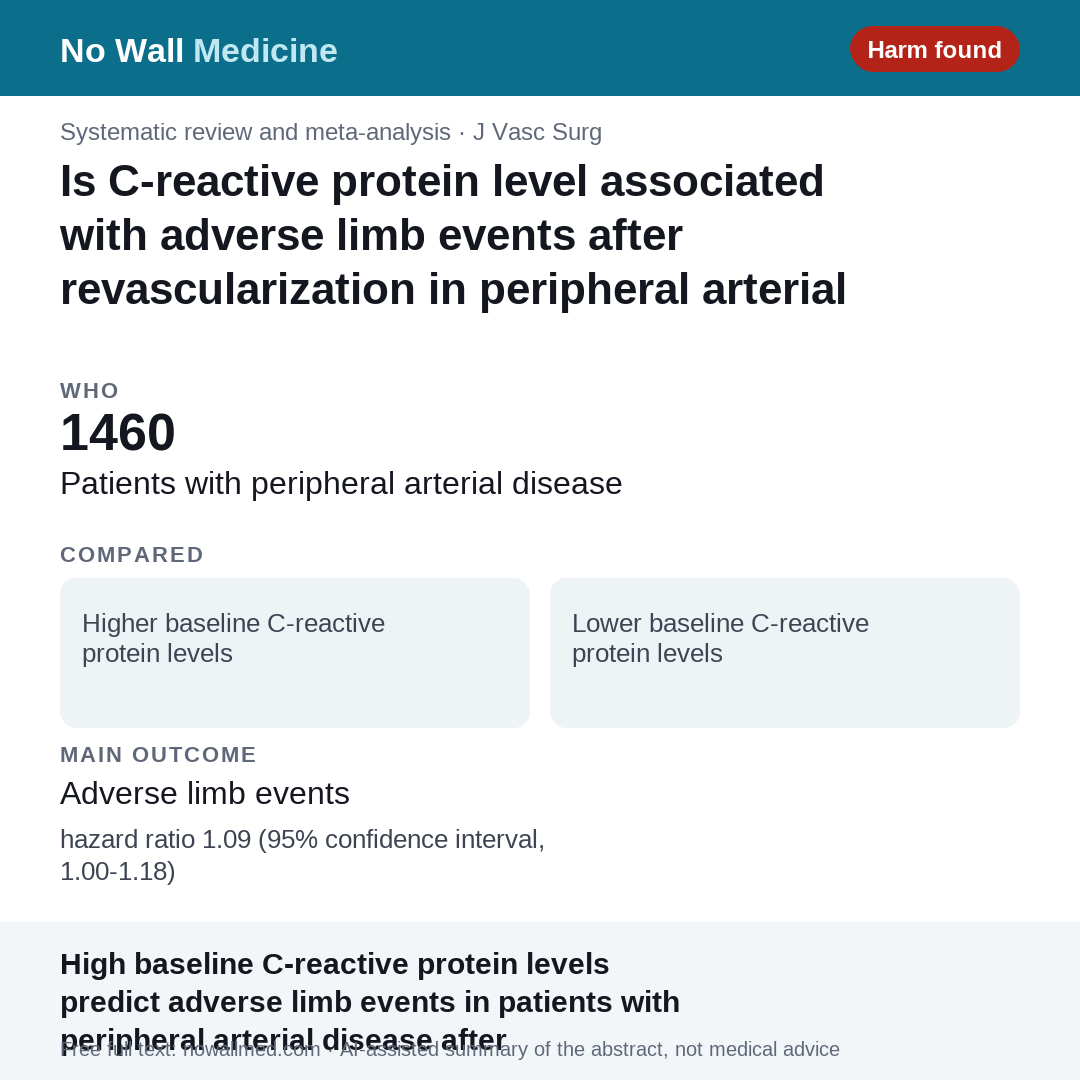
- Eight studies involving 1460 patients with peripheral arterial disease were analyzed to compare adverse limb events after revascularization.
- Higher baseline C-reactive protein levels were associated with a greater risk of adverse limb events (HR 1.09; 95% CI 1.00-1.18).
- The pooled odds ratio for adverse limb events was 2.25 (95% CI 1.49-3.41) per unit increase in logeCRP.
Why it matters: Previous single-center studies reported inconsistent results regarding the relationship between baseline C-reactive protein levels and postprocedure adverse limb events.
Discussion prompts
- Would these patients look like yours? Who was left out?
- Is the main outcome one that matters to patients?
- Is the difference large enough to change what you do?
Cite: Di X, Han W, Liu CW, Ni L, Zhang R. A systematic review and meta-analysis on the association between C-reactive protein levels and adverse limb events after revascularization in patients with peripheral arterial disease. J Vasc Surg. 2021. doi:10.1016/j.jvs.2021.02.026
Free full text: J Vasc Surg website · Summary and visual abstract: nowallmed.com/a/a-systematic-review-and-meta-analysis-on-the-association-between-c-6mvo8n/ (AI-assisted from the abstract; check the paper before relying on it).