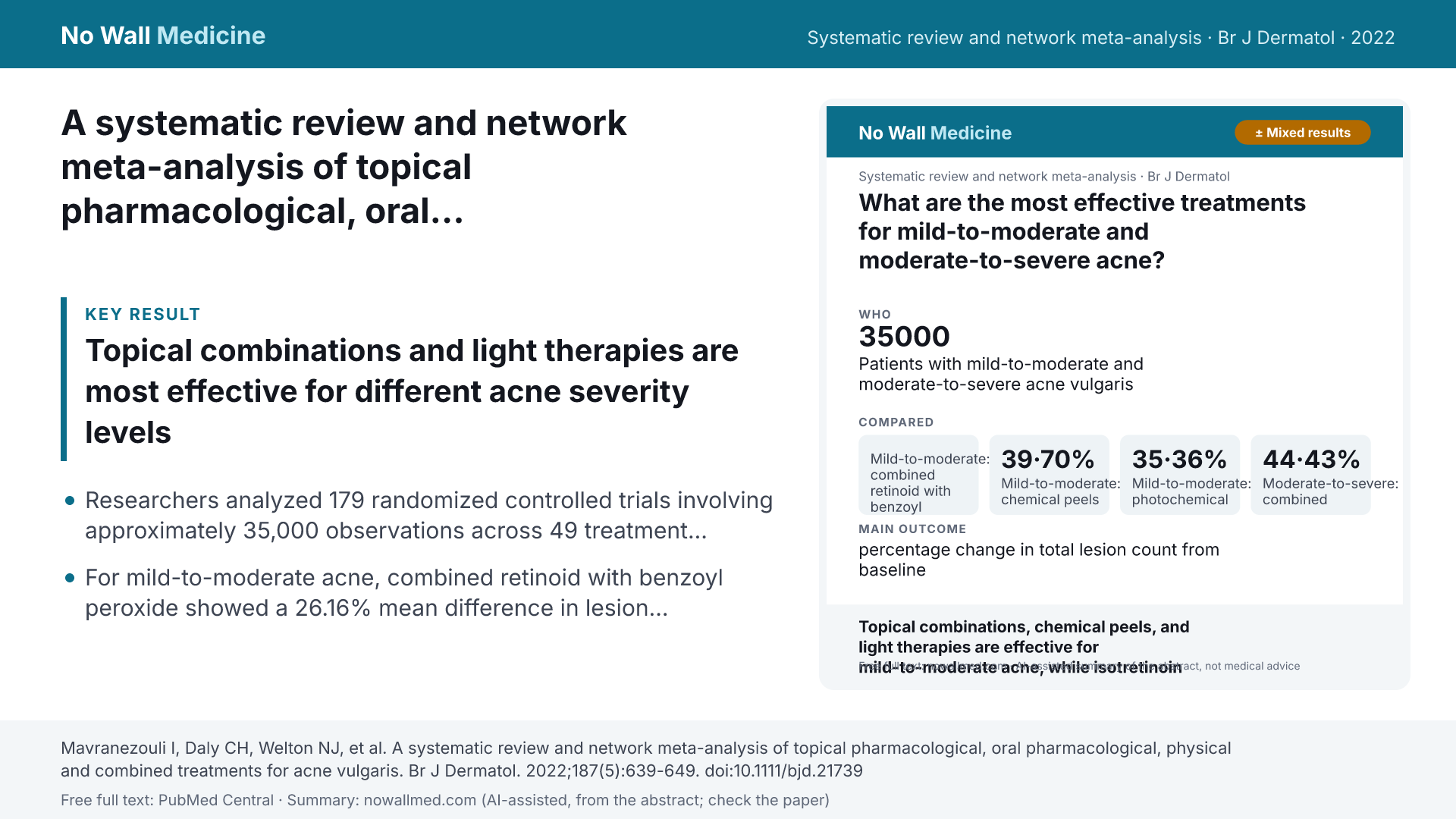
A systematic review and network meta-analysis of topical pharmacological, oral pharmacological, physical and combined treatments for acne vulgaris
Key result: Topical combinations and light therapies are most effective for different acne severity levels
Key points
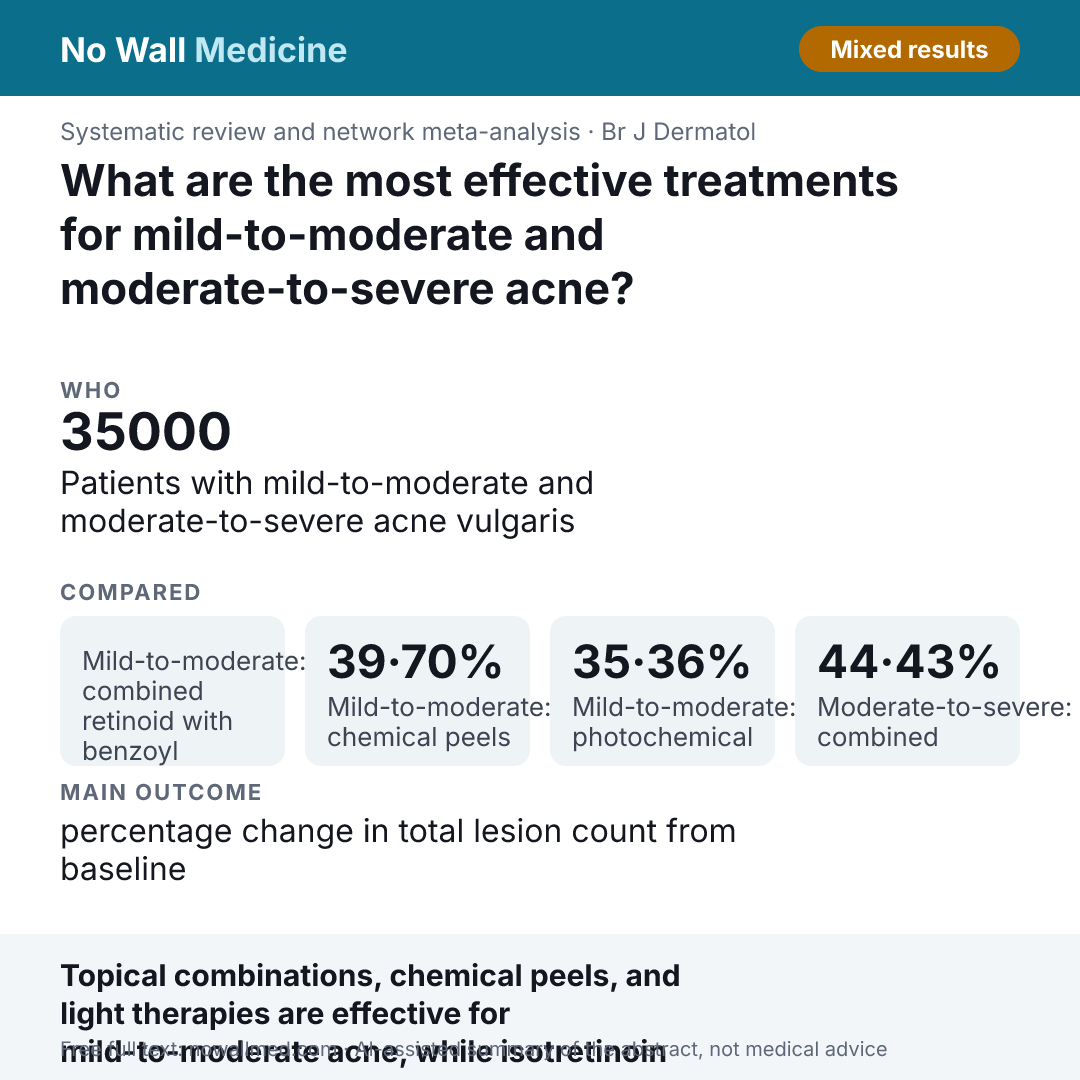
- Researchers analyzed 179 randomized controlled trials involving approximately 35,000 observations across 49 treatment classes for acne.
- For mild-to-moderate acne, combined retinoid with benzoyl peroxide showed a 26.16% mean difference in lesion reduction compared to placebo.
- For moderate-to-severe acne, oral isotretinoin with a cumulative dose of ≥ 120 mg kg-1 showed a 58.09% mean difference in lesion reduction.
Limitation the authors note: The quality of included randomized controlled trials was moderate to very low, and uncertainty in findings was high for chemical peels, photochemical therapy, and photodynamic therapy.
Discussion prompts
- Would these patients look like yours? Who was left out?
- Is the main outcome one that matters to patients?
- Is the difference large enough to change what you do?
Cite: Mavranezouli I, Daly CH, Welton NJ, et al. A systematic review and network meta-analysis of topical pharmacological, oral pharmacological, physical and combined treatments for acne vulgaris. Br J Dermatol. 2022;187(5):639-649. doi:10.1111/bjd.21739
Free full text: PubMed Central · Summary and visual abstract: nowallmed.com/a/a-systematic-review-and-network-meta-analysis-of-topical-z5lm31/ (AI-assisted from the abstract; check the paper before relying on it).