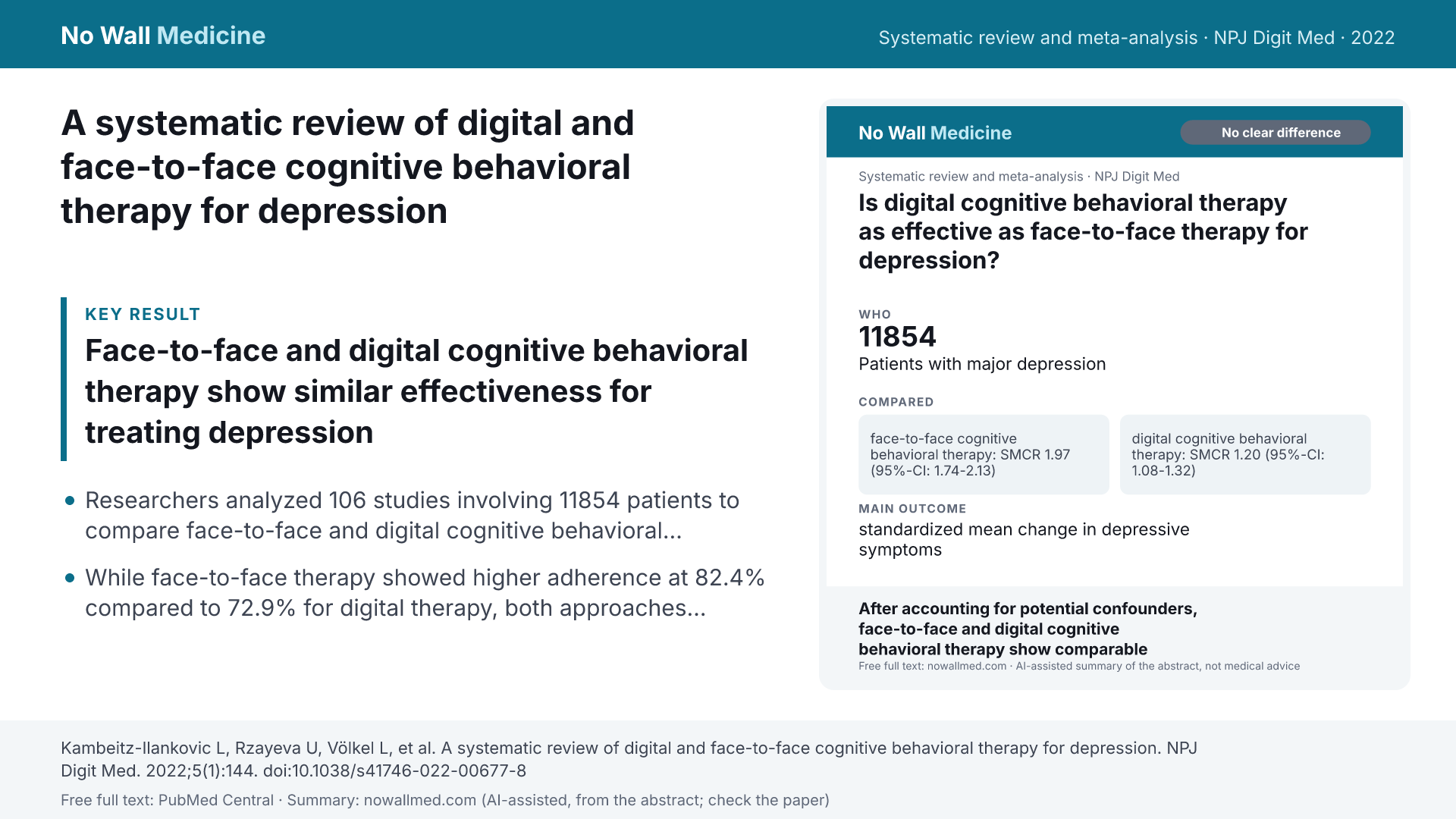
Face-to-face and digital cognitive behavioral therapy show similar effectiveness for treating depression
A systematic review of digital and face-to-face cognitive behavioral therapy for depression
Systematic review and meta-analysisNo clear difference
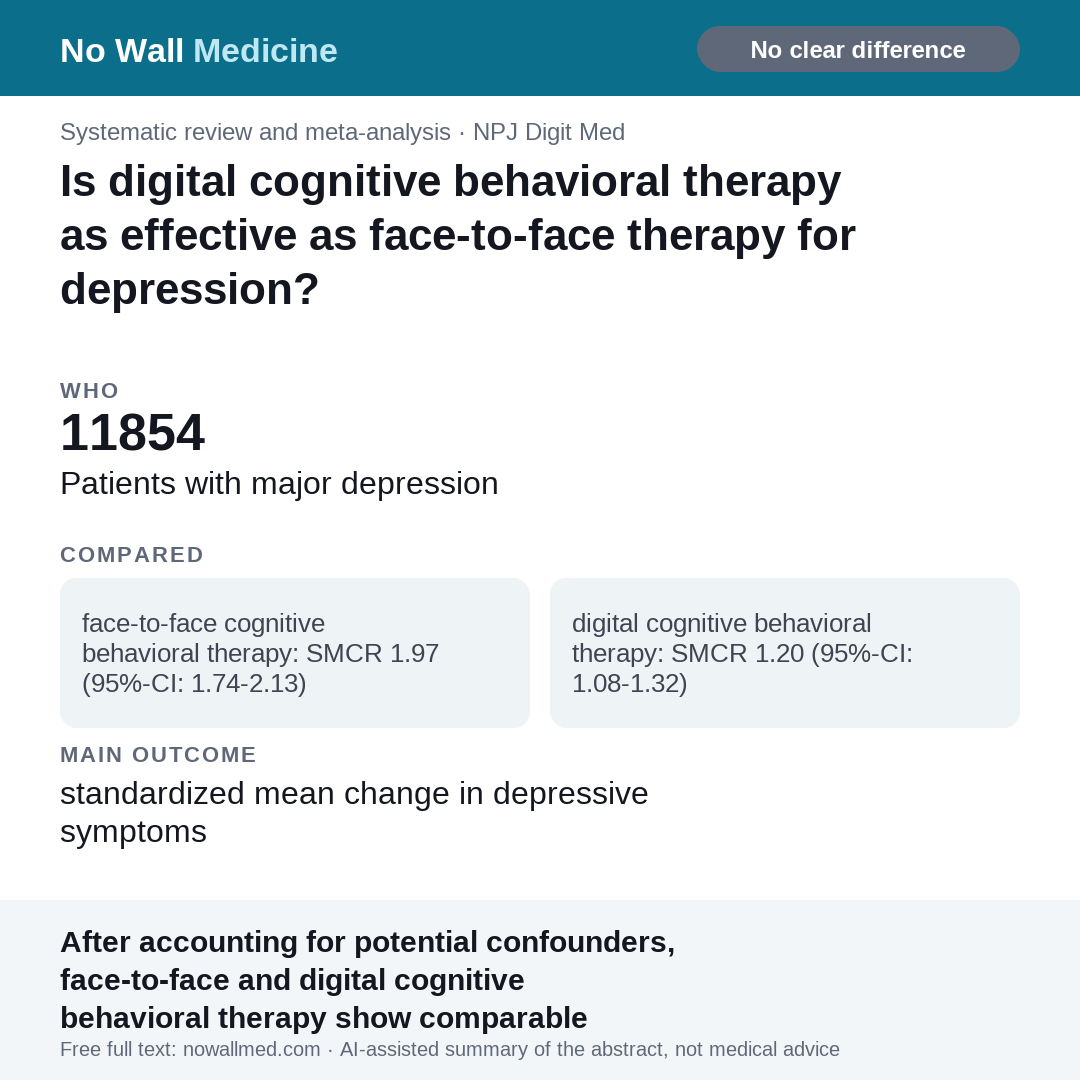
Is digital cognitive behavioral therapy as effective as face-to-face therapy for depression?
Who
11854
Patients with major depression
Compared
face-to-face cognitive behavioral therapy: SMCR 1.97 (95%-CI: 1.74-2.13)
digital cognitive behavioral therapy: SMCR 1.20 (95%-CI: 1.08-1.32)
Main outcome
standardized mean change in depressive symptoms
Bottom line: After accounting for potential confounders, face-to-face and digital cognitive behavioral therapy show comparable effectiveness for depression.
NPJ Digit Med · 2022-09-15Download image
Clinical question: Is digital cognitive behavioral therapy as effective as face-to-face therapy for depression?
Why it matters: The relative effectiveness of newly developed digital cognitive behavioral therapy compared to traditional face-to-face therapy for major depression remains unclear.
Key points
- Researchers analyzed 106 studies involving 11854 patients to compare face-to-face and digital cognitive behavioral therapy, a type of talk therapy, for major depression.
- While face-to-face therapy showed higher adherence at 82.4% compared to 72.9% for digital therapy, both approaches showed similar effectiveness after accounting for study differences.
- The effectiveness of these treatments was influenced by factors such as intervention duration, baseline severity, adherence, and the amount of human guidance provided in digital versions.
Headline and key points written with AI from the paper’s abstract, with every number checked against it. Read the paper before relying on them.
Was this summary helpful?
Cite this article
Kambeitz-Ilankovic L, Rzayeva U, Völkel L, et al. A systematic review of digital and face-to-face cognitive behavioral therapy for depression. NPJ Digit Med. 2022. doi:10.1038/s41746-022-00677-8
Spotted a mistake? Suggest a correction