A systematic review of digital and face-to-face cognitive behavioral therapy for depression
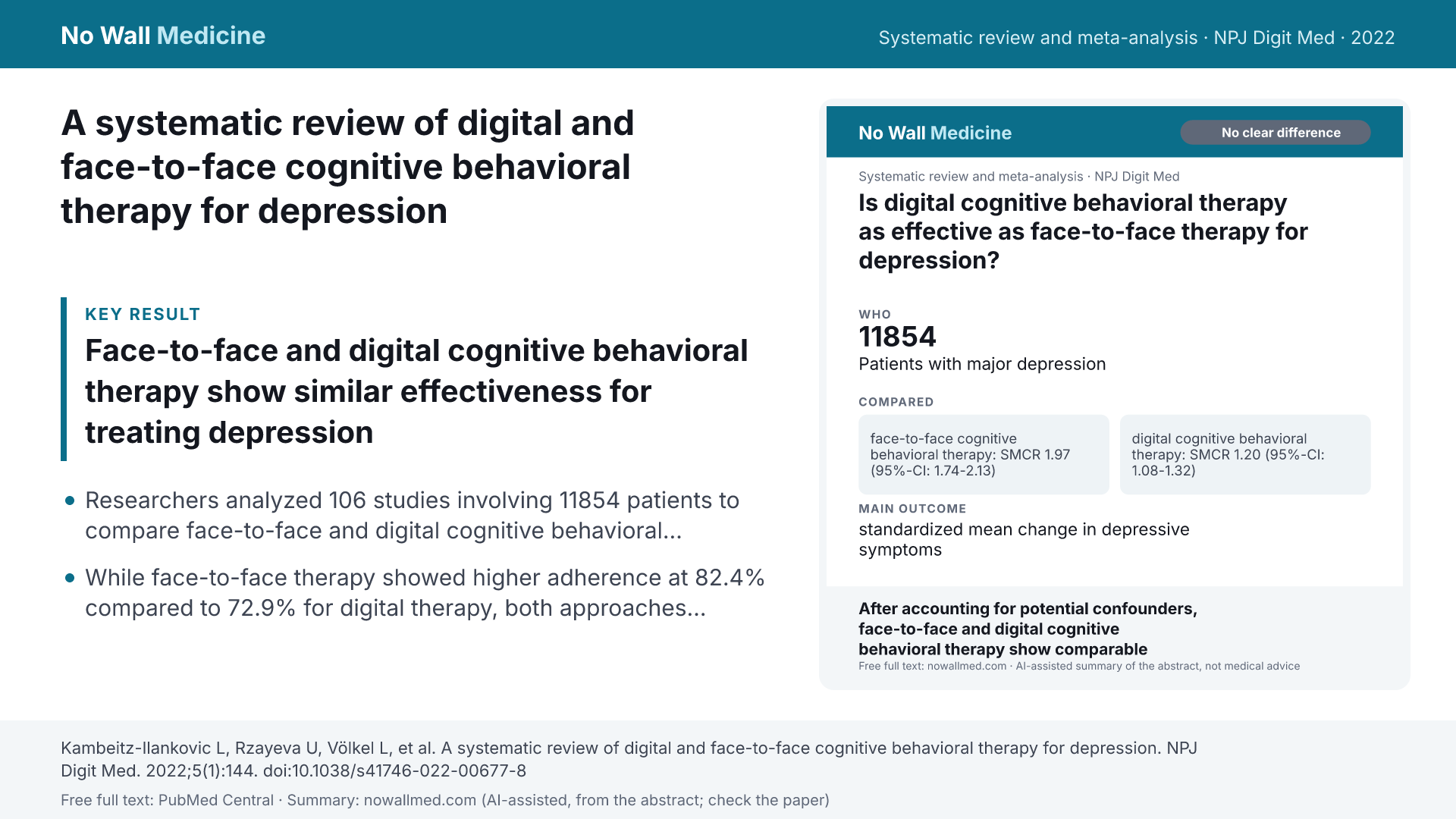
Key result: Face-to-face and digital cognitive behavioral therapy show similar effectiveness for treating depression
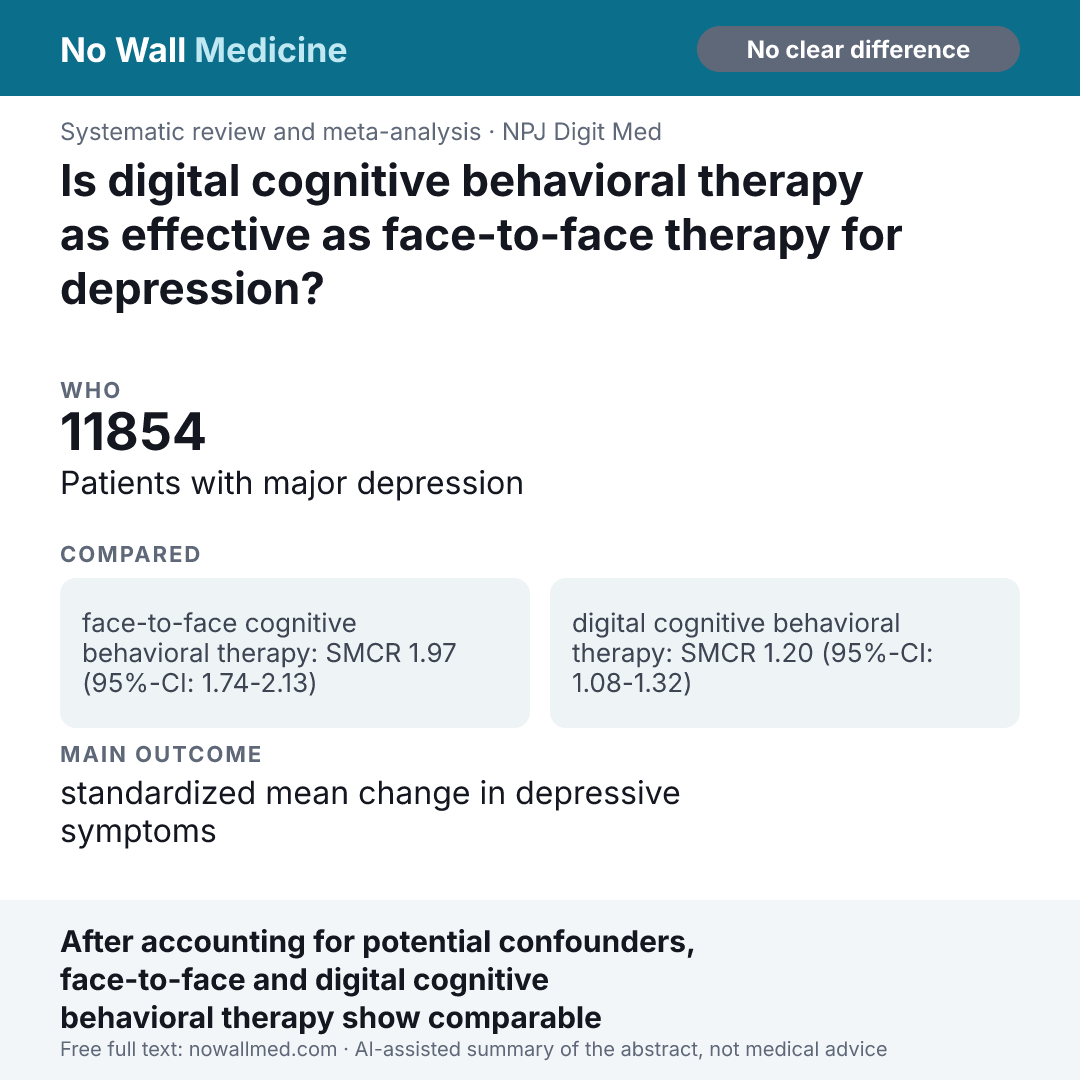
Systematic review and meta-analysisNo clear difference
Is digital cognitive behavioral therapy as effective as face-to-face therapy for depression?
Who
11854
Patients with major depression
Compared
face-to-face cognitive behavioral therapy: SMCR 1.97 (95%-CI: 1.74-2.13)
digital cognitive behavioral therapy: SMCR 1.20 (95%-CI: 1.08-1.32)
Main outcome
standardized mean change in depressive symptoms
Bottom line: After accounting for potential confounders, face-to-face and digital cognitive behavioral therapy show comparable effectiveness for depression.
NPJ Digit Med · 2022-09-15 · Save PNG
Key points
- Researchers analyzed 106 studies involving 11854 patients to compare face-to-face and digital cognitive behavioral therapy, a type of talk therapy, for major depression.
- While face-to-face therapy showed higher adherence at 82.4% compared to 72.9% for digital therapy, both approaches showed similar effectiveness after accounting for study differences.
- The effectiveness of these treatments was influenced by factors such as intervention duration, baseline severity, adherence, and the amount of human guidance provided in digital versions.
Discussion prompts
- Would these patients look like yours? Who was left out?
- Is the main outcome one that matters to patients?
- Is the difference large enough to change what you do?
Cite: Kambeitz-Ilankovic L, Rzayeva U, Völkel L, et al. A systematic review of digital and face-to-face cognitive behavioral therapy for depression. NPJ Digit Med. 2022;5(1):144. doi:10.1038/s41746-022-00677-8
Free full text: PubMed Central · Summary and visual abstract: nowallmed.com/a/a-systematic-review-of-digital-and-face-to-face-cognitive-behavioral-pyt105/ (AI-assisted from the abstract; check the paper before relying on it).