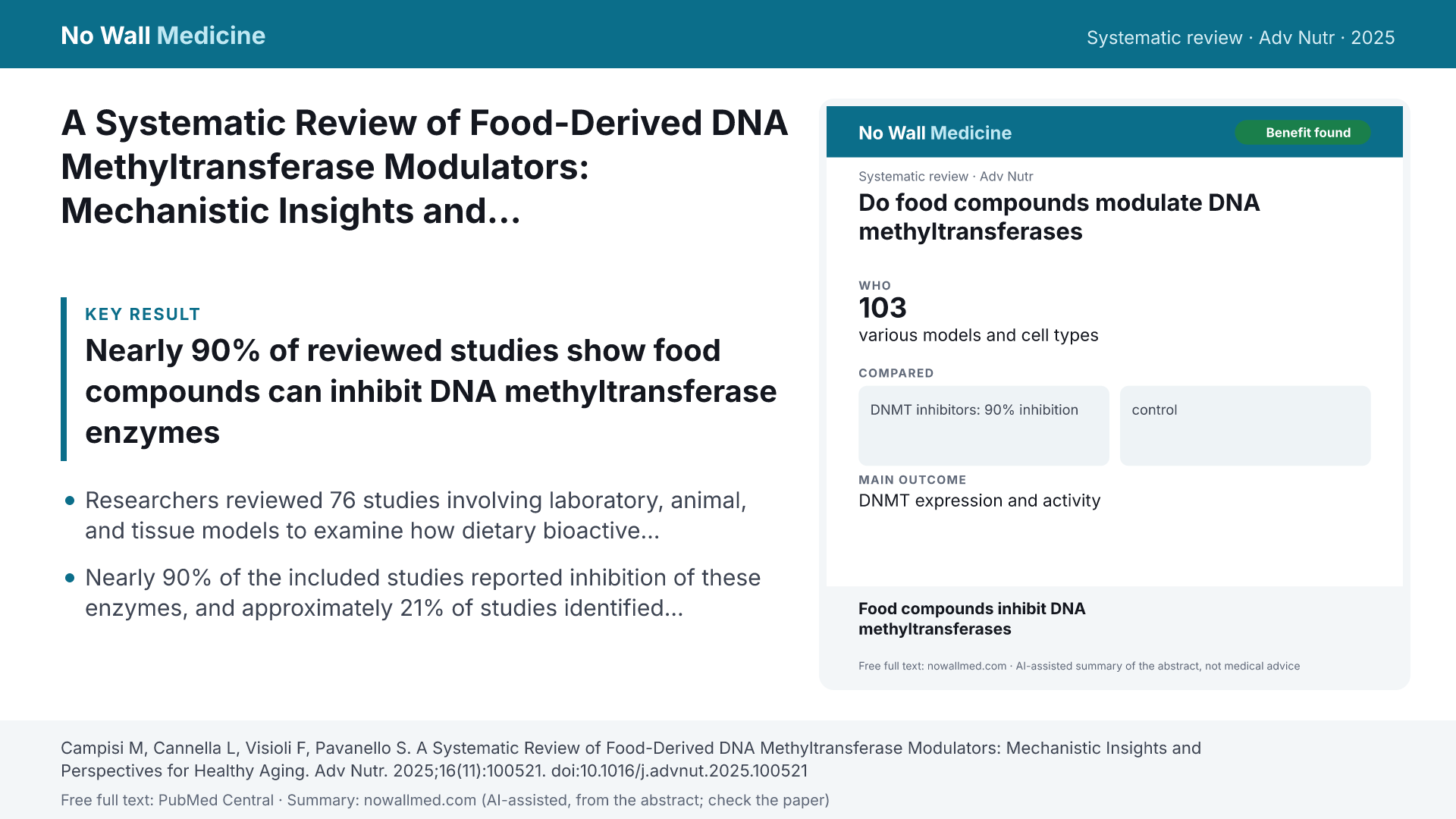
Nearly 90% of reviewed studies show food compounds can inhibit DNA methyltransferase enzymes
A Systematic Review of Food-Derived DNA Methyltransferase Modulators: Mechanistic Insights and Perspectives for Healthy Aging
Systematic reviewBenefit found
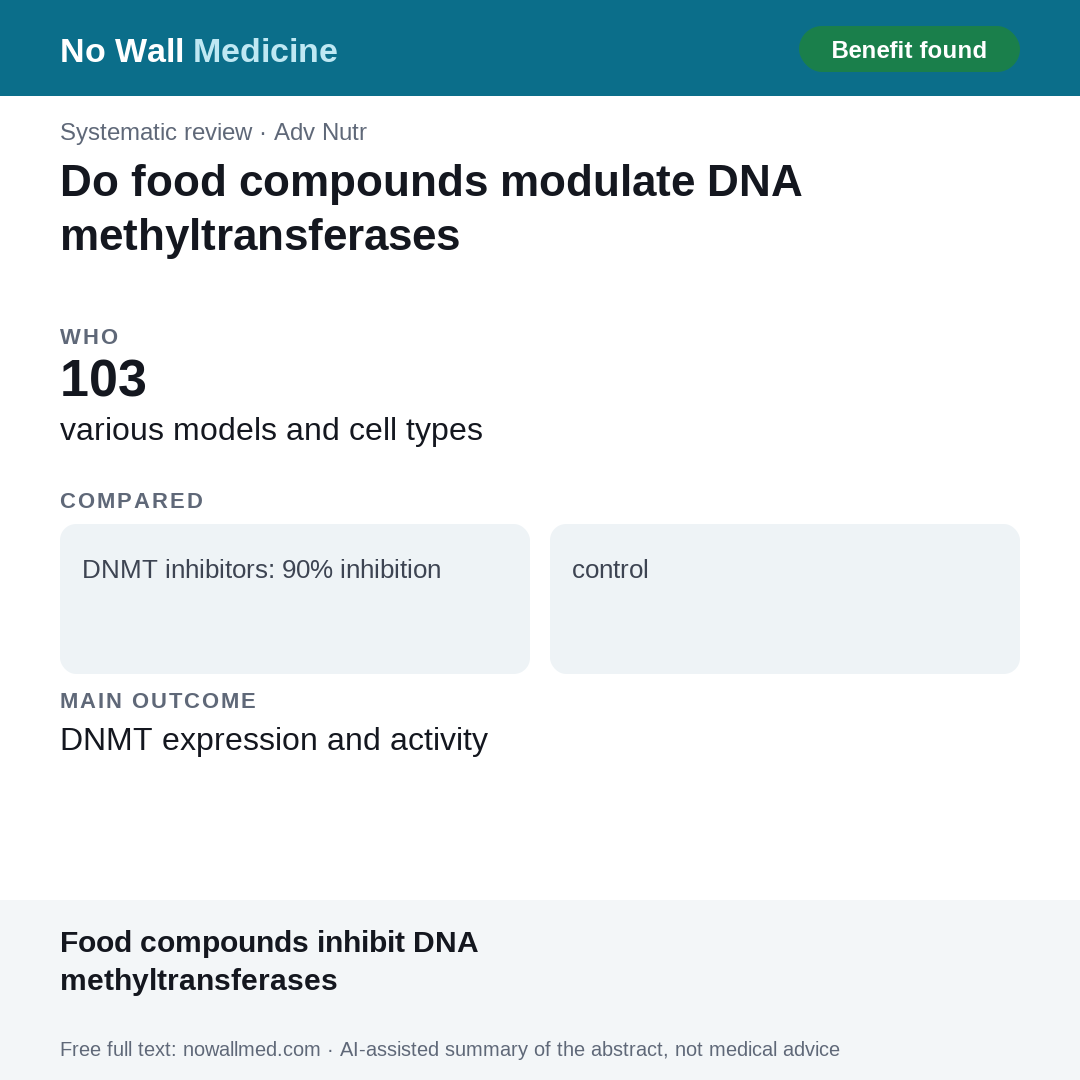
Do food compounds modulate DNA methyltransferases
Who
103
various models and cell types
Compared
DNMT inhibitors: 90% inhibition
control
Main outcome
DNMT expression and activity
Bottom line: Food compounds inhibit DNA methyltransferases
Funded by: European Union and University of Padua
Adv Nutr · 2025-09-18Download image
Why it matters: It is unclear how dietary bioactive compounds influence the enzymes that regulate gene expression and the aging process through epigenetic mechanisms.
Key points
- Researchers reviewed 76 studies involving laboratory, animal, and tissue models to examine how dietary bioactive compounds affect DNA methyltransferase, which are enzymes that control gene expression.
- Nearly 90% of the included studies reported inhibition of these enzymes, and approximately 21% of studies identified minimal effective concentrations for the compounds.
- Commonly studied compounds included epigallocatechin-3-gallate, curcumin, genistein, resveratrol, sulforaphane, and folate.
Headline and key points written with AI from the paper’s abstract, with every number checked against it. Read the paper before relying on them.
Was this summary helpful?
Subject terms
Cite this article
Campisi M, Cannella L, Visioli F, Pavanello S. A Systematic Review of Food-Derived DNA Methyltransferase Modulators: Mechanistic Insights and Perspectives for Healthy Aging. Adv Nutr. 2025. doi:10.1016/j.advnut.2025.100521
Spotted a mistake? Suggest a correction