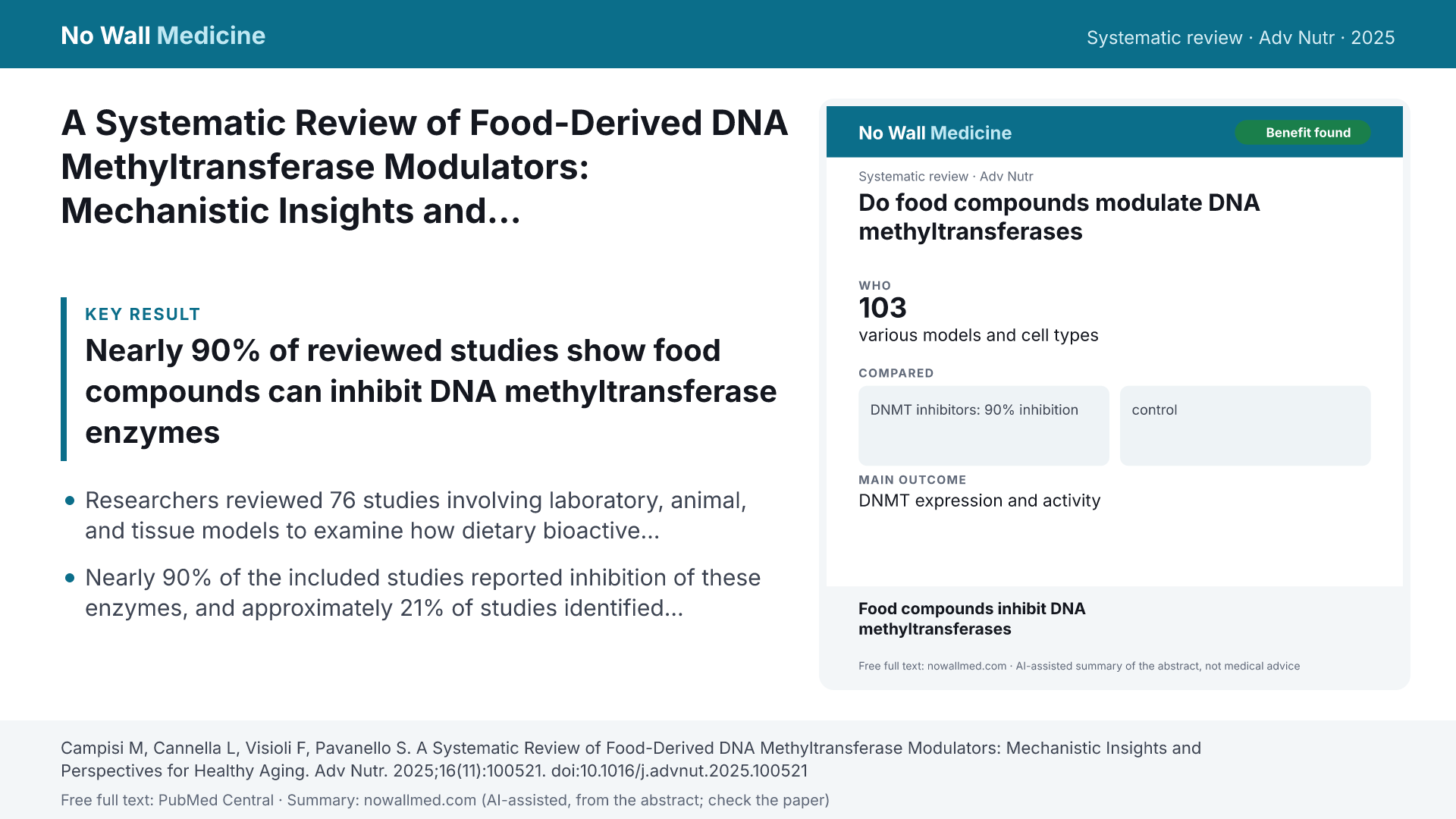
A Systematic Review of Food-Derived DNA Methyltransferase Modulators: Mechanistic Insights and Perspectives for Healthy Aging
Key result: Nearly 90% of reviewed studies show food compounds can inhibit DNA methyltransferase enzymes
Systematic reviewBenefit found
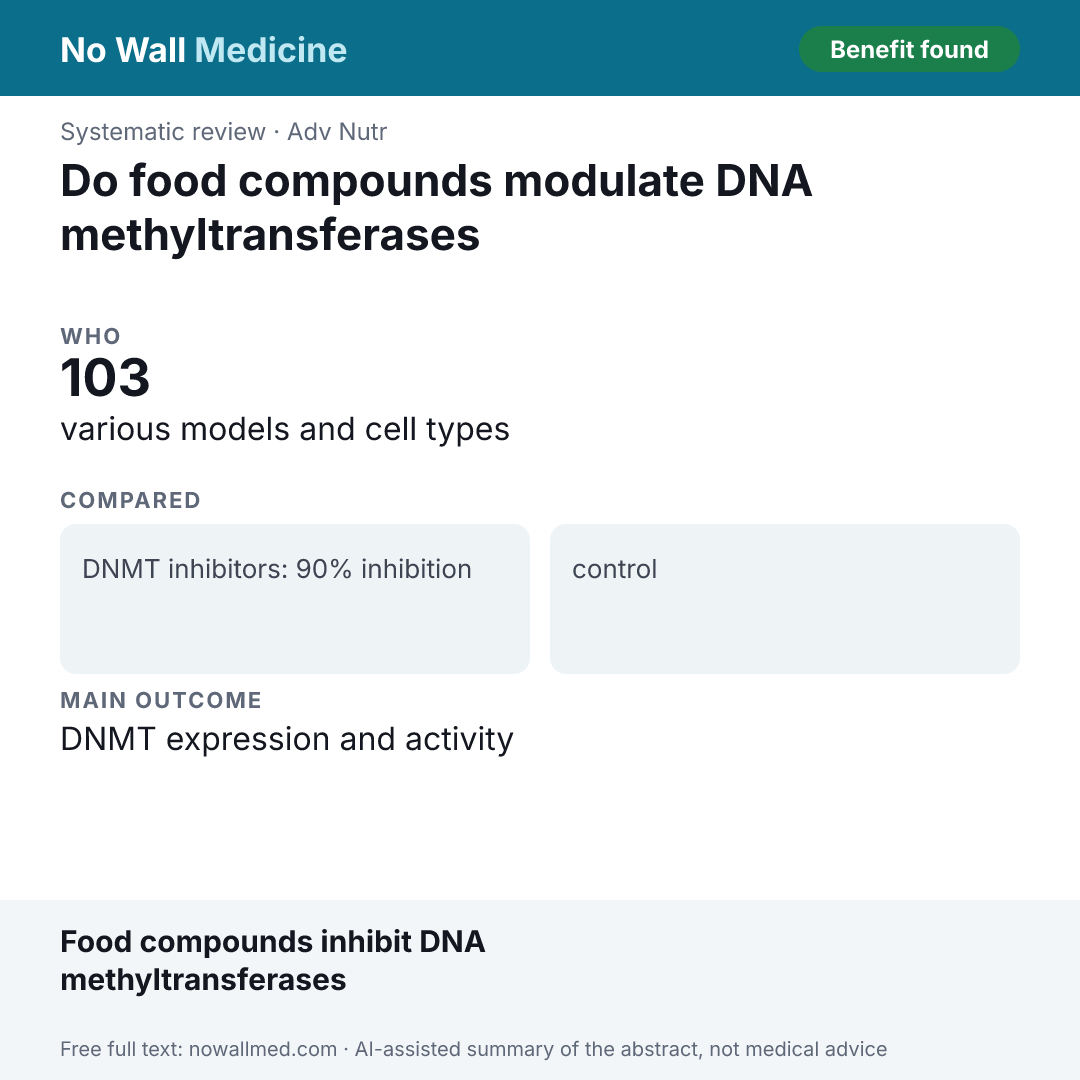
Do food compounds modulate DNA methyltransferases
Who
103
various models and cell types
Compared
DNMT inhibitors: 90% inhibition
control
Main outcome
DNMT expression and activity
Bottom line: Food compounds inhibit DNA methyltransferases
Funded by: European Union and University of Padua
Adv Nutr · 2025-09-18 · Save PNG
Key points
- Researchers reviewed 76 studies involving laboratory, animal, and tissue models to examine how dietary bioactive compounds affect DNA methyltransferase, which are enzymes that control gene expression.
- Nearly 90% of the included studies reported inhibition of these enzymes, and approximately 21% of studies identified minimal effective concentrations for the compounds.
- Commonly studied compounds included epigallocatechin-3-gallate, curcumin, genistein, resveratrol, sulforaphane, and folate.
Discussion prompts
- Would these patients look like yours? Who was left out?
- Is the main outcome one that matters to patients?
- Is the difference large enough to change what you do?
Cite: Campisi M, Cannella L, Visioli F, Pavanello S. A Systematic Review of Food-Derived DNA Methyltransferase Modulators: Mechanistic Insights and Perspectives for Healthy Aging. Adv Nutr. 2025;16(11):100521. doi:10.1016/j.advnut.2025.100521
Free full text: PubMed Central · Summary and visual abstract: nowallmed.com/a/a-systematic-review-of-food-derived-dna-methyltransferase-modulators-d27f2f/ (AI-assisted from the abstract; check the paper before relying on it).