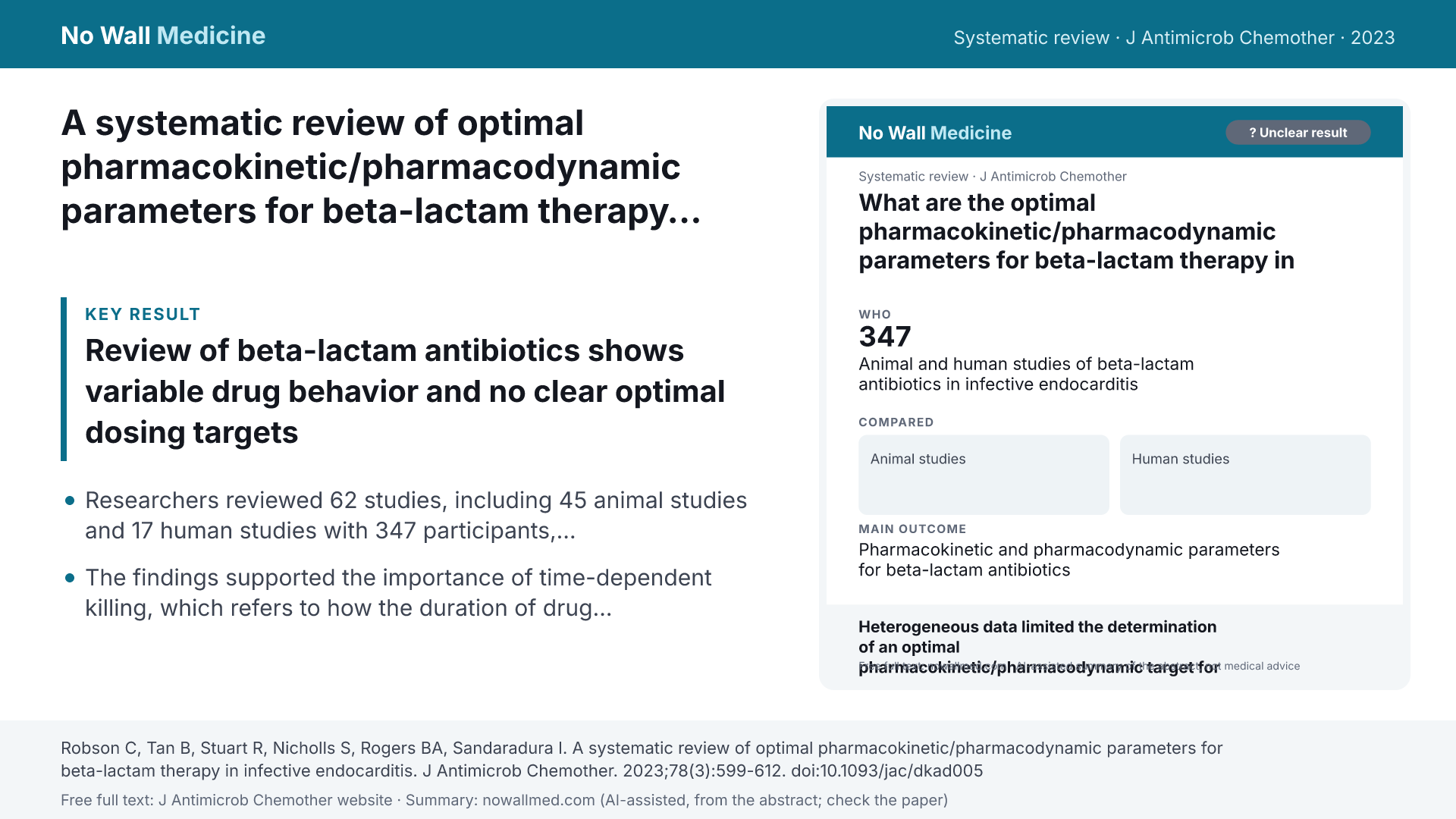
Review of beta-lactam antibiotics shows variable drug behavior and no clear optimal dosing targets
A systematic review of optimal pharmacokinetic/pharmacodynamic parameters for beta-lactam therapy in infective endocarditis
Systematic reviewUnclear result
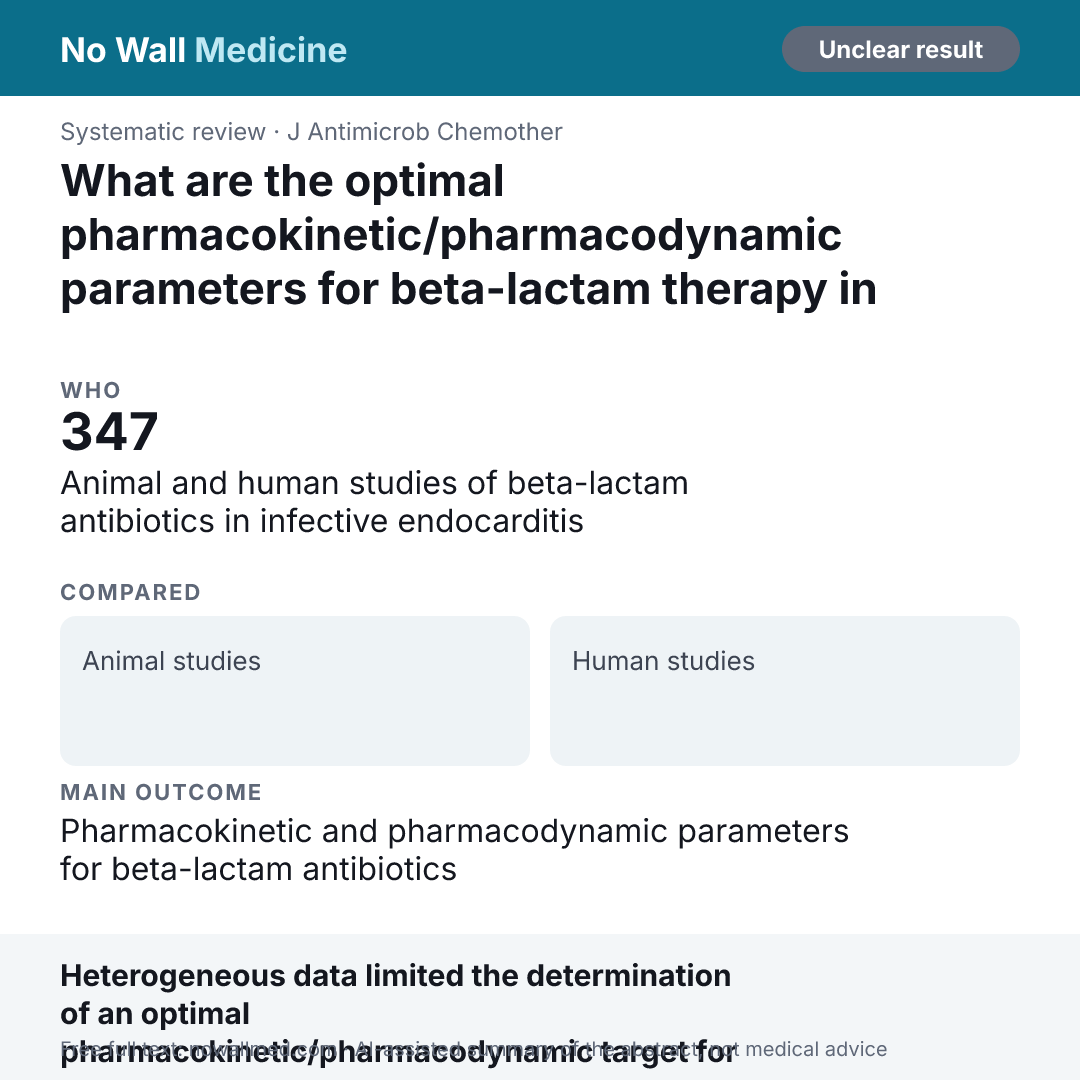
What are the optimal pharmacokinetic/pharmacodynamic parameters for beta-lactam therapy in infective endocarditis?
Who
347
Animal and human studies of beta-lactam antibiotics in infective endocarditis
Compared
Animal studies
Human studies
Main outcome
Pharmacokinetic and pharmacodynamic parameters for beta-lactam antibiotics
Bottom line: Heterogeneous data limited the determination of an optimal pharmacokinetic/pharmacodynamic target for infective endocarditis treatment.
Limitation: Heterogeneous data limited the determination of an optimal pharmacokinetic/pharmacodynamic target.
J Antimicrob Chemother · 2023-01-25 · Save PNG
Clinical question: What are the optimal pharmacokinetic/pharmacodynamic parameters for beta-lactam therapy in infective endocarditis?
Key points
- Researchers reviewed 62 studies, including 45 animal studies and 17 human studies with 347 participants, regarding beta-lactam antibiotic behavior in infective endocarditis.
- The findings supported the importance of time-dependent killing, which refers to how the duration of drug concentration above a certain level affects bacteria.
- Heterogeneous data across the reviewed studies limited the ability to determine a specific optimal pharmacokinetic/pharmacodynamic target for treating infective endocarditis.
Limitation the authors note: The review found heterogeneous data that limited the determination of an optimal pharmacokinetic/pharmacodynamic target.
Headline and key points written with AI from the paper’s abstract, with every number checked against it. Read the paper before relying on them.
Was this summary helpful?
Subject terms
Headline, design, result, key points, caveat and citation as plain text.
Cite this article
Robson C, Tan B, Stuart R, Nicholls S, Rogers BA, Sandaradura I. A systematic review of optimal pharmacokinetic/pharmacodynamic parameters for beta-lactam therapy in infective endocarditis. J Antimicrob Chemother. 2023;78(3):599-612. doi:10.1093/jac/dkad005
Spotted a mistake? Suggest a correction