Acceptability of human papillomavirus (HPV) self-sampling among never- and under-screened Indigenous and other minority women: a randomised three-arm community trial in Aotearoa New Zealand
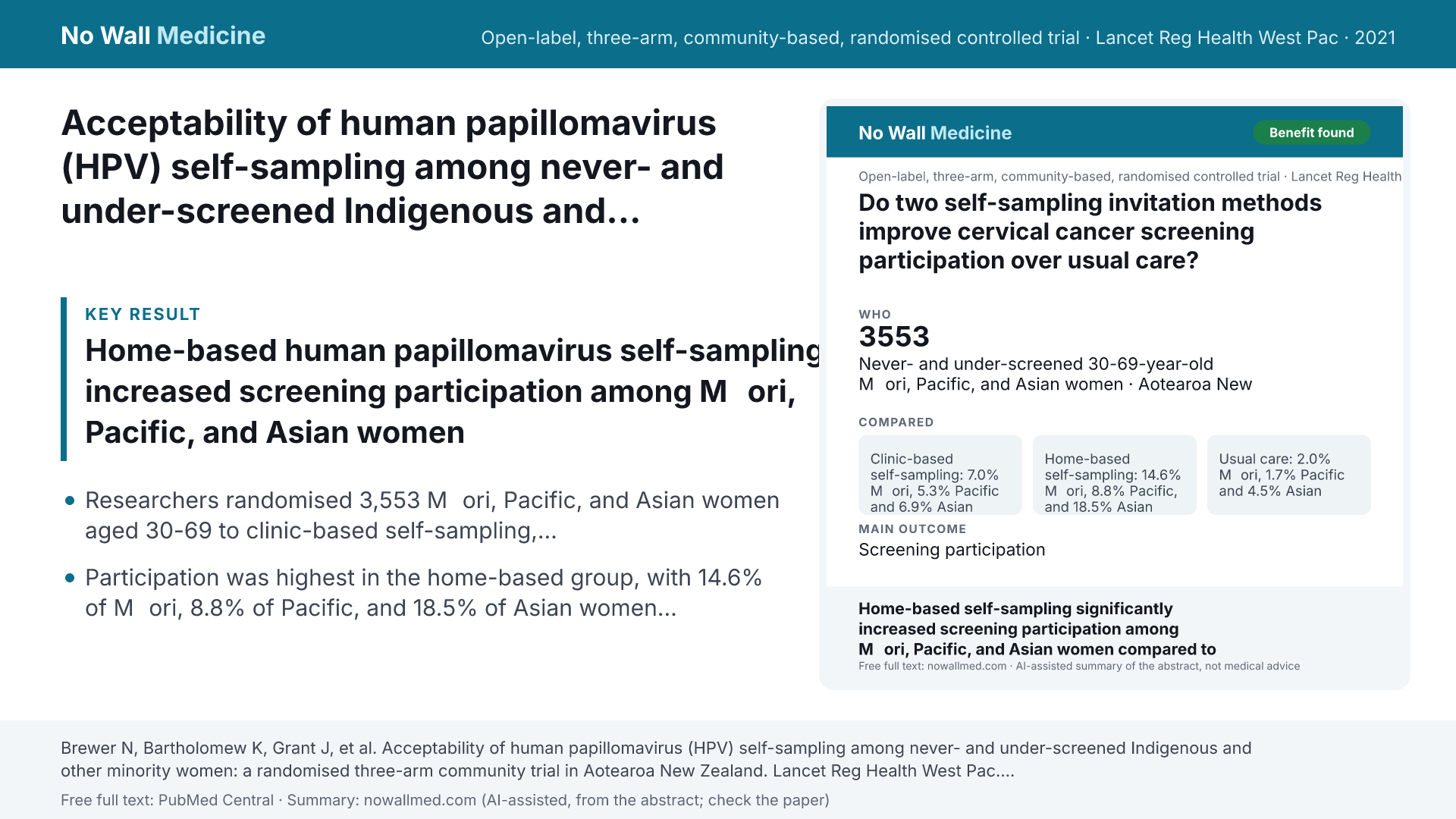
Key result: Home-based human papillomavirus self-sampling increased screening participation among Māori, Pacific, and Asian women
Key points
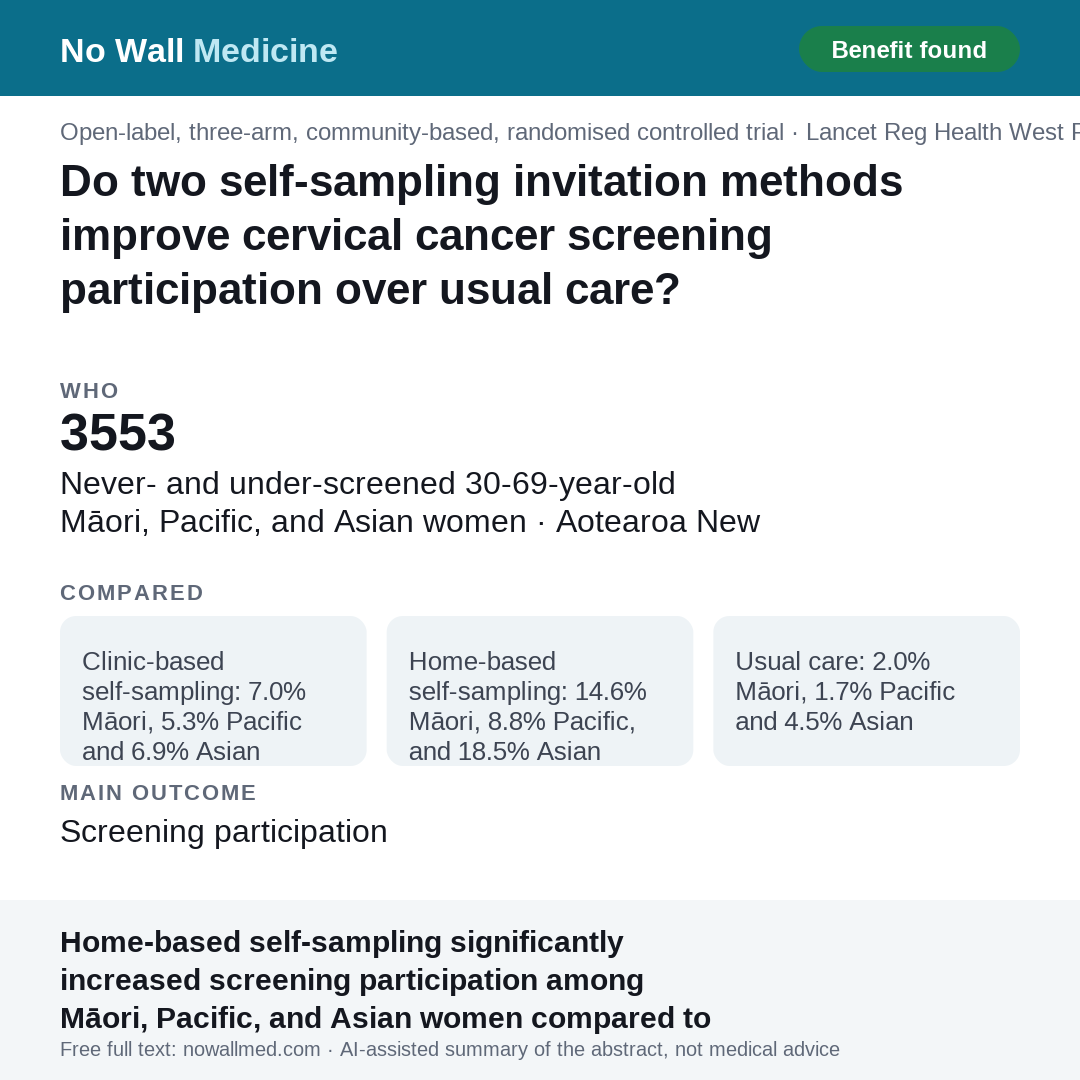
- Researchers randomised 3,553 Māori, Pacific, and Asian women aged 30-69 to clinic-based self-sampling, home-based self-sampling, or usual care involving standard cytology samples.
- Participation was highest in the home-based group, with 14.6% of Māori, 8.8% of Pacific, and 18.5% of Asian women completing a sample.
- Compared to usual care, home-based self-sampling was associated with higher participation for Māori (OR=9.7), Pacific (OR=6.0), and Asian (OR=5.1) women.
Why it matters: Ethnic inequalities exist in cervical cancer screening, incidence, and mortality for Māori, Pacific, and Asian women in Aotearoa New Zealand.
Discussion prompts
- Would these patients look like yours? Who was left out?
- Is the main outcome one that matters to patients?
- Is the difference large enough to change what you do?
Cite: Brewer N, Bartholomew K, Grant J, et al. Acceptability of human papillomavirus (HPV) self-sampling among never- and under-screened Indigenous and other minority women: a randomised three-arm community trial in Aotearoa New Zealand. Lancet Reg Health West Pac. 2021. doi:10.1016/j.lanwpc.2021.100265
Free full text: PubMed Central · Summary and visual abstract: nowallmed.com/a/acceptability-of-human-papillomavirus-hpv-self-sampling-among-never-14h1b9n/ (AI-assisted from the abstract; check the paper before relying on it).