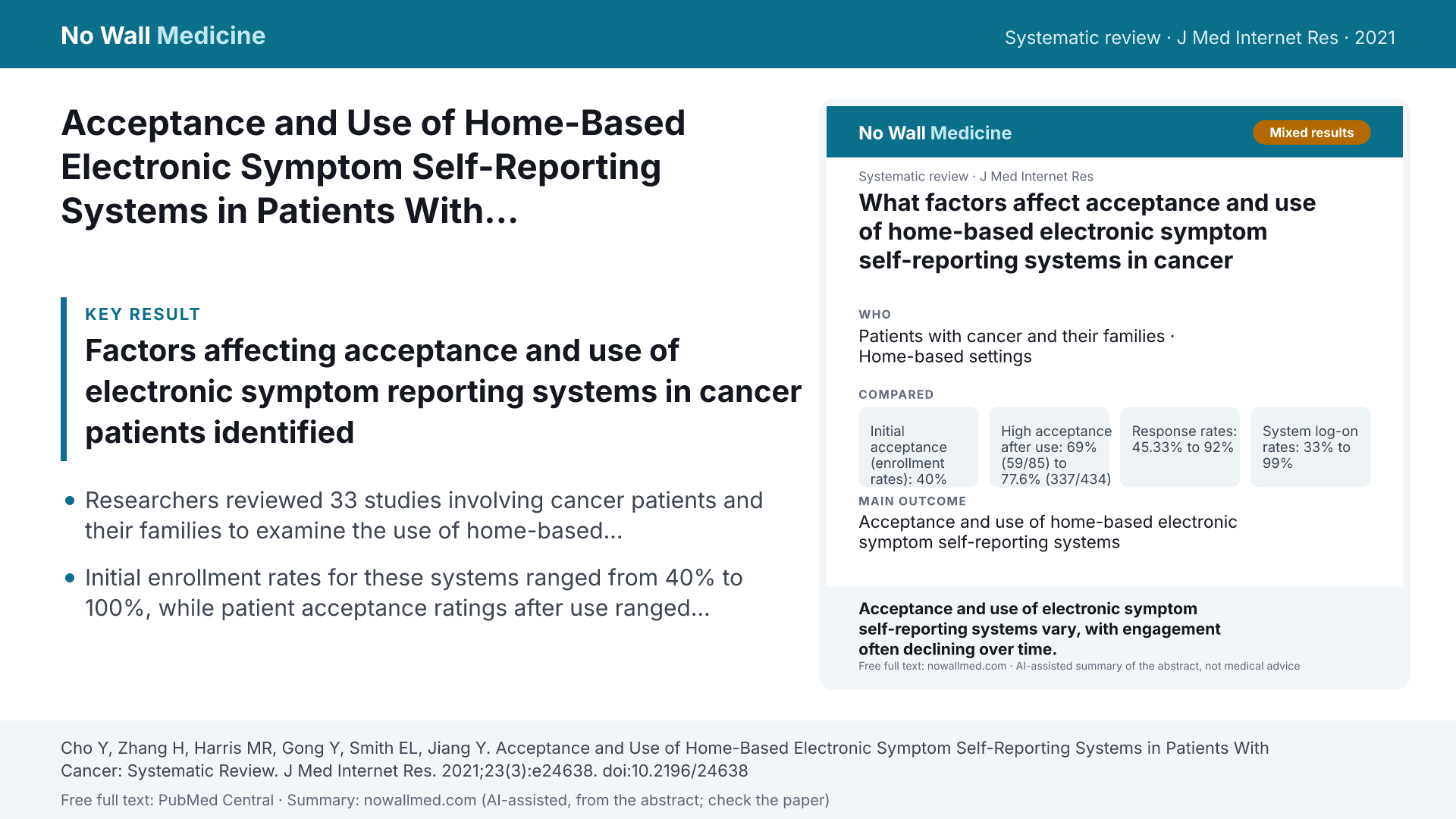
Factors affecting acceptance and use of electronic symptom reporting systems in cancer patients identified
Acceptance and Use of Home-Based Electronic Symptom Self-Reporting Systems in Patients With Cancer: Systematic Review
Systematic reviewMixed results
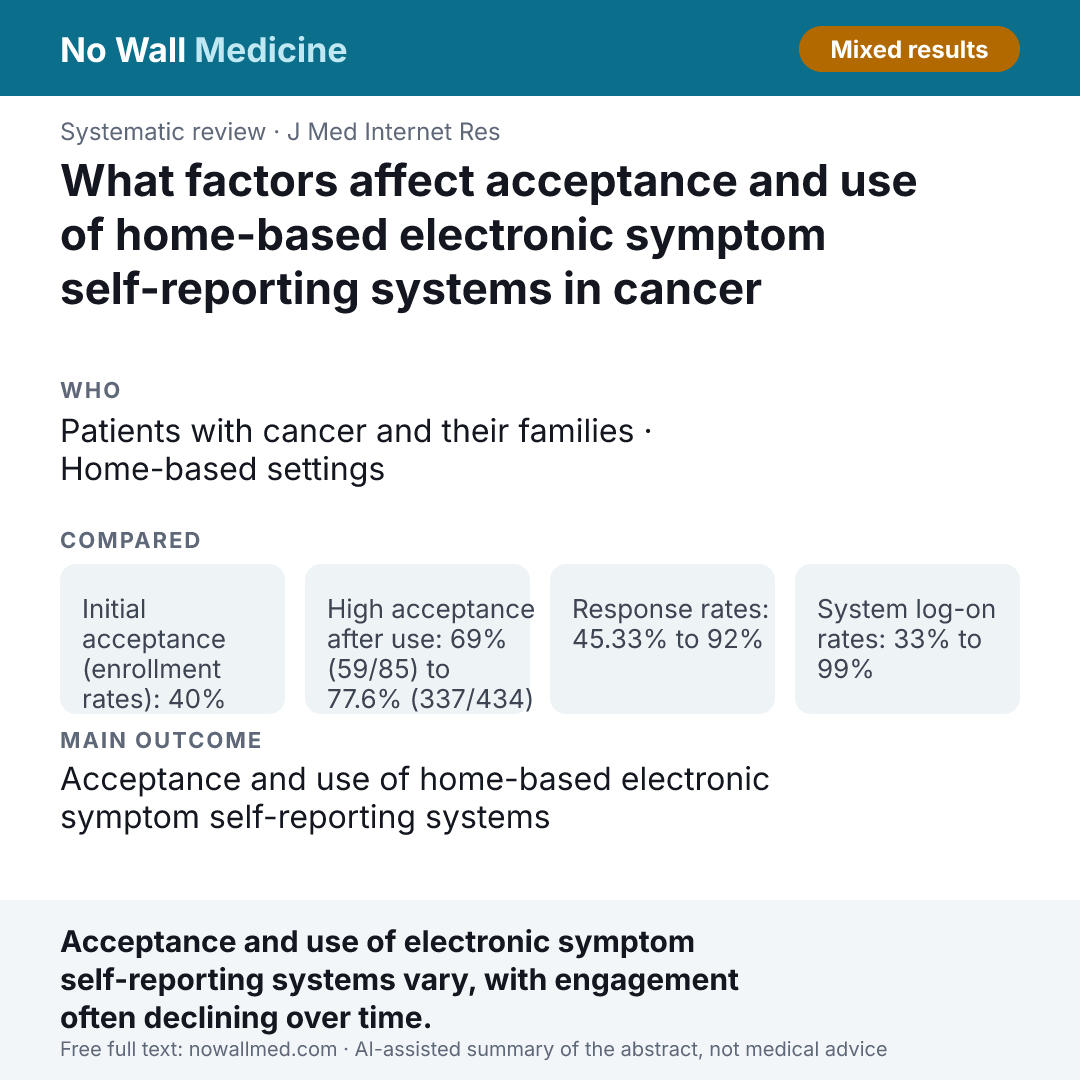
What factors affect acceptance and use of home-based electronic symptom self-reporting systems in cancer patients?
Who
Patients with cancer and their families · Home-based settings
Compared
Initial acceptance (enrollment rates): 40% (22/55) to 100% (100/100)
High acceptance after use: 69% (59/85) to 77.6% (337/434)
Response rates: 45.33% to 92%
System log-on rates: 33% to 99%
Main outcome
Acceptance and use of home-based electronic symptom self-reporting systems
Bottom line: Acceptance and use of electronic symptom self-reporting systems vary, with engagement often declining over time.
Limitation: More studies are needed to understand long-term use behavior patterns.
J Med Internet Res · 2021-03-12 · Save PNG
Clinical question: What factors affect acceptance and use of home-based electronic symptom self-reporting systems in cancer patients?
Key points
- Researchers reviewed 33 studies involving cancer patients and their families to examine the use of home-based electronic symptom self-reporting systems.
- Initial enrollment rates for these systems ranged from 40% to 100%, while patient acceptance ratings after use ranged from 69% to 77.6%.
- System use, measured by response or log-on rates, generally declined over time, with few studies reporting data beyond 6 months.
Headline and key points written with AI from the paper’s abstract, with every number checked against it. Read the paper before relying on them.
Was this summary helpful?
Subject terms
Headline, design, result, key points, caveat and citation as plain text.
Cite this article
Cho Y, Zhang H, Harris MR, Gong Y, Smith EL, Jiang Y. Acceptance and Use of Home-Based Electronic Symptom Self-Reporting Systems in Patients With Cancer: Systematic Review. J Med Internet Res. 2021. doi:10.2196/24638
Spotted a mistake? Suggest a correction