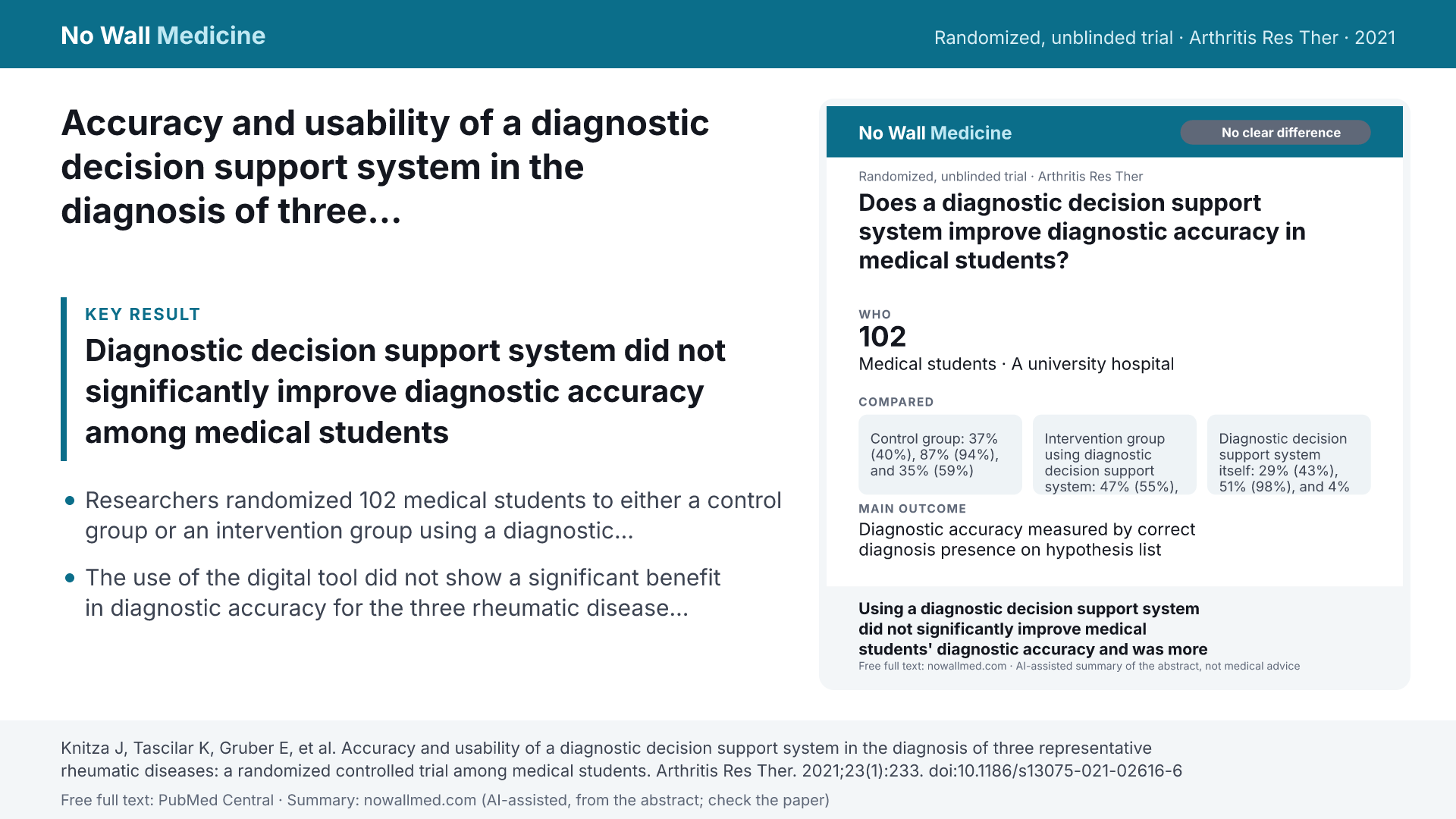
Diagnostic decision support system did not significantly improve diagnostic accuracy among medical students
Accuracy and usability of a diagnostic decision support system in the diagnosis of three representative rheumatic diseases: a randomized controlled trial among medical students
Randomized, unblinded trialNo clear difference
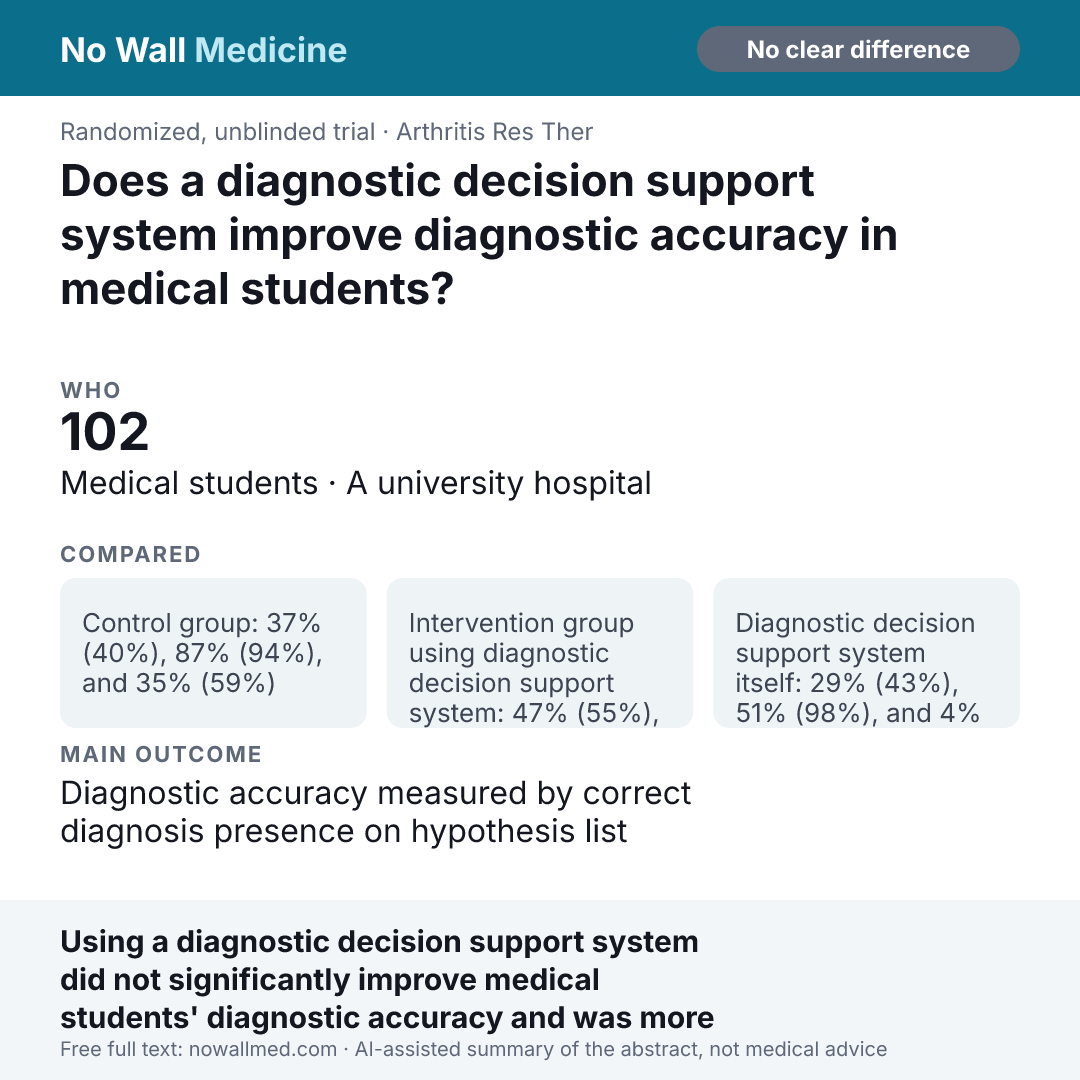
Does a diagnostic decision support system improve diagnostic accuracy in medical students?
Who
102
Medical students · A university hospital
Compared
Control group: 37% (40%), 87% (94%), and 35% (59%)
Intervention group using diagnostic decision support system: 47% (55%), 84% (100%), and 20% (51%)
Diagnostic decision support system itself: 29% (43%), 51% (98%), and 4% (51%)
Main outcome
Diagnostic accuracy measured by correct diagnosis presence on hypothesis list
Bottom line: Using a diagnostic decision support system did not significantly improve medical students' diagnostic accuracy and was more time-consuming.
Limitation: Students accepted false diagnostic suggestions and symptom entry was often incomplete or false.
Arthritis Res Ther · 2021-09-06 · Save PNG
Clinical question: Does a diagnostic decision support system improve diagnostic accuracy in medical students?
Why it matters: Little evidence exists regarding whether diagnostic decision support systems effectively help establish correct diagnoses for patients.
Key points
- Researchers randomized 102 medical students to either a control group or an intervention group using a diagnostic decision support system, which is a digital tool that helps identify diseases.
- The use of the digital tool did not show a significant benefit in diagnostic accuracy for the three rheumatic disease cases studied.
- Using the digital tool took an average of 7 min longer and was associated with students accepting incorrect diagnostic suggestions.
Headline and key points written with AI from the paper’s abstract, with every number checked against it. Read the paper before relying on them.
Was this summary helpful?
Subject terms
Headline, design, result, key points, caveat and citation as plain text.
Cite this article
Knitza J, Tascilar K, Gruber E, et al. Accuracy and usability of a diagnostic decision support system in the diagnosis of three representative rheumatic diseases: a randomized controlled trial among medical students. Arthritis Res Ther. 2021. doi:10.1186/s13075-021-02616-6
Spotted a mistake? Suggest a correction