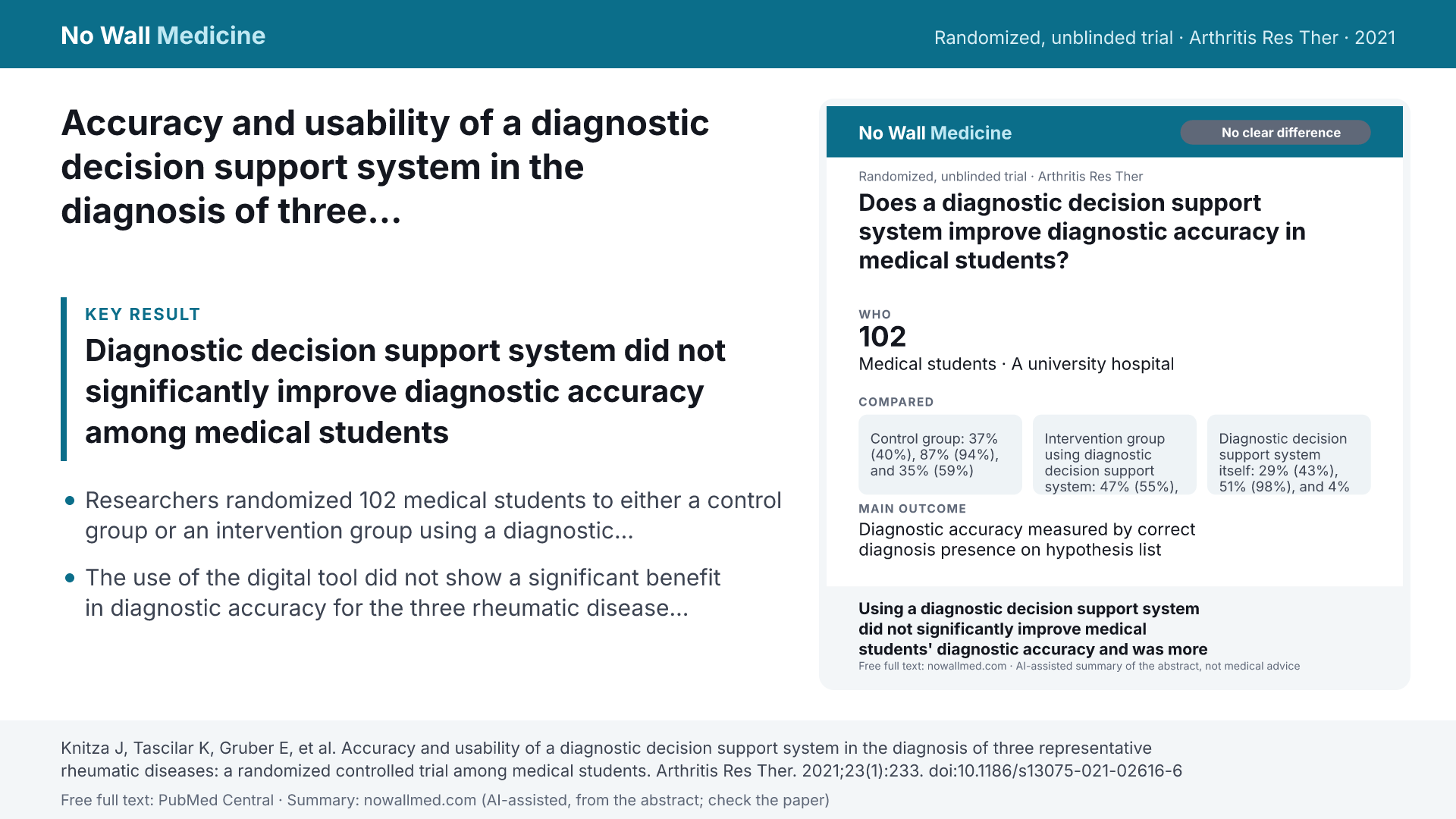
Accuracy and usability of a diagnostic decision support system in the diagnosis of three representative rheumatic diseases: a randomized controlled trial among medical students
Key result: Diagnostic decision support system did not significantly improve diagnostic accuracy among medical students
Key points
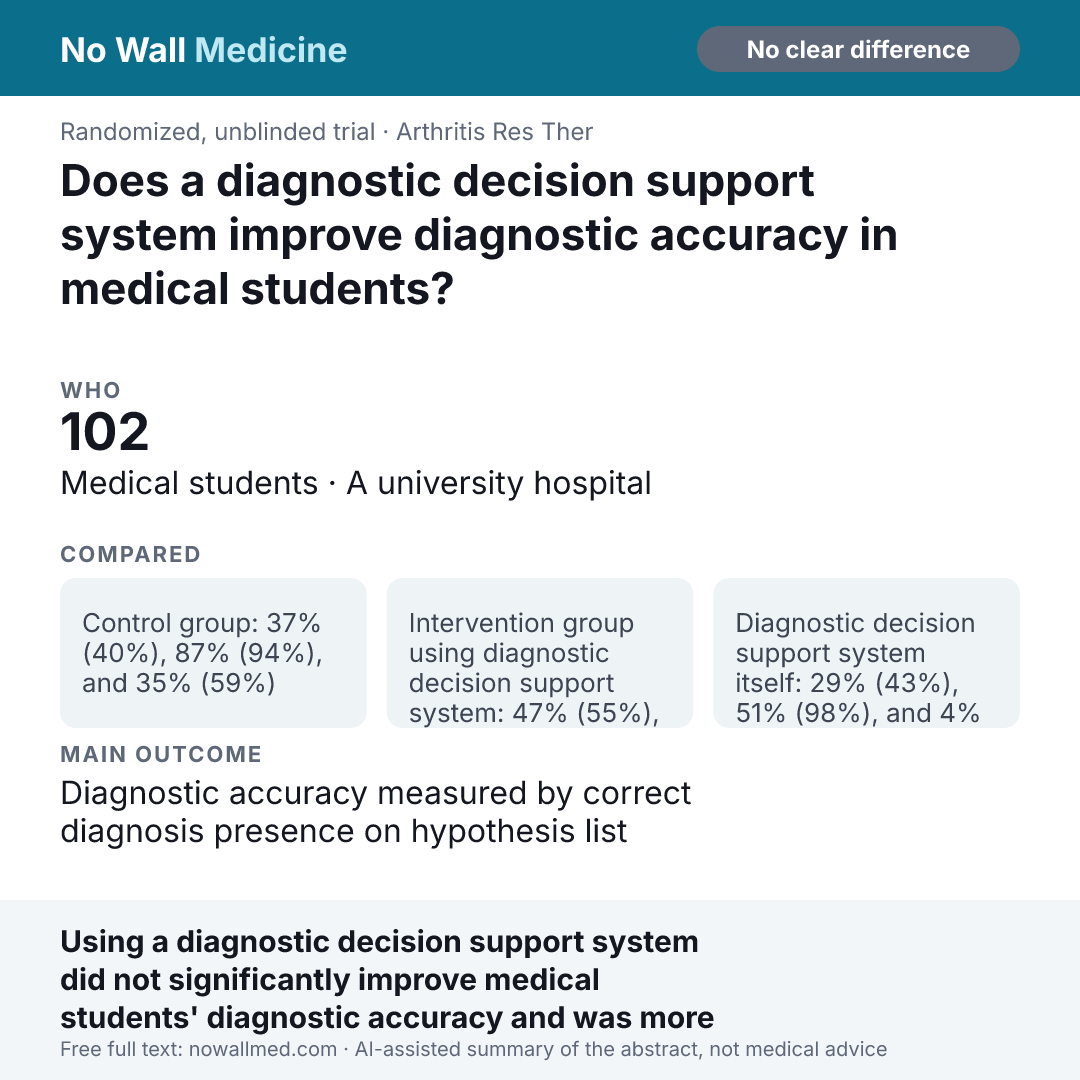
- Researchers randomized 102 medical students to either a control group or an intervention group using a diagnostic decision support system, which is a digital tool that helps identify diseases.
- The use of the digital tool did not show a significant benefit in diagnostic accuracy for the three rheumatic disease cases studied.
- Using the digital tool took an average of 7 min longer and was associated with students accepting incorrect diagnostic suggestions.
Why it matters: Little evidence exists regarding whether diagnostic decision support systems effectively help establish correct diagnoses for patients.
Discussion prompts
- Would these patients look like yours? Who was left out?
- Is the main outcome one that matters to patients?
- Is the difference large enough to change what you do?
Cite: Knitza J, Tascilar K, Gruber E, et al. Accuracy and usability of a diagnostic decision support system in the diagnosis of three representative rheumatic diseases: a randomized controlled trial among medical students. Arthritis Res Ther. 2021;23(1):233. doi:10.1186/s13075-021-02616-6
Free full text: PubMed Central · Summary and visual abstract: nowallmed.com/a/accuracy-and-usability-of-a-diagnostic-decision-support-system-in-the-856nxx/ (AI-assisted from the abstract; check the paper before relying on it).