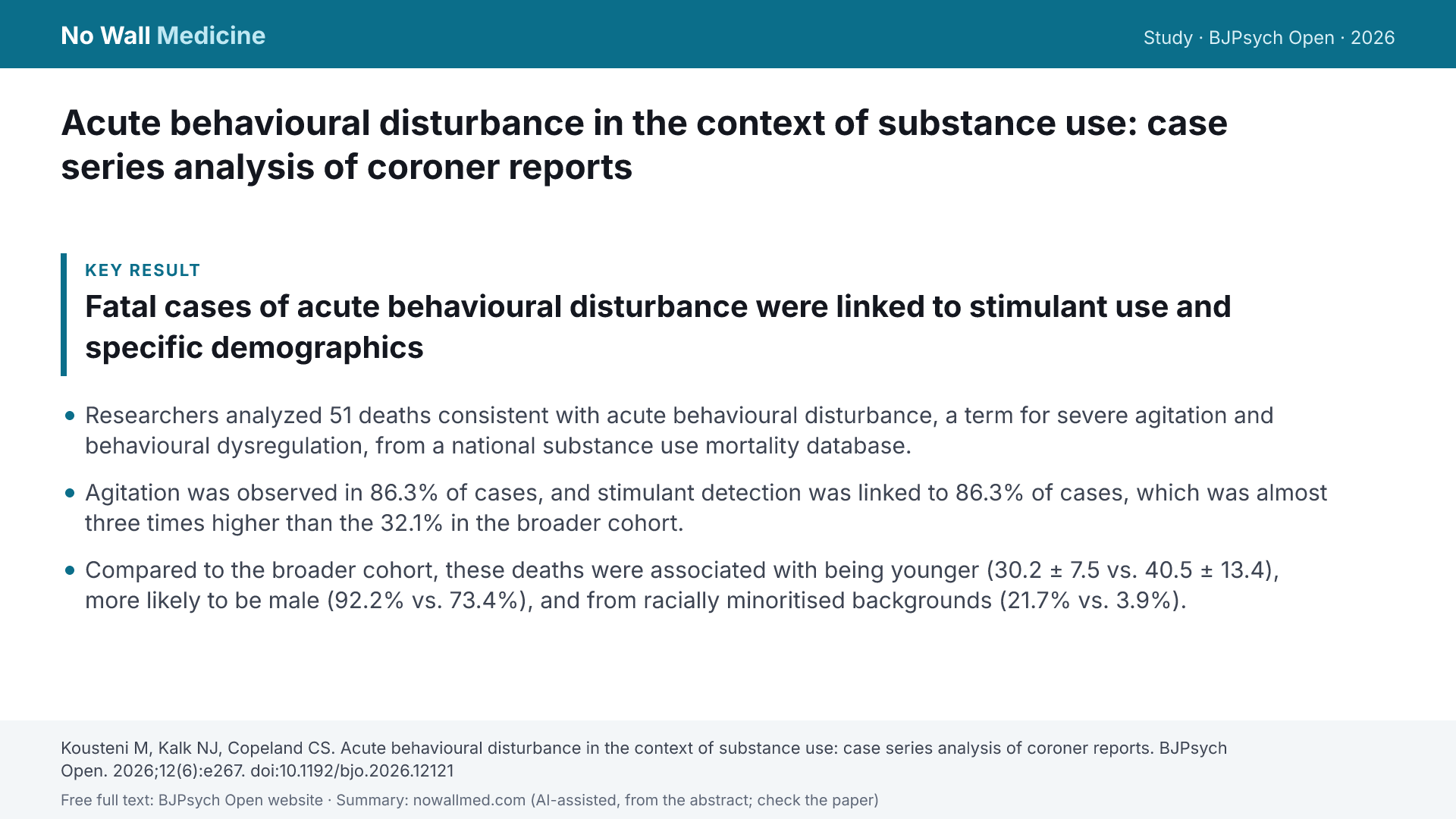
Fatal cases of acute behavioural disturbance were linked to stimulant use and specific demographics
Acute behavioural disturbance in the context of substance use: case series analysis of coroner reports
Why it matters: The clinical and forensic utility of the term acute behavioural disturbance is questioned due to concerns regarding diagnostic clarity, racial bias, and law enforcement restraint.
Key points
- Researchers analyzed 51 deaths consistent with acute behavioural disturbance, a term for severe agitation and behavioural dysregulation, from a national substance use mortality database.
- Agitation was observed in 86.3% of cases, and stimulant detection was linked to 86.3% of cases, which was almost three times higher than the 32.1% in the broader cohort.
- Compared to the broader cohort, these deaths were associated with being younger (30.2 ± 7.5 vs. 40.5 ± 13.4), more likely to be male (92.2% vs. 73.4%), and from racially minoritised backgrounds (21.7% vs. 3.9%).
Study type: Observational study: it can show a link, but not prove that one thing causes another.
Headline and key points written with AI from the paper’s abstract, with every number checked against it. Read the paper before relying on them.
Was this summary helpful?
Headline, design, result, key points, caveat and citation as plain text.
Cite this article
Kousteni M, Kalk NJ, Copeland CS. Acute behavioural disturbance in the context of substance use: case series analysis of coroner reports. BJPsych Open. 2026;12(6):e267. doi:10.1192/bjo.2026.12121
Spotted a mistake? Suggest a correction