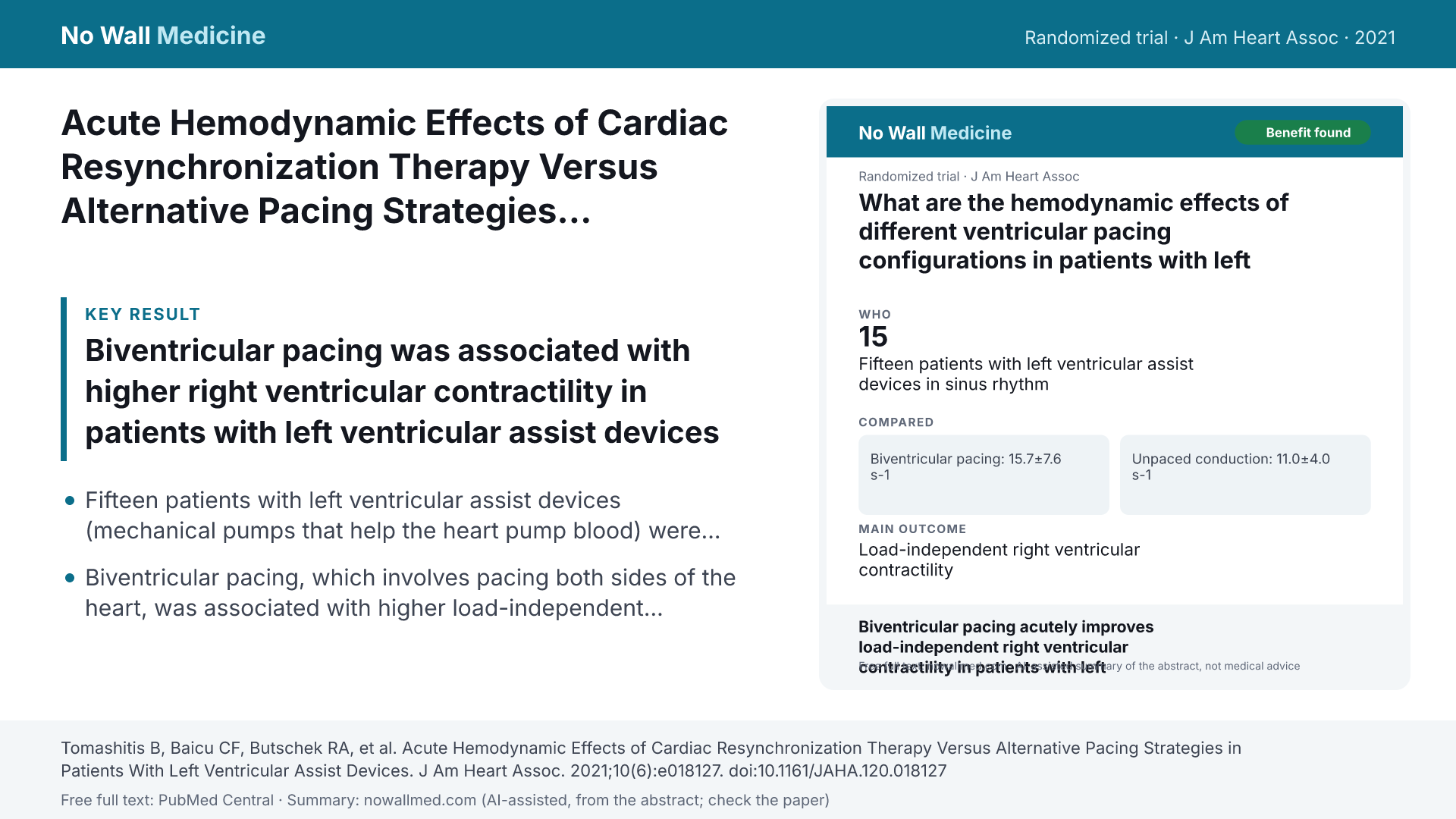
Biventricular pacing was associated with higher right ventricular contractility in patients with left ventricular assist devices
Acute Hemodynamic Effects of Cardiac Resynchronization Therapy Versus Alternative Pacing Strategies in Patients With Left Ventricular Assist Devices
Randomized trialBenefit found
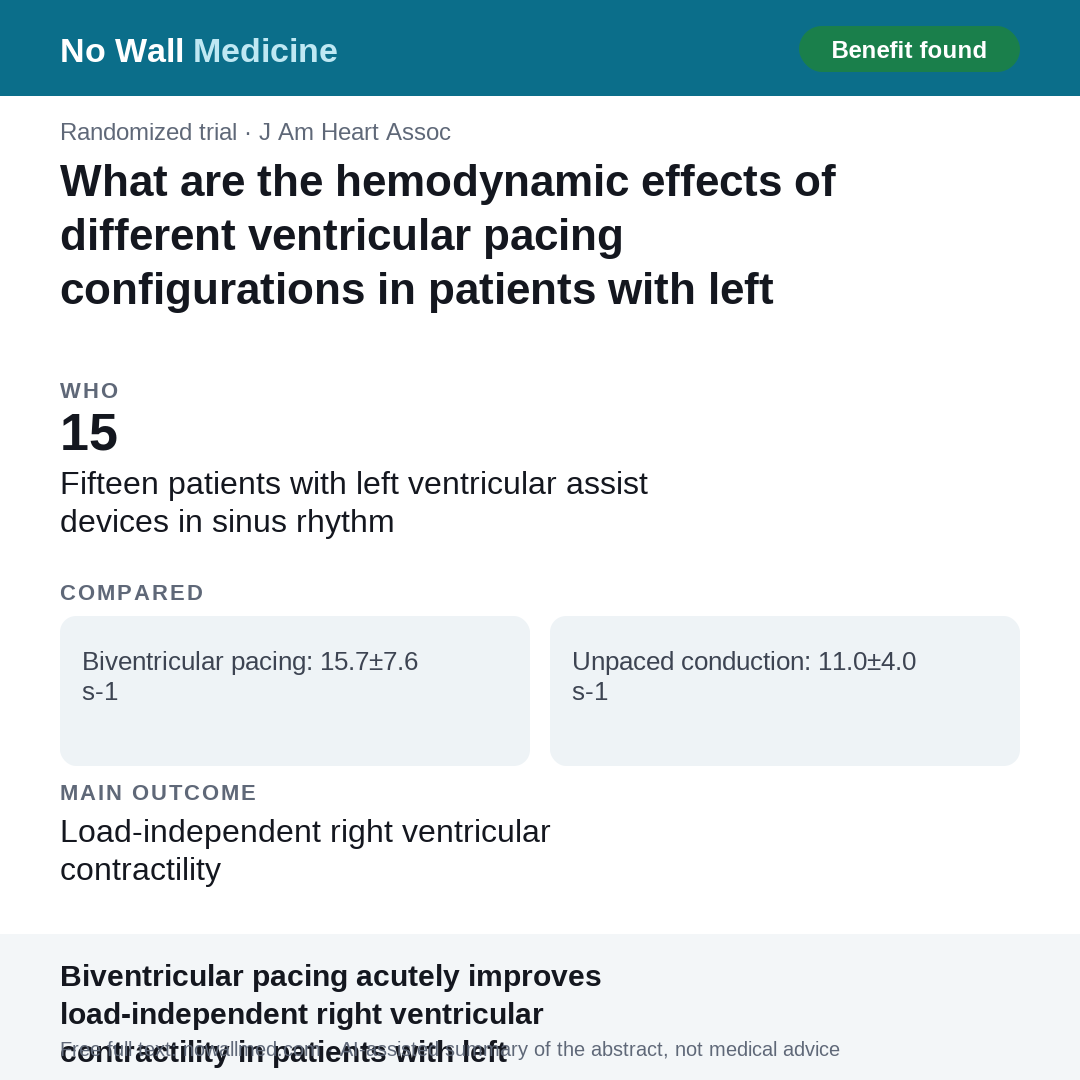
What are the hemodynamic effects of different ventricular pacing configurations in patients with left ventricular assist devices?
Who
15
Fifteen patients with left ventricular assist devices in sinus rhythm
Compared
Biventricular pacing: 15.7±7.6 s-1
Unpaced conduction: 11.0±4.0 s-1
Main outcome
Load-independent right ventricular contractility
Bottom line: Biventricular pacing acutely improves load-independent right ventricular contractility in patients with left ventricular assist devices.
J Am Heart Assoc · 2021-03-05Download image
Clinical question: What are the hemodynamic effects of different ventricular pacing configurations in patients with left ventricular assist devices?
Why it matters: The hemodynamic effects of cardiac resynchronization therapy, a type of pacing that coordinates heart contractions, are uncharacterized in patients using left ventricular assist devices.
Key points
- Fifteen patients with left ventricular assist devices (mechanical pumps that help the heart pump blood) were studied using right heart catheterization to measure different pacing configurations.
- Biventricular pacing, which involves pacing both sides of the heart, was associated with higher load-independent right ventricular contractility compared to unpaced conduction (15.7±7.6 versus 11.0±4.0 s-1; P=0.003).
- Thermodilution cardiac output was higher in biventricular pacing compared with unpaced conduction (4.48±0.7 versus 4.38±0.8 L/min; P=0.05).
Headline and key points written with AI from the paper’s abstract, with every number checked against it. Read the paper before relying on them.
Was this summary helpful?
Subject terms
Cite this article
Tomashitis B, Baicu CF, Butschek RA, Jackson GR, Winterfield J, Tedford RJ. Acute Hemodynamic Effects of Cardiac Resynchronization Therapy Versus Alternative Pacing Strategies in Patients With Left Ventricular Assist Devices. J Am Heart Assoc. 2021. doi:10.1161/JAHA.120.018127
Spotted a mistake? Suggest a correction
Top studies every Monday
The week’s key trials and guidelines in your specialties, plus any topics you follow. By email, free.
Get the weekly digest