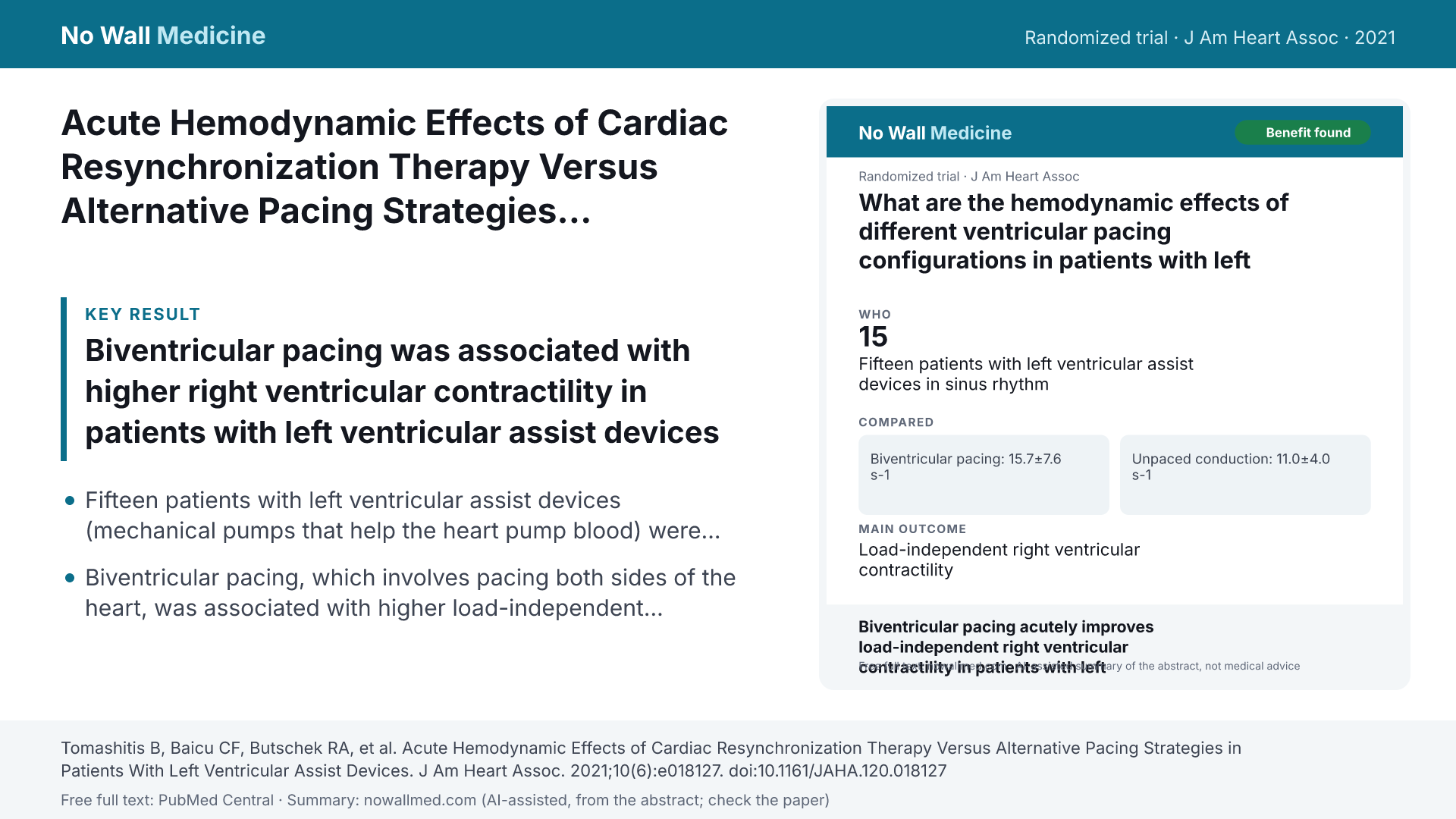
Acute Hemodynamic Effects of Cardiac Resynchronization Therapy Versus Alternative Pacing Strategies in Patients With Left Ventricular Assist Devices
Key result: Biventricular pacing was associated with higher right ventricular contractility in patients with left ventricular assist devices
Key points
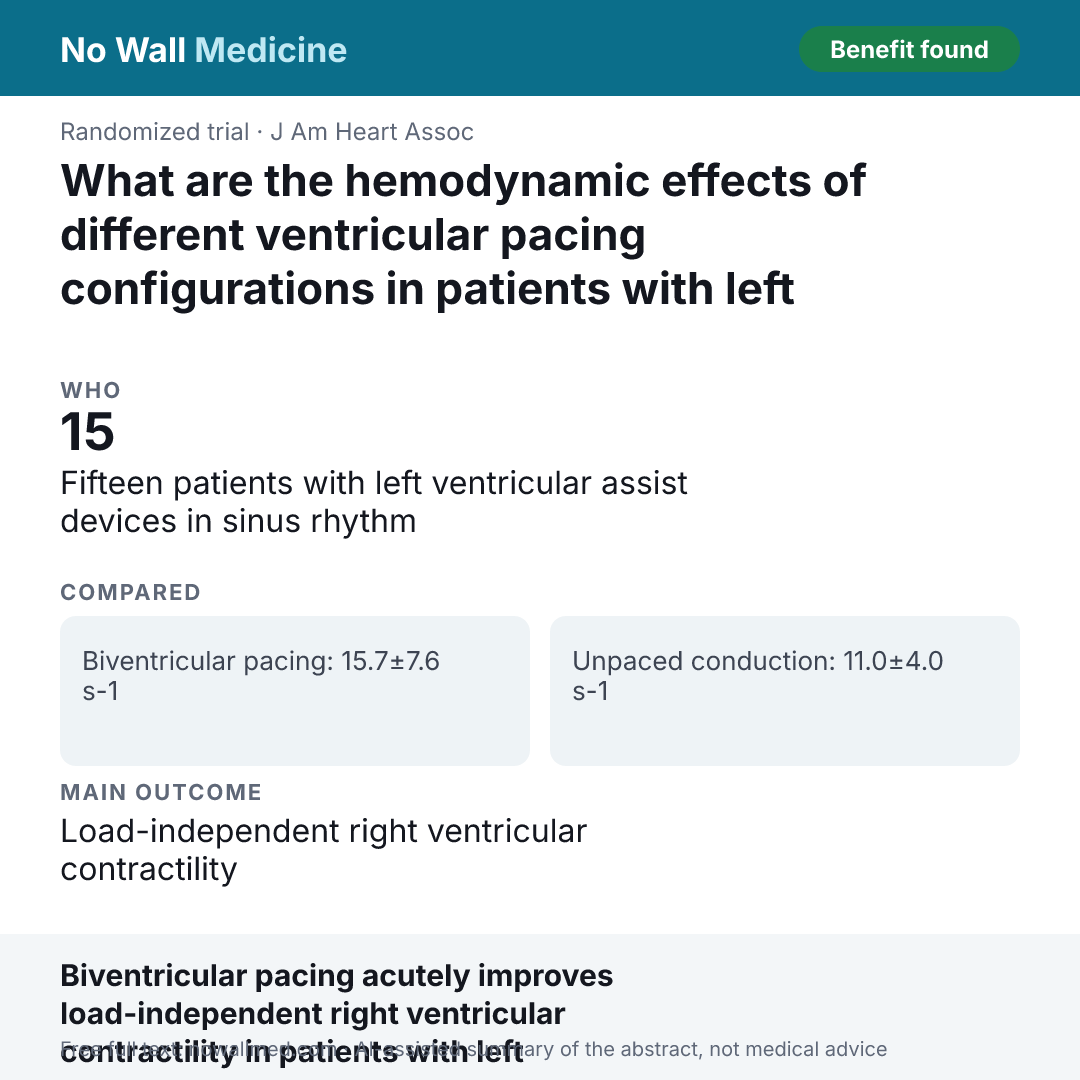
- Fifteen patients with left ventricular assist devices (mechanical pumps that help the heart pump blood) were studied using right heart catheterization to measure different pacing configurations.
- Biventricular pacing, which involves pacing both sides of the heart, was associated with higher load-independent right ventricular contractility compared to unpaced conduction (15.7±7.6 versus 11.0±4.0 s-1; P=0.003).
- Thermodilution cardiac output was higher in biventricular pacing compared with unpaced conduction (4.48±0.7 versus 4.38±0.8 L/min; P=0.05).
Why it matters: The hemodynamic effects of cardiac resynchronization therapy, a type of pacing that coordinates heart contractions, are uncharacterized in patients using left ventricular assist devices.
Discussion prompts
- Would these patients look like yours? Who was left out?
- Is the main outcome one that matters to patients?
- Is the difference large enough to change what you do?
Cite: Tomashitis B, Baicu CF, Butschek RA, et al. Acute Hemodynamic Effects of Cardiac Resynchronization Therapy Versus Alternative Pacing Strategies in Patients With Left Ventricular Assist Devices. J Am Heart Assoc. 2021;10(6):e018127. doi:10.1161/JAHA.120.018127
Free full text: PubMed Central · Summary and visual abstract: nowallmed.com/a/acute-hemodynamic-effects-of-cardiac-resynchronization-therapy-versus-1s2hx1g/ (AI-assisted from the abstract; check the paper before relying on it).