Correcting creatinine for fluid balance identifies more acute kidney injury in premature neonates
Acute Kidney Injury Defined by Fluid-Corrected Creatinine in Premature Neonates: A Secondary Analysis of the PENUT Randomized Clinical Trial
Randomized trial analysisHarm found
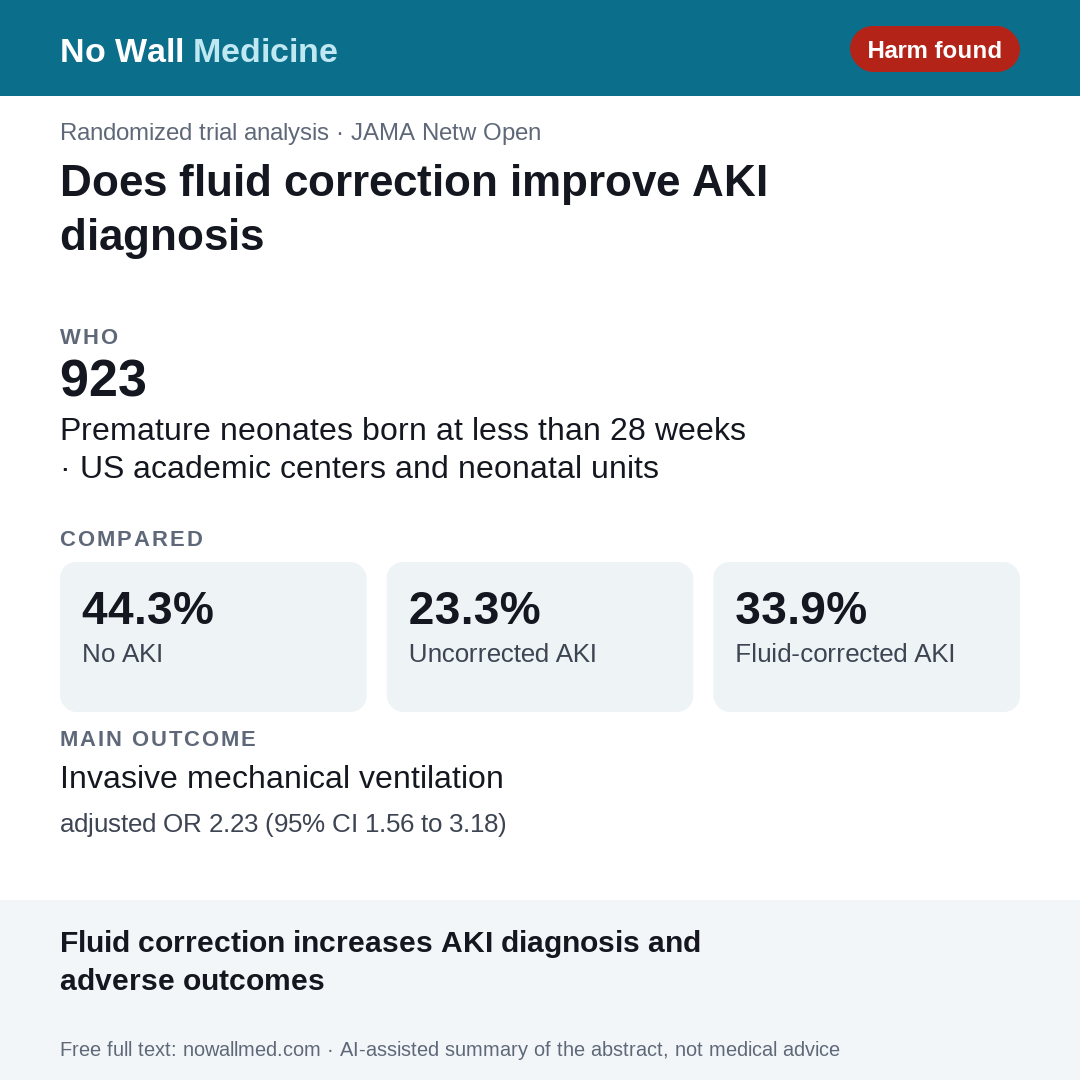
Does fluid correction improve AKI diagnosis
Who
923
Premature neonates born at less than 28 weeks · US academic centers and neonatal units
Compared
44.3%No AKI
23.3%Uncorrected AKI
33.9%Fluid-corrected AKI
Main outcome
Invasive mechanical ventilation
Result: adjusted OR 2.23 (95% CI 1.56 to 3.18)
Bottom line: Fluid correction increases AKI diagnosis and adverse outcomes
JAMA Netw Open · 2023-08-01Download image
Why it matters: Fluid balance can dilute or concentrate serum creatinine levels, making it unclear if standard measurements accurately diagnose acute kidney injury in premature infants.
Key points
- Researchers analyzed 923 extremely premature neonates born at less than 28 weeks of gestation to compare standard acute kidney injury diagnosis with fluid-corrected diagnosis.
- Fluid correction increased the diagnosis rate from 23.3% to 33.9%, reclassifying 111 neonates as having previously undetected acute kidney injury.
- A diagnosis of fluid-corrected acute kidney injury was associated with increased odds of needing mechanical ventilation and severe bronchopulmonary dysplasia, a lung disease.
Headline and key points written with AI from the paper’s abstract, with every number checked against it. Read the paper before relying on them.
Was this summary helpful?
Subject terms
Cite this article
Starr MC, Griffin RL, Harer MW, Soranno DE, Gist KM, Segar JL. Acute Kidney Injury Defined by Fluid-Corrected Creatinine in Premature Neonates: A Secondary Analysis of the PENUT Randomized Clinical Trial. JAMA Netw Open. 2023. doi:10.1001/jamanetworkopen.2023.28182
Spotted a mistake? Suggest a correction
Top studies every Monday
The week’s key trials and guidelines in your specialties, plus any topics you follow. By email, free.
Get the weekly digest