Adeno-associated virus-based gene therapy for hemophilia A and B: a systematic review and meta-analysis
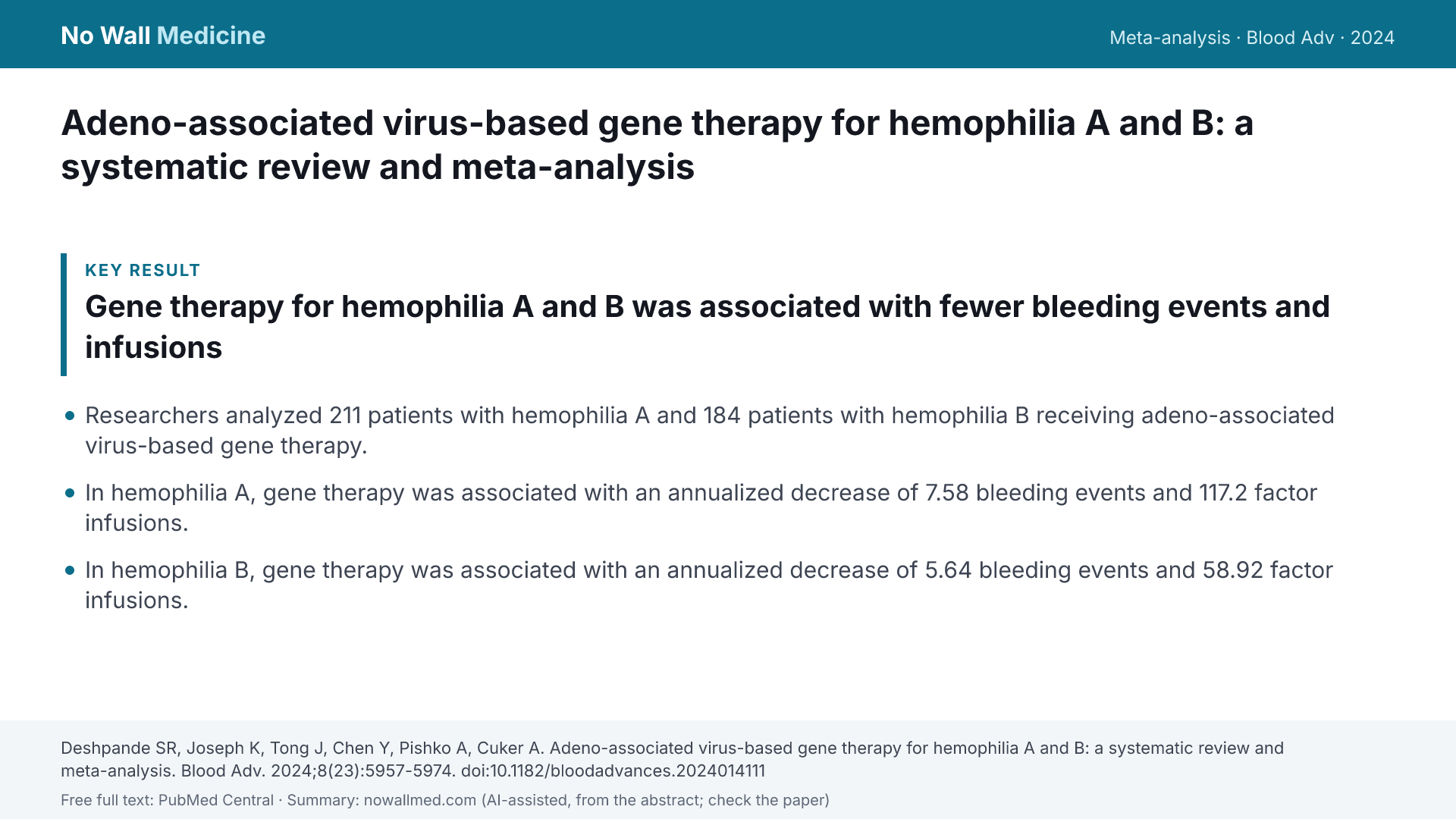
Key result: Gene therapy for hemophilia A and B was associated with fewer bleeding events and infusions
Key points
- Researchers analyzed 211 patients with hemophilia A and 184 patients with hemophilia B receiving adeno-associated virus-based gene therapy.
- In hemophilia A, gene therapy was associated with an annualized decrease of 7.58 bleeding events and 117.2 factor infusions.
- In hemophilia B, gene therapy was associated with an annualized decrease of 5.64 bleeding events and 58.92 factor infusions.
Why it matters: The effectiveness and safety of emerging adeno-associated virus-based gene therapies for treating severe or moderately severe hemophilia A and B were not fully synthesized.
Discussion prompts
- Would these patients look like yours? Who was left out?
- Is the main outcome one that matters to patients?
- Is the difference large enough to change what you do?
Cite: Deshpande SR, Joseph K, Tong J, Chen Y, Pishko A, Cuker A. Adeno-associated virus-based gene therapy for hemophilia A and B: a systematic review and meta-analysis. Blood Adv. 2024;8(23):5957-5974. doi:10.1182/bloodadvances.2024014111
Free full text: PubMed Central · Summary and visual abstract: nowallmed.com/a/adeno-associated-virus-based-gene-therapy-for-hemophilia-a-and-b-a-1ae9ph2/ (AI-assisted from the abstract; check the paper before relying on it).